Claude Code: What It Is and How Founders Use It Today

Building software no longer requires wrestling with syntax and debugging for hours. AI assistants like Claude Code enable founders and developers to create applications through conversational interactions, transforming how technical challenges get solved. These tools allow teams to automate workflows, write code more efficiently, and ship products faster and more precisely.
Understanding AI coding capabilities becomes most valuable when applied to real projects. Founders today leverage these tools to prototype faster, reduce development bottlenecks, and focus on business logic rather than implementation details. For those ready to transform AI-assisted development into production-ready solutions, partnering with an experienced web app development company ensures these capabilities translate into functional applications that serve specific business goals.
Summary
- AI coding tools compress development timelines, but they don't eliminate the operational work required to run a business. Claude Code can process up to 200,000 tokens in a single context window and generate multi-file changes that reflect the project structure, but once the code is in place, founders still face deployment, payment integration, user acquisition, and ongoing maintenance. The speed advantage collapses when these surrounding systems remain manual or unclear.
- Development time reductions don't automatically translate into business traction. 70% of startups implementing Claude Code report significant reductions in development time, yet most founders still struggle with distribution, positioning, and customer validation. The bottleneck shifts from "can you code?" to whether you can define what to build, articulate why it matters to specific users, and establish feedback loops that surface what's broken based on real behavior rather than assumptions.
- Terminal integration removes the copy-paste workflow between interfaces, but it creates new dependencies that disrupt momentum when access becomes unreliable. Claude Code burns through developers' usage allotments far too quickly, according to Forbes, forcing slowdowns mid-task precisely when continuity matters most. The tool that accelerates building can introduce friction if limits interrupt critical build phases.
- Non-technical founders now have access to functional prototyping without hiring engineers or learning syntax. 50 documented use cases show that non-technical people can build working products using natural-language instructions alone. This accessibility matters more than raw speed because it changes who gets to test ideas and validate demand before committing months to development or fundraising.
- Code generation stops at the implementation layer and doesn't extend into strategic decisions about what to build next. AI assistants write functions based on instructions but don't adjust features based on user behavior, run experiments to improve conversion, or prioritize work based on revenue data. The operational decisions, strategic adjustments, and customer feedback loops still require human judgment or systems designed for autonomous decision-making beyond code output.
- Senior engineers with decades of experience struggle to absorb entire business models and codebases instantly when joining new teams, and the mental processing load increases over time. Context-aware AI tools maintain awareness across repositories and understand how changes ripple through connected files, which removes the manual verification burden that traditionally slows onboarding and cross-functional work.
- A web app development company like Polsia addresses this by connecting AI-assisted development directly to deployment, user acquisition, and ongoing operations within a single autonomous system.
Why “AI Coding Tools Will Build Your Startup” Is Misleading
AI coding tools won't build your startup. They'll help you write code faster, but that's one part of what matters. The idea that you can describe what you want and watch an autonomous system turn it into a working business misses how companies actually work.
The early experience feels amazing. You type what you want, Claude Code creates working functions, and within an hour, you have something that runs. That momentum creates a dangerous assumption: if building is this fast, launching must be equally quick.
🎯 Key Point: AI tools accelerate coding speed but don't address the real challenges of product-market fit, customer acquisition, or business strategy.
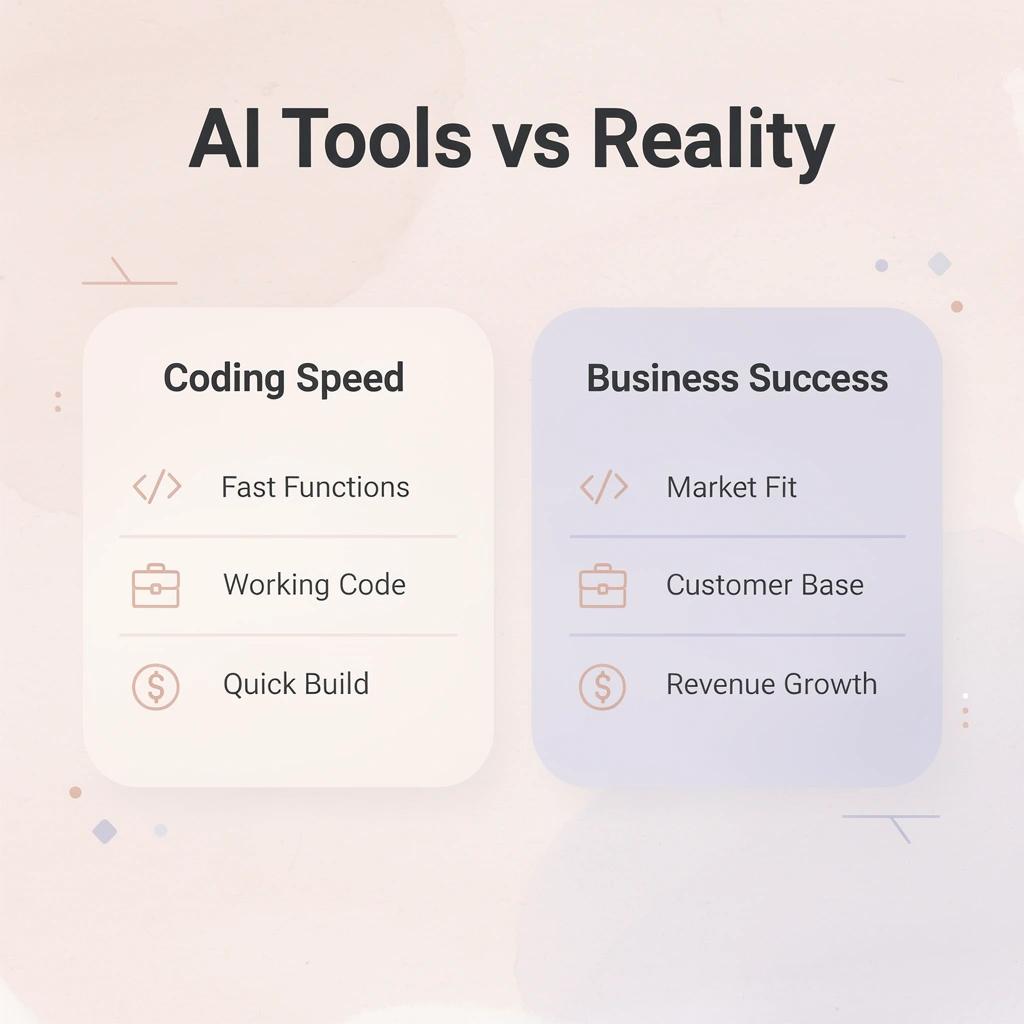
⚠️ Warning: The instant gratification of working code can create false confidence about how quickly you can build a sustainable business.
The Gap Between Code and Business
According to MIT Technology Review, Claude Code can process up to 200,000 tokens in a single context window, enabling it to understand and create complex codebases independently. It cannot, however, decide which features customers will pay for, how to position your product against competitors, or why your first hundred users should care.
AI creates the basic structure. You're responsible for hosting infrastructure, payment processing, authentication flows, conversion copy, and communicating with users about what's broken.
Where Momentum Dies
Teams often report losing steam once the initial build finishes. The project that felt 80% complete after a weekend of AI-assisted coding turns out to be 20% done when measured against what it takes to operate. You have features, but no way to get them to people. You have a working demo but no feedback loop. You have code but no customers.
What does true autonomy look like beyond code generation?
True autonomy isn't writing code while you sleep. It's making decisions about what to build next based on user behavior, adjusting marketing messages when conversion rates drop, and running experiments that improve the product without you having to specify each step. Most AI coding tools stop at code generation. The rest requires you to think, decide, and act.
Related Reading
What Claude Code Actually Is
Claude Code is an AI assistant that runs in your terminal and creates working code from plain language requests. It writes functions, improves logic, and fixes errors without requiring you to switch between tools, working directly in your development environment.

💡 Key Point: Unlike traditional coding assistants that work in isolation, Claude Code integrates seamlessly into your existing workflow.
Most AI coding tools work like autocomplete, guessing your next line or suggesting function names. Claude Code works differently: it reads your whole codebase, understands how files connect, and makes changes across multiple files that align with the context. You're working with a system that grasps structure, not isolated code snippets.
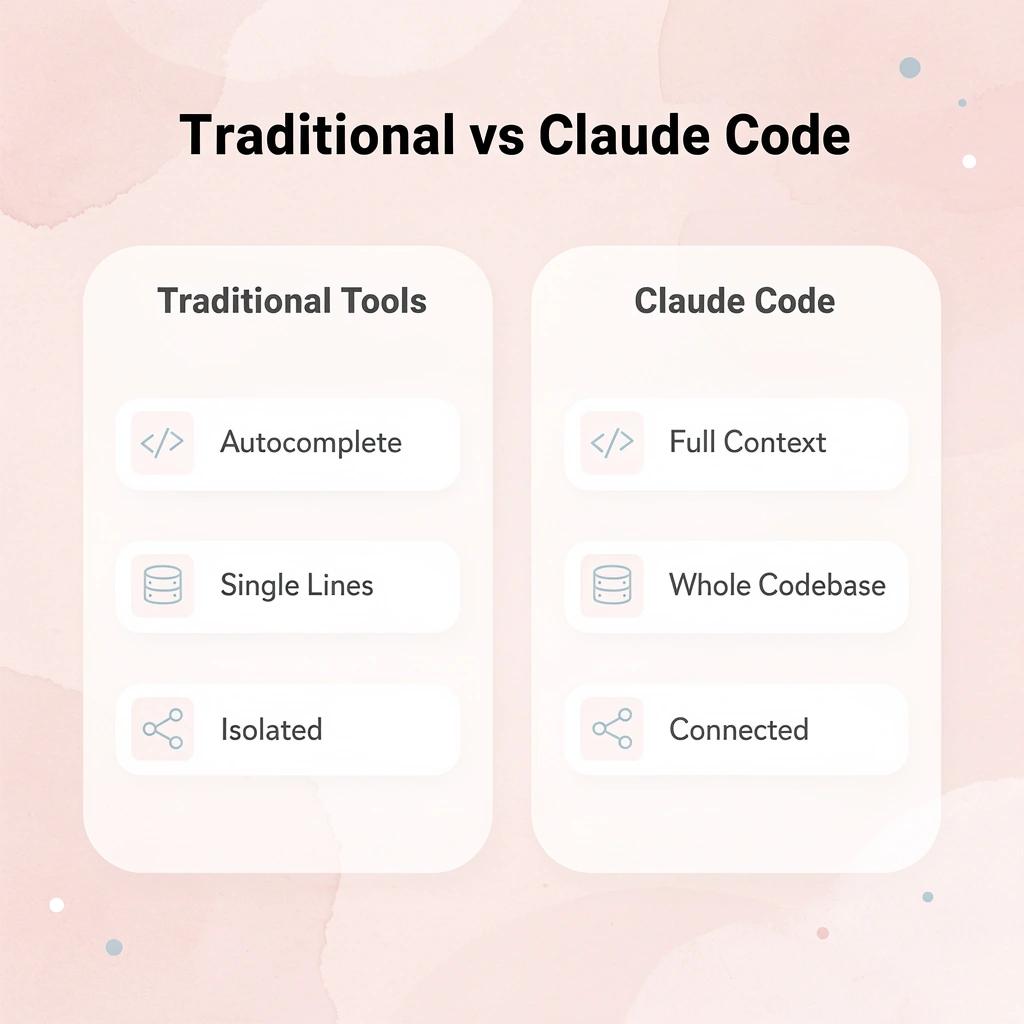
"Claude Code transforms how developers interact with their codebase by understanding context rather than just providing isolated suggestions."
🔑 Takeaway: Claude Code's real power lies in its ability to understand relationships between files and make intelligent modifications across your entire project.

How It Processes Context
According to a Hacker News discussion, Claude Code's revenue has more than doubled since early 2026, showing that developers are rapidly adopting it for capabilities beyond isolated code generation.
Claude Code tracks your entire repository. When refactoring a function, it checks where the function is used, its dependencies, and how changes affect related files. Traditional autocomplete tools generate code in isolation, requiring you to manually check connections and fix problems.
Where Terminal Integration Changes Workflow
Running Claude Code in your terminal removes the copy-paste loop. You type a command, it writes or changes code, and you review changes without leaving your environment.
Paying users feel particularly frustrated when outages occur, as they expect reliable access to a tool integrated into their critical development workflow. When the system goes down mid-task, developers lose momentum at the exact moment they need continuity. Terminal integration embeds deeply into daily work—it's part of the process, not a side tool checked occasionally.
What It Doesn't Do
Claude Code writes code. It doesn't decide what to build, who your users are, or how to position your product. It won't set up hosting infrastructure, configure payment processing, or write marketing copy that converts. The business logic that determines what code matters still comes from you.
How does it compare to autonomous platforms?
Platforms like Polsia do more than create code. Our platform makes autonomous decisions by adapting features based on user behavior and running tests without manual intervention. Claude Code operates only at the coding level, meaning strategic changes and customer feedback still require human decision-making or a more autonomous system.
Why does understanding limitations matter?
Knowing what Claude Code does changes what you expect from it.
Why Founders Are Using Claude Code
How does Claude Code compress development timelines?
Founders use Claude Code to close the gap between deciding to build something and having a working version to test. What used to take weeks of hiring, training new employees, or learning to code now happens in days. This speed enables faster validation of whether an idea is worth pursuing.
According to Incremys, 70% of startups using Claude Code report significant reductions in development time. Claude Code eliminates the barrier that prevents non-technical founders from testing ideas until they secure funding or find a technical co-founder. You can build prototypes, iterate, and experiment without waiting for external availability.
Why does accessibility matter more than raw speed?
Accessibility matters more than raw speed. Founders who couldn't build before can now create functional products and learn from real users. The barrier shifts from "can you code?" to "can you explain what you want to build?" This fundamentally different constraint opens up who gets to participate in building software.
Why should you test assumptions before building?
The real value is testing your assumptions quickly. Ship a working prototype in days instead of spending months building features you think users need, only to discover what they actually want. That feedback loop shortens the distance between idea and reality.
How does cheap validation prevent costly mistakes?
Founders who built apps that made zero revenue often trace failure to one problem: they never validated demand before investing time. They built cool ideas and polished features, but skipped talking to people who would pay. Claude Code doesn't solve validation, but it makes testing ideas cheap enough that you can afford to be wrong multiple times before finding what works.
What happens when you reach the hard parts faster?
Most startups fail not because of bad code, but because they can't reach customers or are solving problems that aren't painful enough for people to pay for. Claude Code speeds up the building phase, so you reach the hard parts faster: finding customers, positioning your product, and building retention loops. The faster you get there, the faster you learn whether the business works.
Where Autonomy Still Requires You
Claude Code can create working functions and improve logic, but it cannot decide what to build next based on user behavior. It won't adjust your marketing message when conversions drop, test new ideas to retain users, or prioritize features based on revenue potential. Those decisions require you to analyze data, speak with users, and determine what matters most.
How do autonomous platforms compare to Claude Code?
Platforms like Polsia can make autonomous decisions by adjusting features based on user behavior and running tests without manual intervention. Claude Code stops at coding; decisions about operations, strategic changes, and customer feedback still require human judgment or a more autonomous system.
What happens when speed creates new constraints?
The speed Claude Code provides changes who can start. Once you're moving, real constraints become visible faster than before.
Speed creates its own set of problems.
The Hidden Limitation of Claude Code
Claude Code excels at understanding your code, writing and fixing features, and accelerating development. This provides a genuine advantage early on, but it doesn't make running a business automatic.
💡 Tip: While Claude Code excels at implementation, the real business challenges begin after your code is written.

Once code exists, different problems take over. You need deployment and infrastructure: hosting, environments, databases, and reliability. You need product direction: what you're building, for whom, and why they'll use it. Claude Code can implement features, but doesn't decide positioning or validate market demand. Then there's distribution. Getting users requires marketing through ads, email, content, or partnerships—often where momentum slows the most.
"Code implementation is just the beginning—the real challenge is turning working software into a sustainable business."

⚠️ Warning: Many developers assume that great code automatically leads to business success, but technical excellence and market success require completely different skill sets.
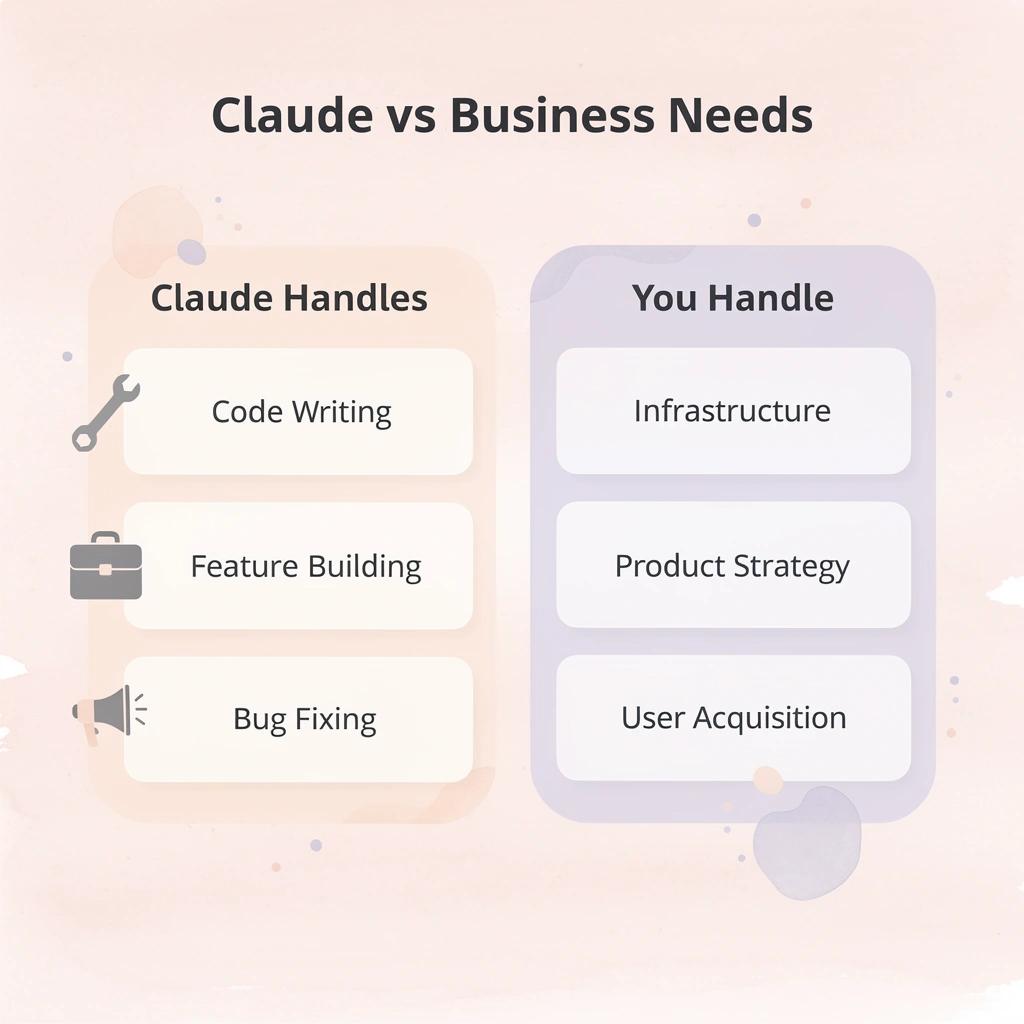
- What Claude Code handles
- Code writing and debugging
- Feature implementation
- Technical problem-solving
- Code optimization
- What you still need
- Infrastructure and deployment
- Product strategy and positioning
- User acquisition and marketing
- Business model validation

The Operational Gap
You use Claude Code to build an app quickly, and the core functionality works. But then you hit hosting, payments, onboarding flows, and user acquisition: the operational challenges that slow progress, not because you cannot build, but because everything around the product becomes the bottleneck.
According to Forbes, Claude Code depletes usage allotments rapidly, creating friction when limits interrupt mid-task. The speed advantage disappears without continuous access during critical build phases.
Where Autonomy Breaks Down
Claude Code saves time during development, but it doesn't eliminate the difficulty of starting and running a business. The assistant writes functions based on your instructions, but it doesn't adapt features based on user behavior, run conversion tests, or prioritize based on financial data.
How do autonomous platforms differ from Claude Code?
Platforms like Polsia go beyond creating code. Our platform makes autonomous decisions, adapting features based on user behavior and running tests without manual intervention. Claude Code operates only at the coding level. Business decisions, strategic changes, and the integration of customer feedback still require human judgment or a more autonomous system.
Why does understanding these limits matter?
Understanding this limitation changes how you use the tool and what you expect from it when the code is finished.
Related Reading
- Softr Alternatives
- Vs Code Alternatives
- Mobile App Ideas
- Ai Tools For Product Managers
- Replit Alternatives
- Appsheet Alternatives
What Actually Makes Claude Code Useful for Founders
Claude Code makes writing, refactoring, and debugging faster, but speed only matters when it connects to deployment, user feedback, and continuous iteration. Without that connection, you're producing features in a vacuum.

🎯 Key Point: The real value isn't in how quickly you can write code—it's in how rapidly you can get that code in front of real users and learn from their behavior.
"Speed without direction is just expensive motion. The fastest code is worthless if it doesn't solve actual user problems." — Lean Startup Methodology
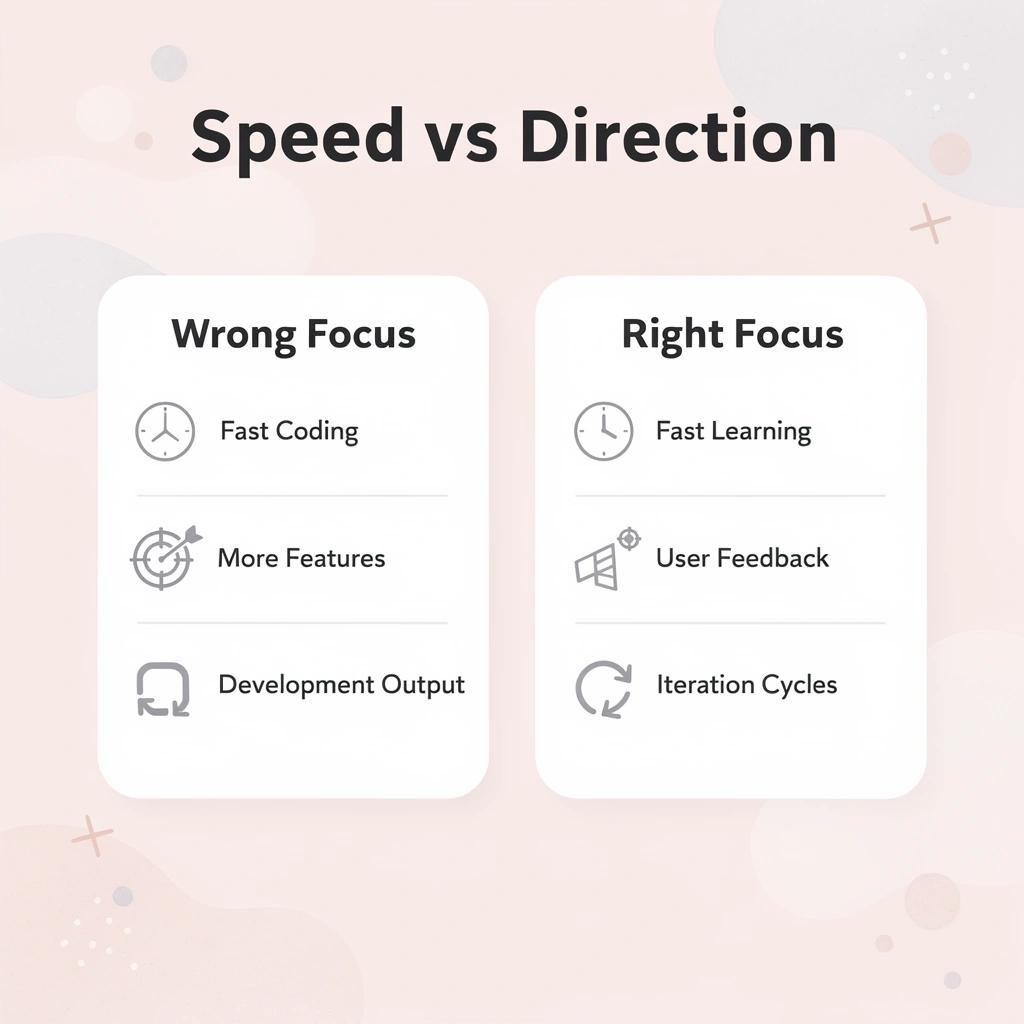
💡 Pro Tip: Use Claude Code's speed as a multiplier for your experimentation velocity, not just your development output. The goal is faster learning cycles, not just faster coding.
How does coding speed become real leverage?
The shift happens when you treat Claude Code as one piece in a workflow designed to learn fast. You need product direction that defines what to build and why it matters to users. You need infrastructure that moves finished code into production quickly. You need feedback loops that show what's broken or missing based on real behavior. When those pieces connect, coding speed becomes a lever rather than mere output.
Shipping Fast Enough to Learn
The time between finishing code and showing it to users determines how quickly you can verify you built the right thing. If deployment takes a week, you lose the speed that Claude Code provides. The faster you ship, the faster you discover what needs to change.
According to Lenny's Newsletter, there are 50 ways non-technical people are using Claude Code to build working products without writing code. That accessibility breaks down the barrier between idea and prototype, but only if you can launch and test it. If launching is slow, the advantage disappears.
Continuous Iteration Based on Real Users
Code that works doesn't guarantee product success. Real value comes from observing how users interact with what you built, identifying problems, and iterating quickly. Claude Code helps with the building; learning comes from how people use it, where they abandon it, and feedback that reveals what to prioritize next.
Platforms like Polsia generate code and make autonomous decisions, adapting features based on user behavior and running tests without manual intervention. Claude Code operates only at the coding level—business decisions, significant changes, and customer feedback still require human judgment or more sophisticated automation.
Where Marketing and Operations Become the Constraint
Once the product exists, acquiring and converting customers becomes the constraint. This requires messaging, channels, conversion flows, and clear communication of value—not code or features.
Manual or unclear systems slow growth. You can build quickly, but if users never arrive or leave confused, speed doesn't translate to growth. Claude Code speeds up feature iteration; the rest of the stack determines whether those iterations matter.
Speed creates its own problems, and most founders don't see them until momentum stalls.
How Polsia Extends Claude Code Into a Full Business Engine
Claude Code writes functions and ships features quickly, but the gap between working code and working business—hosting, payments, user acquisition, operations—is where momentum dies for most founders.
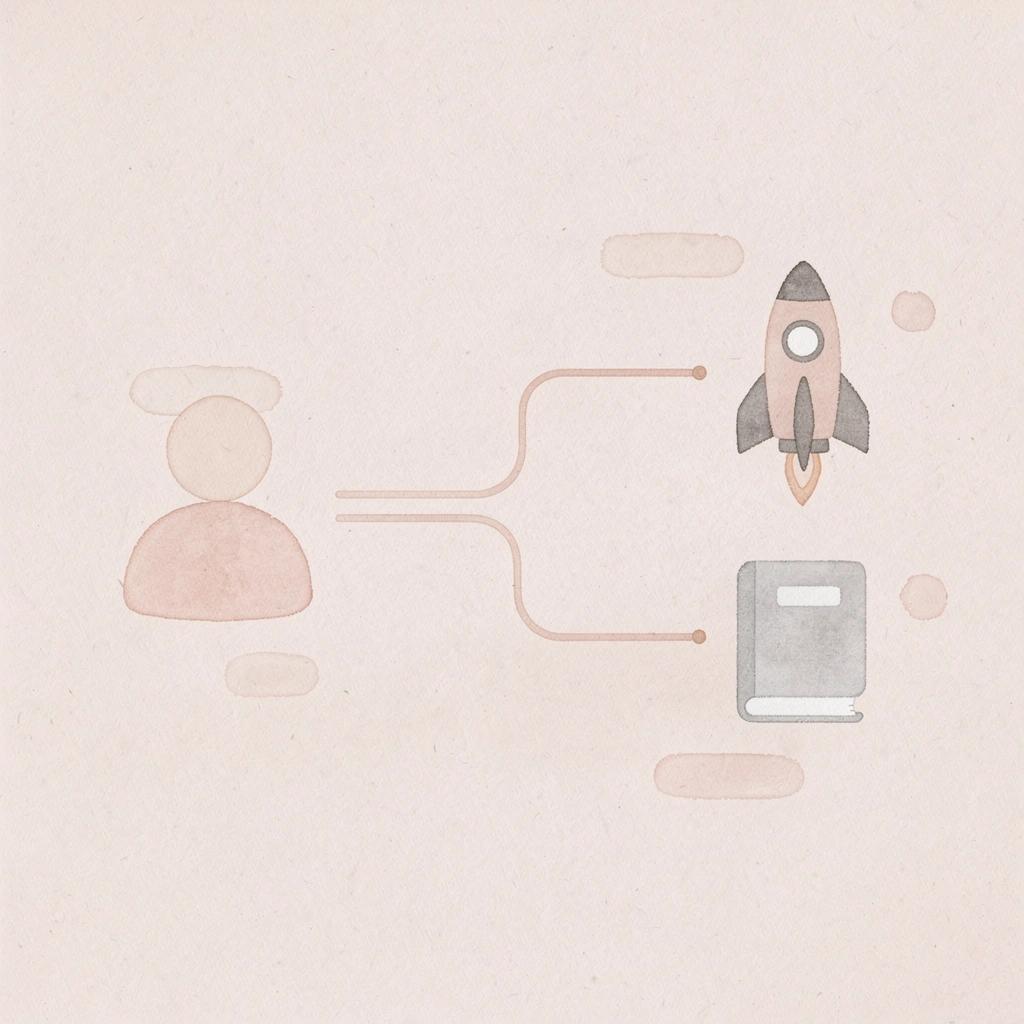
🎯 Key Point: The real challenge isn't writing code—it's bridging the gap between functional software and a profitable business.
"The gap between working code and working business is where momentum dies for most founders." — The reality of 90% of development projects that never reach market.
Polsia closes that gap by treating the entire lifecycle as one system. Instead of using Claude Code in isolation, our platform connects development directly to deployment, marketing, and operations. It operates less like a tool you consult periodically and more like a co-founder that keeps the business running while you focus on decisions requiring your judgment.
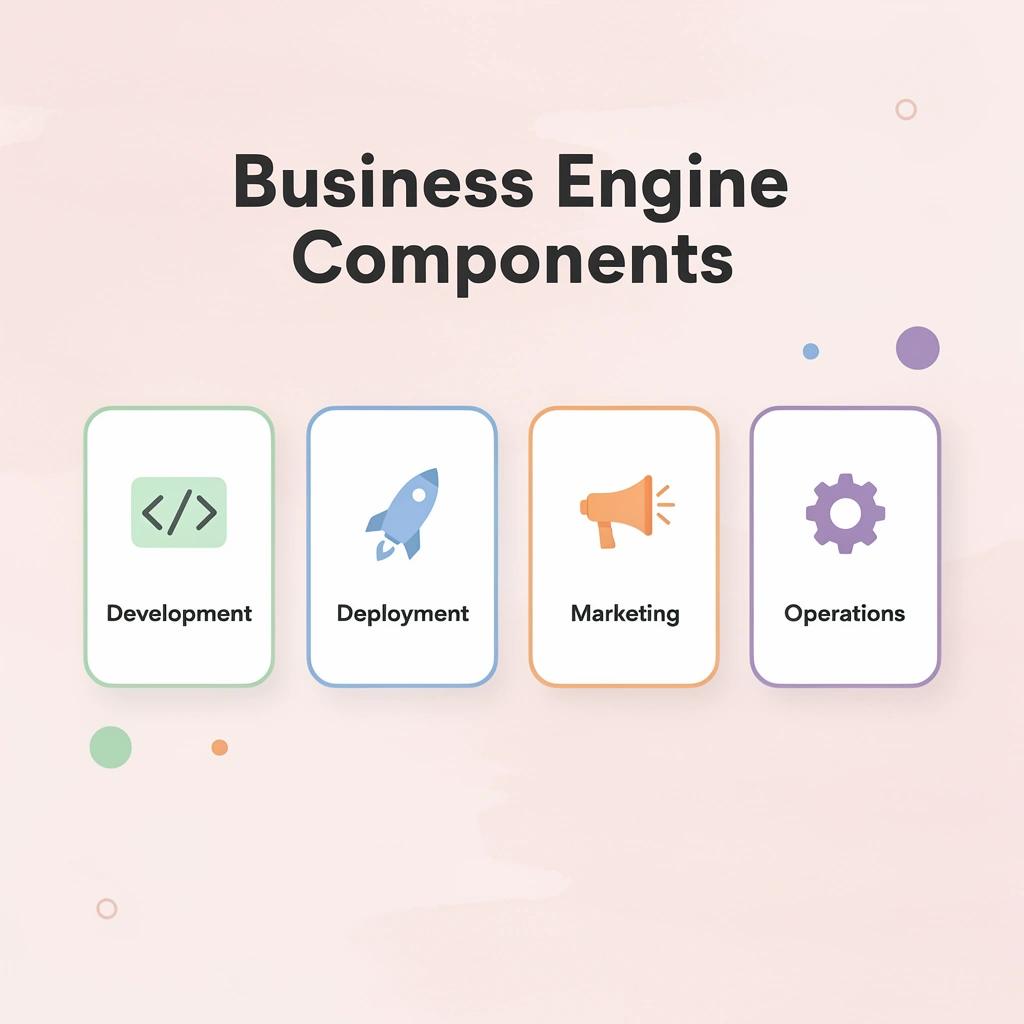
💡 Tip: Think of Polsia as your technical co-founder that handles the operational complexity while you focus on strategic decisions and business growth.
Planning Before Building
Most founders skip planning and jump straight into code, building features without knowing who will use them or how they generate revenue. Polsia forces clarity upfront by mapping out product direction, target users, and positioning before writing code.
This planning layer ensures your product solves a specific problem for specific people, which shapes what gets prioritized and how the product evolves after launch.
Execution Without Managing Engineers
Once the plan is in place, Polsia handles the build using AI-driven development. You don't need to hire engineers, manage timelines, or coordinate tools. The focus shifts from managing people to reviewing progress and making strategic decisions.
Senior engineers struggle to understand entire business models and codebases when joining new teams. Polsia removes that bottleneck by tracking context across the project, understanding how features connect, and generating multi-file changes that reflect structure without requiring manual verification.
Distribution That Runs Continuously
After the product is ready, Polsia distributes across channels, including cold email, Meta ads, and social media. The system adjusts messaging based on conversion performance, runs experiments to improve acquisition, and scales working channels without manual analysis.
Platforms like Polsia extend beyond code generation into independent decision-making, adjusting features based on user behavior and running experiments without intervention. Claude Code stops at the coding layer. Operational decisions, strategic adjustments, and customer feedback loops continue running without requiring your management at every step.
Operations Without Constant Input
Customer communication, inbox management, and infrastructure maintenance run in the background. The business keeps operating when you're offline: progress doesn't stop because you took a day off. The system handles routine decisions, surfaces issues that need your attention, and maintains continuity without constant manual input.
The result is a working business engine that turns code into outcomes, connects building with launching, and keeps the entire process moving without manual management. Most founders don't realize what this independence requires until they attempt to build it themselves.
Start or Grow your Existing Business with Polsia Today
Most founders hit a wall after code works because they need to figure out hosting, payments, user acquisition, and everything else that makes a product function. That gap is where ideas stall—not because building was hard, but because everything around the product becomes harder than expected.
💡 Tip: The real challenge isn't coding—it's everything that comes after your MVP is built.

Polsia starts at $49 a month and connects the entire process from planning through launch. You get a system that shows you exactly how your product will be built, who it serves, how it will reach users, and what happens after launch. The first session maps out your product with enough clarity that you know what you are building and why it matters before any code gets written.
"The first session maps out your product with enough clarity that you know what you are building and why it matters before any code gets written." — Polsia Process
The system runs continuously, handling development, deployment, and marketing without manual intervention. Customer communication, infrastructure maintenance, and acquisition experiments operate in the background, so progress continues when you step away.

🎯 Key Point: Your business keeps growing even when you're not actively managing every detail.
You're working with an autonomous system that treats the entire lifecycle as one connected process. Code gets written, deployed, and tested. Marketing runs across channels and adjusts based on what converts. Operations handle routine decisions and surface what needs your attention.
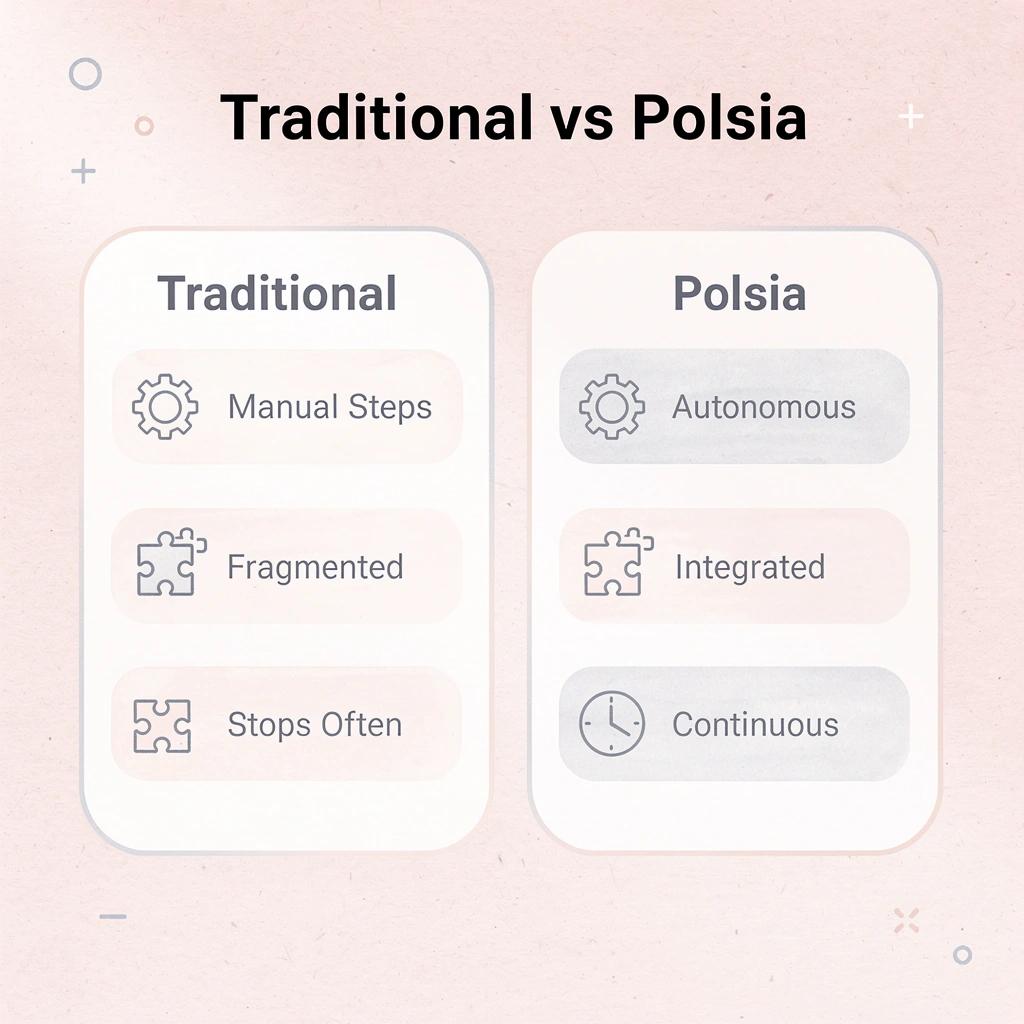
- Traditional approach
- Manual coordination of each step
- Fragmented tools and workflows
- Progress stops without constant oversight
- Hosting, payments, and marketing handled separately
- Polsia system
- Autonomous process management
- Integrated lifecycle system
- Continuous operation
- Everything connected from day one
Start with Polsia today and move from idea to a fully planned, build-ready product in your first session.
Related Reading
- Lovable Ai
- Best Vibe Coding Tools
- Best Mobile App Builder
- Hire an App Developer
- No Code Ai Tools
- How To Create An App
- Ai App Builders