Vibe Coding: What It Is and Why It’s Changing Startups
Startup teams racing against tight deadlines are discovering Vibe Coding, an intuitive development approach that prioritizes developer instincts and flow state over excessive planning. This methodology allows developers to write code faster by trusting their natural problem-solving abilities rather than getting stuck in lengthy preparation phases. Teams embrace this approach because it helps them ship products quickly while maintaining momentum during critical development cycles.
Implementing new development methodologies requires experienced guidance to balance speed with quality standards. Founders need partners who understand both modern coding approaches and the importance of building reliable, scalable foundations. For teams exploring these innovative methods, working with a web app development company ensures they can move quickly without compromising the technical integrity their business depends on.
Summary
- Vibe Coding prioritizes working prototypes over architectural perfection, using AI to generate functional code quickly so founders can test ideas with real users and refine based on feedback. CB Insights reports that 35% to 42% of startups fail due to a lack of market need, not poor code quality. This approach inverts traditional development by shipping fast and improving what matters based on actual usage, moving the bottleneck from "how do I build this correctly?" to "does anyone actually want this?"
- AI-assisted development tools have reached mainstream adoption, with 92% of US developers now using them daily, according to Second Talent. The speed gains are substantial, collapsing tasks that consumed entire afternoons into minutes. This velocity compounds because faster builds enable faster tests, which enable faster learning about whether ideas solve real problems worth pursuing. The capabilities expanded beyond autocomplete into generating complete features from natural language prompts, fundamentally changing who can build products.
- Context degradation creates a hidden failure mode in AI-assisted coding. After about 8 to 10 messages with AI coding tools, developers notice that the system starts suggesting increasingly complex solutions that don't address the core problems. What should take minutes stretches into hours because the AI begins modifying working code to "improve" failed fixes, creating new bugs faster than it resolves old ones. This infinite loop, in which more conversation yields worse results, represents a structural limitation of current prompt-based approaches.
- Speed without understanding introduces production vulnerabilities that most founders miss during development. Stanford research found developers are 41% more likely to introduce bugs when relying heavily on AI-generated code without understanding the underlying logic. Real incidents include applications that exposed API keys and passwords to anyone on the network because AI-generated code skipped authentication entirely on sensitive endpoints. Systems worked perfectly in demos but failed catastrophically under real-world security review.
- Operational fragmentation remains the bottleneck even when code generation becomes instant. Founders still need hosting, deployment pipelines, user authentication, payment processing, marketing infrastructure, and customer support systems, each living in separate tools with distinct learning curves. Jason Wingard's analysis of enterprise organizations with budgets exceeding $3 billion found the challenge isn't generating code quickly but ensuring what gets built aligns with strategic positioning from the start, since planning tools that operate separately from development create coordination gaps.
- Polsia, a web app development company, addresses these gaps by handling planning, full-stack development, distribution, and operations as a single, integrated, autonomous cycle rather than as disconnected, manual steps.
Why “Just Learn to Code First” Is Becoming Obsolete
The common belief that founders must learn to code before launching creates unnecessary delay, pushing the only question that matters—does anyone want this?—months or years into the future. This optimizes for technical capability rather than market validation.

🎯 Key Point: The real risk isn't launching without coding skills—it's spending months learning to code for a product that no one wants.
"Market validation should come first, technical execution second. Too many founders get this backwards and waste 6-12 months building the wrong thing perfectly."

⚠️ Warning: Every day spent coding before validating your idea is a day that could have been spent talking to potential customers and refining your value proposition.
The Real Failure Point Isn't Technical
CB Insights reports that 35% to 42% of startups fail due to a lack of market need, not poor technical execution. The product works fine; it solves a problem nobody has or will pay for. Spending six months learning JavaScript before testing with real users invests effort into what statistically matters least. The market either exists or it doesn't.
Most founders get stuck in preparation: learning frameworks, hiring developers, or waiting until they "know enough" to start. Meanwhile, the idea stays untested. You're building execution expertise while the fundamental question—is this worth executing?—remains unanswered.
When Preparation Becomes Procrastination
The traditional path—learn to code, build your product, then launch—creates dependency at every step. Without coding skills, you need a technical co-founder or contract developers, introducing cost, coordination overhead, and timeline friction before validating anything. With coding skills, you're still months from shipping something users can react to. Either way, you delay the feedback loop that determines whether your startup survives.
Why do experienced developers prioritize speed over perfection?
Mark Shust's reflection after 25 years of coding shows how experienced developers understand that speed to market often matters more than perfect code. The real skill is getting working code in front of users fast enough to learn whether you're solving a real problem. When learning to code becomes the first step, you've lost months of possible learning from what real users actually do.
How do autonomous platforms change the development game?
Systems like Polsia, an independent AI platform, handle the complete development cycle autonomously. Founders can move straight to testing ideas with real users while the system builds, modifies, and improves continuously in the background. The focus shifts from preparation to validation, from learning to code to understanding customer needs.
But knowing this doesn't tell you what replaces the old way or why some developers call it something that sounds almost careless.
Related Reading
What “Vibe Coding” Actually Means
Vibe coding focuses on getting a working prototype in front of users rather than perfecting the architecture. You use AI to create working code quickly, test the idea with real people, then make changes based on feedback. The goal isn't clean code—it's speed to feedback.
💡 Tip: The fastest way to validate your idea is to put something functional in users' hands, even if it's imperfect under the hood.

This approach flips traditional development on its head. Instead of planning architecture, writing tests, and optimizing for scale before launch, you release fast and improve what matters based on how people use it. The bottleneck shifts from "how do I build this the right way?" to "does anyone want this?"
🎯 Key Point: Vibe coding prioritizes user validation over technical perfection, fundamentally changing how you approach product development.
"The biggest risk in software development isn't building something wrong—it's building something nobody wants." — Lean Startup Methodology
The Workflow Changes Completely
Traditional development follows a linear path: design, build, test, deploy. Vibe coding compresses that into quick cycles: describe what you want, AI generates the code, verify it works, then ship. User behavior tells you what to fix, not theoretical edge cases.
Most early products fail because there is no market need for them, not because of technical debt. Spending months perfecting code before validating user demand optimizes for the wrong thing. Vibe coding assumes you'll rebuild parts once you understand user needs, so initial code quality matters less than learning speed.
When Speed Beats Precision
The reframe isn't about abandoning technical skill—it's about changing when that skill gets used. You're not writing production-grade code on day one. You're generating something that works well enough to validate assumptions, then applying engineering effort where user data shows it matters.
Platforms like Polsia take this further by operating autonomously. Instead of manually prompting AI for each feature and checking the output, the system handles the complete build-iterate-refine cycle. You define the product vision, and development happens in the background while you focus on user conversations and strategy.
Why do experienced developers resist this approach?
Some experienced developers find this shift tiring. After years of careful, step-by-step engineering, watching AI generate entire features in minutes feels careless. The code works in demos but fails under production load. Edge cases get missed. Error handling disappears. This tension between build speed and engineering discipline creates friction, especially where correctness matters.
What makes this approach suddenly viable for founders?
But most founders aren't building systems where safety is critical. They're testing whether people want their idea, and vibe coding shortens the time between "I think this could work" and "here's proof it doesn't"—from months to days. That changes what's possible when working alone, without money, trying to prove an idea works before investing years in it.
The question isn't whether vibe coding replaces traditional engineering, but why this approach now appeals to people who would have rejected it two years ago.
Why Vibe Coding Is Growing So Fast
It became easier to get started, and things moved faster. What used to take months to learn coding or hire developers now takes a few hours with AI tools that help you build. This change meant more people could create things and test out their ideas more quickly.
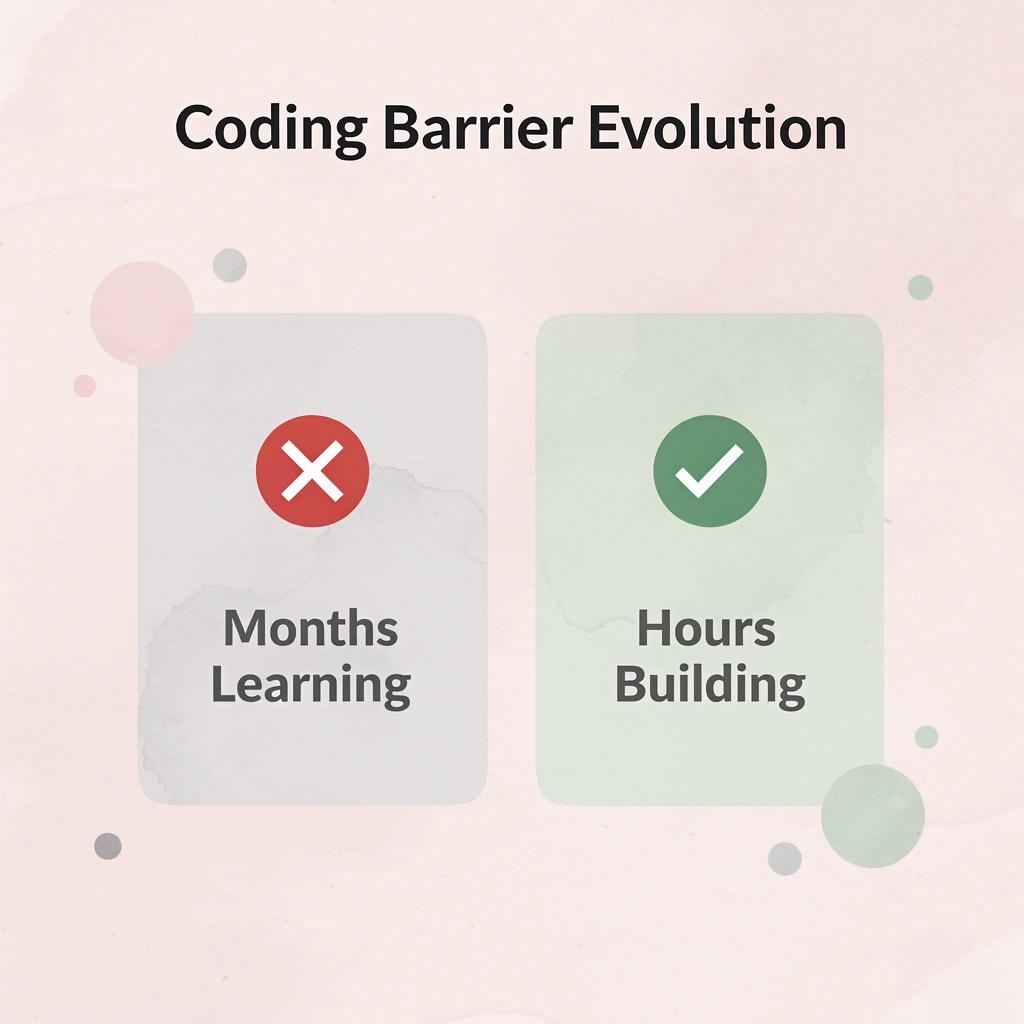
🎯 Key Point: The barrier to entry for coding has dropped from months of learning to hours of building with AI assistance, democratizing software development for everyone.
"What used to take months to learn coding or hire developers now takes just a few hours with AI tools that help you build."
💡 Tip: This dramatic time reduction means you can now prototype ideas, test concepts, and build solutions without the traditional lengthy learning curve or expensive developer costs.
How did speed become the primary unlock?
Second Talent reports that 92% of US developers use AI coding tools daily. Tasks that once took entire afternoons now finish in minutes. AI handles boilerplate code, API integrations, and database schemas while you focus on whether the feature solves the actual problem. The time savings compound: faster builds enable faster tests, faster tests enable faster learning, and faster learning means you stop wasting months on ideas nobody wants.
What happens when AI generates complete features?
AI capabilities expanded beyond autocomplete into generating complete features from natural language prompts. You describe what users need, the system builds the workflow, connects front-end to back-end logic, and handles error states you hadn't considered. This closes the gap between idea and working prototype.
How did Vibe coding remove technical barriers for founders?
The traditional path required learning to code or finding a technical co-founder, both of which added months of delay before testing with real users. Vibe coding removed that dependency. Founders who cannot write a function can now describe user flows in plain language and receive functional software. The constraint shifted from "do I have technical skills?" to "can I clearly explain what this product needs to do?"
Why does speed matter more than code quality early on?
This reframe matters because most early-stage products fail not because of poor code quality, but because they build the wrong thing. When you can generate a working prototype in days instead of months, you can validate demand before investing heavily in perfection. You learn whether anyone cares while competitors are still hiring their first engineer.
How do autonomous platforms take vibe coding further?
Platforms like Polsia take this further by automating the entire development cycle. Instead of manually requesting each feature from AI, the system handles continuous development in the background based on user behavior and performance metrics. Development adapts to how real users interact with the product.
But speed without structure creates its own problems, and that's where most people hit an unexpected wall.
The Hidden Problem With Most “Vibe Coding” Approaches
The bottleneck moved. AI handles code generation, but you still need hosting, deployment pipelines, user authentication, payment processing, marketing infrastructure, and customer support systems. Each lives in a separate tool with its own learning curve, and none communicate without manual integration work.
🎯 Key Point: While AI solves coding, the real challenge becomes orchestrating multiple tools and managing complex integrations across your entire tech stack.
"The bottleneck moved from code generation to system integration - you're no longer stuck writing functions, but you're still stuck connecting 6+ different platforms just to launch."

⚠️ Warning: Most developers underestimate the integration complexity - what feels like a simple app requires authentication APIs, payment gateways, hosting configurations, and deployment automation that can take weeks to properly connect.
What happens when you build the prototype but struggle with infrastructure?
You can create a working prototype in hours using AI. Then you spend days setting up AWS or Vercel for hosting, another day configuring Stripe for payments, more time adding Auth0 or Firebase for user management, and additional hours connecting email automation tools for onboarding sequences. The code exists, but the operational infrastructure around it requires the same manual assembly process it always did.
Why does AI coding assistance degrade over longer sessions?
After tracking dozens of debugging sessions, developers notice a pattern: context degrades after about eight to ten messages with AI coding tools. The system suggests increasingly complex solutions that don't address the core problem. What should take minutes stretches into hours because the AI modifies working code to "improve" failed fixes, creating new bugs faster than it resolves old ones.
When Speed Creates New Vulnerabilities
Building fast without understanding what you're building introduces risk most founders don't see until production. A developer recently shipped an application that exposed API keys and passwords to anyone on the network because AI-generated code skipped authentication on sensitive endpoints entirely. The system worked perfectly in demos but failed catastrophically under real-world security review. Trunk-based development with hundreds of commits in minutes bypasses the deliberate review process that catches these gaps before users are harmed.
How do complete operational platforms solve this problem?
Systems like Polsia solve this problem by handling the complete operational lifecycle, not just code generation. Rather than generating features you must manually deploy, secure, and maintain, the platform manages continuous development cycles that include infrastructure, testing, and iteration based on actual usage patterns.
The real problem isn't that vibe coding generates imperfect code. It's that most approaches stop at generation, leaving you to manually assemble everything else a functioning business requires. Speed only changes where you get stuck, not whether you do—until those pieces connect into a complete system.
Related Reading
- Softr Alternatives
- Vs Code Alternatives
- Ai Tools For Product Managers
- Best LLM for Coding
- Replit Alternatives
- Appsheet Alternatives
- Mobile App Ideas
What Actually Makes Vibe Coding Work
Vibe coding works when the entire cycle compresses—from idea to live product to user feedback to iteration without manual handoffs. The advantage isn't in writing code faster, but in collapsing the time between decisions and learning whether they mattered.
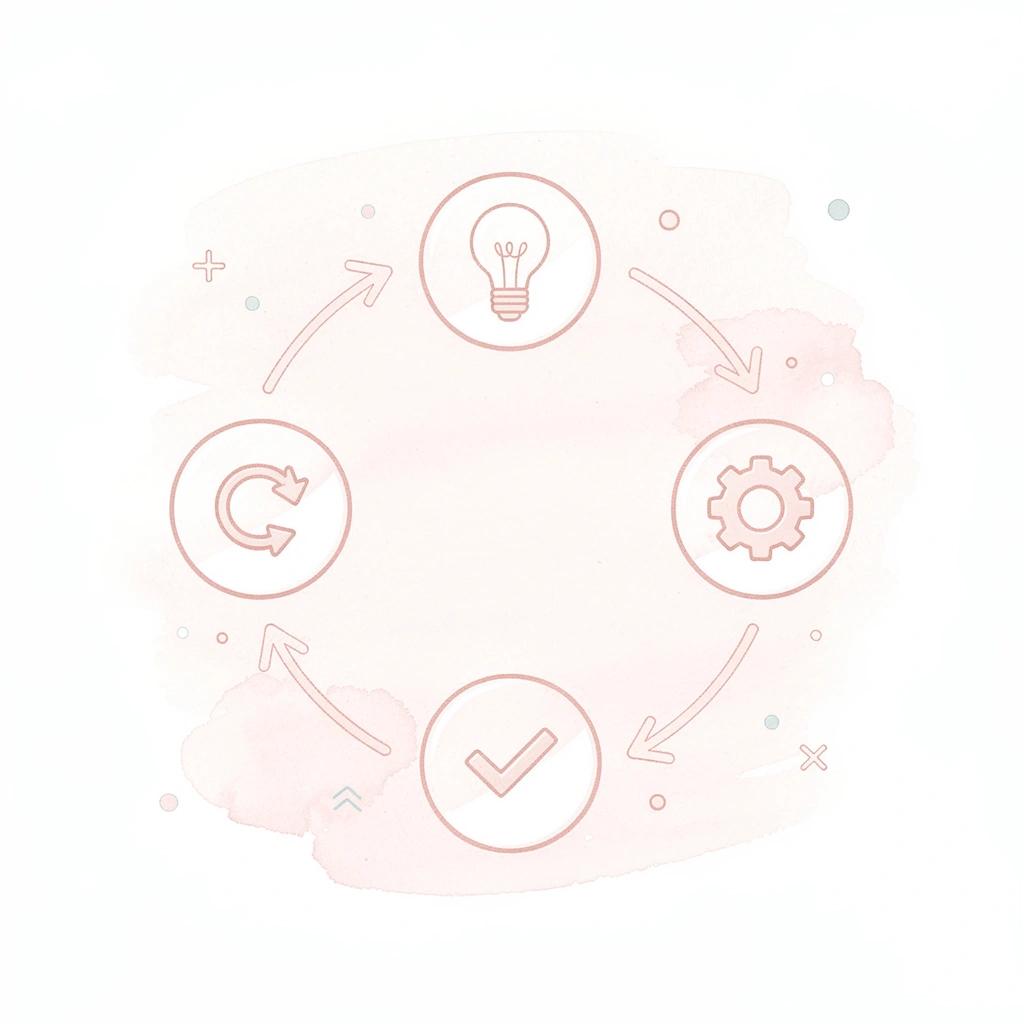
🎯 Key Point: The real power of vibe coding lies in eliminating the traditional development bottlenecks that slow down the feedback loop.
"The advantage isn't in writing code faster, but in collapsing the time between decisions and learning whether they mattered."
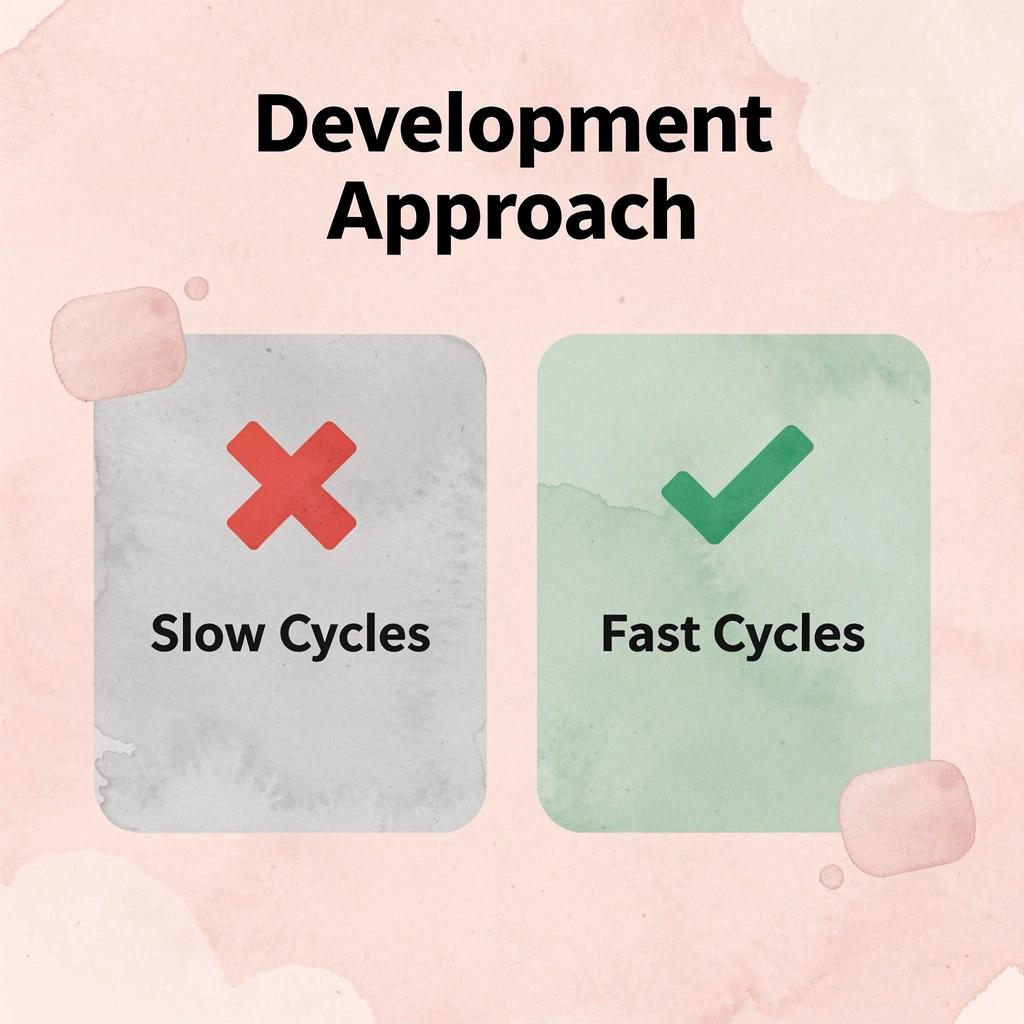
💡 Best Practice: Focus on reducing cycle time rather than just optimizing individual coding speed—the compound effect of faster iterations creates exponentially better learning outcomes.
Getting Real Products Live, Not Just Generated
Value shows up when something that works reaches real users. Code sitting in your editor doesn't teach you anything about what the market wants or how users behave. According to Stanford research on AI-assisted coding, developers are 41% more likely to introduce bugs when they rely heavily on AI-generated code without understanding the underlying logic. You need deployment, infrastructure, and user-facing systems that work without days of manual setup once the code is deployed.
Removing Technical Friction From Launch
If pushing code live still requires AWS configuration, DNS setup, SSL certificates, database migrations, and environment variable management, you've only solved half the problem. Speed in development becomes irrelevant when deployment introduces the same delays. The process must stay fast from start to finish, from describing what you want to having users interact with it.
Learning From Real Behavior, Not Assumptions
Building quickly only matters if you can test quickly. Y Combinator's startup guidance emphasizes that early-stage companies succeed by shipping fast and refining based on user feedback. That feedback loop drives product-market fit. You learn what people need by watching how they use what you built, then adjust based on behavior rather than assumptions. When that cycle takes weeks instead of days, competitors who iterate faster will find the right solution first.
Handling Operations Without Manual Overhead
Launching is the beginning, not the end. You still need user management, customer support, marketing automation, payment processing, and ongoing maintenance.
How do autonomous systems eliminate operational bottlenecks?
If those tasks require manual work for every new user or feature change, they become the new constraint. Systems like Polsia handle this by operating autonomously throughout the entire lifecycle, managing continuous cycles of building, launching, and improving based on usage data, without requiring constant human direction.
What happens when speed compounds without manual assembly?
The workflow changes from build, stall, figure out next steps to build, launch, learn, improve, repeat. Speed increases when nothing requires you to stop and manually assemble the next piece.
But understanding what makes it work doesn't prepare you for what happens when you try to grow beyond the first working prototype.
How Polsia Turns Vibe Coding Into a Real Business System
Most vibe coding tools stop at code generation. They turn your description into working features, but you still need hosting, user acquisition, payment processing, customer support, and maintenance. The product exists, but the business doesn't. This gap between functional code and revenue-generating operation is where most founders get stuck—not from lack of technical ability, but because operational infrastructure requires manual assembly across disconnected platforms.
🎯 Key Point: The real challenge isn't building the product—it's bridging the gap between working code and a revenue-generating business.
"The gap between functional code and revenue-generating operation is where most founders get stuck—not from lack of technical ability, but because operational infrastructure requires manual assembly." — Polsia Business Framework
⚠️ Warning: Don't assume functional code automatically equals a viable business—the operational layer is where most vibe coding projects fail to scale.
What causes the disconnect between planning and development?
The failure point usually appears before any code gets written. You build features users don't need because you skip mapping product decisions to actual market demand. According to Jason Wingard's analysis of enterprise organizations with budgets exceeding $3 billion, the challenge isn't generating code quickly but ensuring what gets built aligns with strategic positioning from the start.
Planning tools that operate separately from development create a coordination gap: you define strategy in one place, build in another, then discover misalignment only after launch, when users ignore features that took weeks to ship.
How does integrated planning solve this problem?
Polsia treats planning as the first step of a connected cycle. Rather than writing a strategy in fixed documents for developers to read later, the system uses your business model and target user situation to guide what gets built.
Product decisions connect directly to market positioning because the system handling development understands the customer problem you're solving.
How does autonomous development work differently from traditional coding?
Traditional vibe coding generates features on demand: you describe what you need, review the output, and implement it manually. Polsia works differently by handling full-stack development autonomously based on your product vision and usage data. Our platform continues to build while you're in meetings or asleep, improving functionality, refining user flows, and enhancing performance based on real user interactions, without waiting for your next prompt.
Why does continuous development speed matter for product growth?
This matters because speed builds up when development cycles don't stop for coordination. Features get released, user behavior creates data, that data informs the next update, and improvements deploy automatically. You shift from controlling each change to setting meaningful goals and letting continuous development work toward them.
How does integrated distribution change the launch process?
Making a product doesn't automatically bring in customers. Most founders build something that works, then spend months figuring out how to reach users. Marketing becomes a separate problem, requiring different tools, distinct skills, and manual campaign management, which diverts attention from product improvement.
Polsia runs distribution campaigns across email, paid ads, and social channels as part of the same operational cycle that handles development. Your product launches with acquisition already running, not as an afterthought.
What happens when you build and market simultaneously?
The workflow shifts from building first, then marketing, to building and marketing simultaneously as one continuous process. User acquisition generates feedback before feature refinement is complete, enabling product development to respond to real demand signals rather than assumptions.
You learn what messaging resonates and which user segments convert while the system improves the product based on that behavioral data.
What happens when operations run without constant oversight?
After you launch, you need to handle customer responses, inbox management, infrastructure monitoring, and support workflows. Without automation, these tasks become a constraint that prevents you from focusing on strategy or product decisions.
Systems like Polsia manage these operational layers independently, processing inquiries, maintaining infrastructure, and handling routine support without requiring your involvement in execution details.
How does removing operational bottlenecks change your focus?
Your time either goes toward important decisions like market positioning and feature prioritization, or it gets consumed by operational tasks that don't require your specific judgment. When operations run smoothly in the background, you stop being the bottleneck for everything that keeps the business functioning.
But knowing a system can handle the complete cycle doesn't show what changes when you use it instead of managing each piece separately.
Related Reading
- Best Mobile App Builder
- No Code Ai Tools
- Best Vibe Coding Tools
- Ai App Builders
- Hire an App Developer
- How To Create An App
- Lovable Ai
Start or Grow your Existing Business with Polsia Today
The problem isn't technical anymore. It's whether you're willing to start before you feel completely ready. Vibe coding works when the system handles execution while you focus on the decisions only you can make: which market to enter, what problem matters most, how to position against alternatives.
💡 Tip: Most founders wait for the perfect moment—enough runway, the right team, sufficient confidence. That delay costs market position, customer relationships, and the compounding advantage of starting today instead of six months from now.

Most founders wait for the perfect moment: enough runway, the right team, sufficient confidence. That delay costs market position, customer relationships, and the compounding advantage of starting today instead of six months from now. Your competitors are testing, learning, and iterating while you prepare.
"Your competitors are testing, learning, and iterating while you're still preparing. That delay costs market position, customer relationships, and the compounding advantage of starting today."
Start with Polsia for $49 per month and move from idea to live product without writing code or coordinating developers. Your first session takes you from concept to a planned, build-ready system with development mapping, implementation, launch strategy, and operational workflows. Our platform handles the complete cycle: building features, managing infrastructure, running distribution campaigns, processing customer interactions, and refining based on usage data.
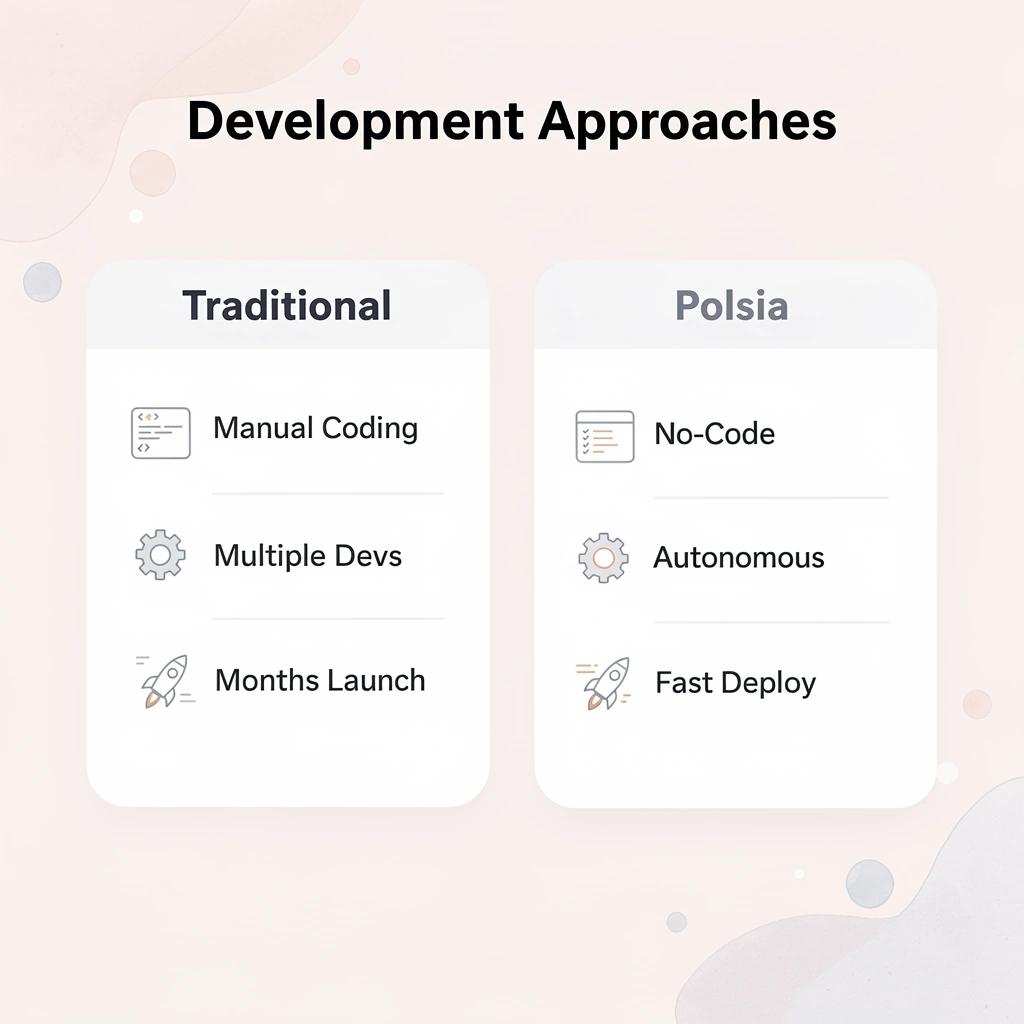
- Traditional development
- Manual coding required
- Coordination across multiple developers
- Months to launch
- Manual handoffs between stages
- Assumption-based improvements
- Polsia platform
- No-code development
- Autonomous system workflow
- First session to build-readiness
- Fully integrated process
- Data-driven optimization
Nothing waits for manual handoffs. You define what the product needs to accomplish, and continuous development cycles execute toward that outcome without requiring you to prompt each step. Features ship, users interact, behavior generates insights, and improvements are deployed based on real patterns instead of assumptions. You're directing vision while the system optimizes everything beneath it.
🎯 Key Point: This matters most when working alone or with a small team. Your time either goes toward high-leverage decisions that shape market position, or it gets consumed assembling operational pieces that don't require your specific judgment.
This matters most when working alone or with a small team. Your time either goes toward high-leverage decisions that shape market position, or it gets consumed assembling operational pieces that don't require your specific judgment. When planning, development, distribution, and operations run as one integrated process, you stop being the constraint.
The real question isn't whether autonomous systems can handle this, but how much longer you're willing to wait before testing whether your idea matters to your market.