10 Best No-Code SaaS Builder Apps for Launching Faster

Launching a SaaS product no longer requires a large engineering team or a six-figure development budget. The best no-code SaaS builder platforms have made it possible for founders to move from idea to working product in weeks, using visual tools and drag-and-drop interfaces that replace traditional coding entirely. These platforms vary widely in capability, pricing, and fit depending on the type of product being built.
Choosing the right platform is only part of the equation. Founders who want structured guidance, faster decision-making, and a clear path from prototype to scalable product often benefit from working with an experienced web app development company.
Summary
- No-code platforms have dramatically reduced the cost and time required to build a SaaS product. Traditional development for even a basic product with authentication, a database, payment processing, and a user dashboard can cost between $20,000 and $80,000 before a single paying customer exists. No-code tools significantly compress timelines and budgets, with some research suggesting development time can be reduced by up to 90% compared to traditional coding approaches.
- The global SaaS market is projected to reach $1 trillion by 2030, and no-code platforms are a major reason that opportunity is now accessible to a wider range of builders. The no-code platform market itself is projected to reach $187 billion by 2030, with the fastest-growing platforms treating AI as core infrastructure rather than an optional feature. Solo founders are increasingly competing at a level that previously required full development teams.
- Platform selection is a business decision, not just a features comparison. The three capabilities that separate a real SaaS platform from a prototyping tool are user authentication, database management, and payment integration. Builders that lack native support for all three force founders into workarounds that slow every future decision and tend to break at the worst possible time, usually when growth is picking up.
- Scalability is a factor that most founders evaluate too late. The platform that supports an MVP and the platform that handles 5,000 active users are not always the same product. Founders who skip this evaluation often face expensive migrations just as momentum is building, making it worth understanding a platform's ceiling before committing to it, rather than after.
- 73% of no-code SaaS projects fail, and the same research estimates these failures cost founders an average of $50,000 and 8 months of lost time. The most common causes are not bad tools or bad ideas but predictable, repeatable mistakes, including building before validating, treating launch as the finish line, and ignoring customer acquisition until it becomes urgent. Founders who treat marketing as a parallel workstream and start building their audience at least 60 days before launch consistently gain traction faster than those who bolt it on after.
- A web app development company like Polsia addresses the gap between having the right tools and actually running a functioning business by handling product planning, marketing execution, and customer operations as an integrated system rather than leaving founders to stitch together separate platforms for each function.
Why So Many SaaS Ideas Never Get Built
Every year, thousands of software ideas die in notebooks, Notion docs, and half-finished Figma files — not because they were bad, but because the gap between "I have an idea" and "I have a product" felt too wide to cross without a technical co-founder, a development budget, or months of runway most first-time founders lack.
"Thousands of software ideas die every year — not because they were bad, but because the gap between idea and product felt too wide to cross alone." — A reality facing first-time founders everywhere
💡 Tip: The barrier to building a SaaS product is the perceived cost, complexity, and technical dependency standing between you and your first line of code, not the idea itself.
⚠️ Warning: Waiting for a technical co-founder or full development budget before moving forward is one of the most common and costly mistakes first-time founders make.

What does it actually cost to build a SaaS product from scratch?
The cost barrier is significant. Hiring a developer to build a simple SaaS product with authentication, database, payment processing, and a user dashboard costs $20,000 to $80,000 before a single paying customer exists. According to the MindK Blog, 90% of startups fail, with many SaaS ideas never advancing past the concept stage. Most founders must commit six figures to validate an untested idea.
The failure point is usually the search for technical talent. Non-technical founders spend months chasing a developer co-founder who is already employed, building their own thing, or uninterested in splitting equity on an unproven concept. Meanwhile, the idea stalls, the market moves, and motivation fades.
Why do workarounds like freelancing and learning to code fall short?
Most founders try to learn to code, hire freelancers one at a time, or build a pitch deck instead of a product. Each path carries a hidden cost: time. Months pass before real users try the product, and without real feedback, the product being built may not be what anyone wants. Autonomous AI systems like Polsia are changing this equation, enabling solo founders to plan, build, and operate a product without first assembling a team.
Is the assumption that building software requires a team becoming outdated?
The idea that you need a team to build software is changing. The global SaaS market is projected to reach $1 trillion by 2030, according to Zylo. No-code and AI-assisted tools now enable one person to accomplish what previously required a team of five.
The real change isn't about the tools—it's about who you are as a founder. The question you need to answer is no longer "can I afford to build this?" but "am I ready to run a company tonight?" That shift moves the conversation away from resources and toward decision-making.
But knowing a tool exists and knowing which one to trust with your actual business are two different things.
Related Reading
- How To Start A Software Company
- How to Automate My Business
- How To Start A Saas Business
- How To Start An Ai Company
- How To Create A Digital Product
- How To Turn An Idea Into A Product
- How To Find A Cofounder
- Startup Product Development
- How To Validate A Startup Idea
What to Look for in the Best No-Code SaaS Builder
Choosing the right no-code SaaS builder determines how fast you can move, how far you can grow, and whether the platform grows with you or holds you back.
"The platform you choose today becomes the foundation — or the ceiling — of everything you build tomorrow."
🎯 Key Point: Not all no-code SaaS builders are created equal — the wrong choice can cap your growth potential before you even launch.
💡 Tip: Before committing to any no-code platform, evaluate it against your long-term scaling needs, not just your immediate build requirements.
Speed of development
Why It Matters: Determines how fast you reach your first paying customer
Scalability
Why It Matters: Ensures the platform grows with you rather than limiting your ceiling
Platform flexibility
Why It Matters: Prevents costly migrations down the road
Ease of Use and Speed of Development
A clean drag-and-drop interface, reusable components, and pre-built templates reduce development time by up to 90% compared to traditional coding, according to the ISHIR Blog's 2025 analysis of no-code SaaS development. This advantage depends on selecting a platform suited to your skill level.
Database, Authentication, and Payments
First-time SaaS founders often choose a builder based on the front-end appearance, only to hit a wall when they need user authentication, data storage, or payments. These three capabilities form the structural foundation of any subscription software product. A platform without native support for all three forces workarounds that compound over time, slowing future build decisions. If the builder can't handle user roles, recurring billing, and relational data out of the box, it's a prototyping tool, not a business platform.
Why do separate tools for auth, payments, and data create problems at scale?
Most solo founders use separate tools for user login, payments, and data storage. This works initially, but as your business grows, these tools often don't integrate seamlessly. A web app development company like Polsia can help by connecting everything into a unified system. We assist you in planning, integrating, and running the systems that no single no-code tool can handle completely.
Can your platform scale as your SaaS grows?
The platform that launches your MVP and the platform that supports 5,000 active users are not always the same product. Scalability isn't about server capacity alone; it's about whether the platform's logic, workflow automation, and data architecture can handle complexity as your product evolves. Founders who skip this evaluation often face costly migrations as momentum builds. Choose a builder that can explain exactly where its limits are, and ensure that the limit exceeds your ambition.
Are AI capabilities now a baseline requirement for no-code builders?
AI capabilities are no longer a differentiator; they're a baseline expectation. The no-code builders worth serious consideration in 2025 embed AI tools that generate application logic, automate repetitive workflows, and surface user behavior insights without requiring a data analyst. ISHIR's 2025 research on no-code development projects the no-code platform market will reach $187 billion by 2030, and the platforms capturing that growth treat AI as infrastructure, not a feature toggle. For a solo founder, built-in AI enables competition at a level that previously required a team.
10 Best No-Code SaaS Builder Apps
Ten platforms stand out for building SaaS products without a development team, covering autonomous AI systems, visual frontend builders, and backend infrastructure tools.
"The no-code market is reshaping how founders launch SaaS products — empowering non-technical builders to ship faster, cheaper, and smarter than ever before."
💡 Tip: Whether you need AI-powered automation, a drag-and-drop UI builder, or a scalable backend, there's a purpose-built no-code platform on this list for you.
🎯 Key Point: These 10 tools span every layer of the SaaS stack — from frontend design and user authentication to database management and payment infrastructure — so you can build a complete product without writing a single line of code.
Autonomous AI Systems
- What It Covers: Logic, workflows, automation
- Best For: Non-technical founders
Visual Frontend Builders
- What It Covers: UI, design, user experience
- Best For: Designers & marketers
Backend Infrastructure
- What It Covers: Databases, APIs, auth, payments
- Best For: Power users & developers

1. Polsia
Polsia's critical difference is what it replaces. Most no-code tools help you build faster. Polsia helps you run a company. Our platform integrates product planning, MVP development, marketing, and customer operations into one system, enabling a solo founder to operate at a scale that previously required five or six specialized hires.
How does Polsia replace a fragmented tool stack?
Most founders assemble a stack: one tool for building, another for marketing, a third for support, a spreadsheet for operations. This works until complexity sets in, then the stack becomes the job itself. Polsia replaces this fragmented approach by serving as an autonomous system across all functions, keeping founders focused on decisions rather than on coordination. Starting at $49 per month, it's priced for founders balancing a day job while building their first product.
2. Bubble
Bubble is the platform serious builders move to when they've outgrown simpler tools. It supports complex database structures, conditional workflows, user authentication, API connections, and multi-sided marketplace logic in a single visual environment. The tradeoff: Bubble has a steep learning curve, and the gap between "I built something" and "I built something production-ready" can take weeks to close.
Is Bubble worth the learning curve for serious founders?
Intermediate builders often spend months in Bubble before realizing the tool demands a level of systems thinking closer to development than design. For founders willing to invest that time, the payoff is a scalable web application with genuine depth. For everyone else, the frustration proves costly.
3. Softr
Softr excels at quickly converting organized data into working software products. Its strong integration with Airtable enables founders to launch client portals, membership sites, or internal tools in days instead of weeks. The template library addresses real-world scenarios like customer dashboards and team wikis.
The limitation is how far it can grow. Softr is built for simplicity, which works until your product needs exceed its capabilities. For early testing and lightweight SaaS products, it's one of the most efficient ways to move from idea to live application.
4. Glide
Glide's main idea is that most founders already have their data in a Google Sheet or Excel file. The real problem is turning that data into something usable. Glide solves this by letting you connect a spreadsheet and build a working web or mobile application through a visual interface with minimal setup.
Why do experts recommend Glide for rapid idea validation?
The Zapier Blog regularly lists Glide as a top choice for testing ideas among dozens of no-code app builders. For founders who need to validate a product idea before building the full version, Glide removes technical barriers between concept and first user.
5. FlutterFlow
FlutterFlow is built for mobile-first founders. It generates production-ready Flutter code as you design, so you're not locked into a proprietary environment. You can export the codebase, hand it to a developer, or deploy directly to iOS and Android without rebuilding.
Code ownership becomes critical at scale. FlutterFlow supports Firebase integrations, custom API connections, and advanced UI patterns that most no-code mobile tools cannot replicate, making it ideal for subscription-based mobile SaaS products.
6. WeWeb
WeWeb fills a gap in the no-code ecosystem: serious frontend development without requiring a frontend developer. It connects to external databases and backend services, giving founders precise control over application structure, component behavior, and design logic, resulting in a polished user experience without the visual fingerprints most no-code platforms leave behind.
The WeWeb Blog's comparison of 10 platforms, ranked by scalability, pricing, and code ownership, highlights WeWeb's strength for SaaS products that need to scale beyond MVP without a full rebuild. If your product must eventually feel like software rather than a template, WeWeb justifies the learning investment.
7. Adalo
Adalo simplifies mobile app development through drag-and-drop components and built-in user sign-in, database management, and direct publishing to app stores—all without setup beyond what appears on screen. For founders testing a mobile app idea with real users, Adalo can reduce development time from months to weeks.
The downside emerges as your product scales. Adalo works well for simple SaaS features but has limits with complex workflows or high user volumes. It's ideal for starting, but not a long-term solution.
8. Backendless
Many no-code SaaS products fail at the backend layer: authentication breaks under load, database queries slow down, and real-time features become unreliable. Backendless addresses this directly with cloud functions, scalable databases, API management, and real-time data capabilities without requiring founders to manage servers or write backend infrastructure code.
For data-intensive SaaS, separating backend concerns into a dedicated platform like Backendless creates a more durable architecture than forcing a frontend-first tool to handle everything. It pairs well with visual builders focused on UI while offloading operational logic to a purpose-built backend system.
9. BuildShip
BuildShip combines workflow automation and AI-powered logic through visual development, focusing on the operational layer: automating processes, connecting systems, and embedding AI functionality without backend code. For founders building SaaS products that need intelligent automation—such as lead scoring, personalized emails, or scheduled data processing—BuildShip handles this layer cleanly.
The platform is particularly relevant for SaaS products where competitive advantage comes from background automation rather than interface design.
10. Toddle
Toddle approaches visual development with modern, scalable architecture. Reusable components, custom logic layers, API integrations, and responsive design function within a drag-and-drop environment without sacrificing structural integrity. The platform supports products through multiple growth stages without requiring a rebuild.
Is Toddle the right path for founders thinking past the MVP?
For founders thinking past the MVP, Toddle provides the architectural foundation that beginner-focused tools deliberately avoid. It's not the fastest way to prototype, but it's one of the more honest ways to build a product that can grow.
How much does the platform choice on day one matter?
Choosing between platforms is a bet on how you plan to operate. The decision on day one shapes everything that follows.
Even the right tool fails if you walk into the build with the wrong assumptions.
Related Reading
- Replit Alternatives
- Bubble.io Alternatives
- Ai Prototyping
- Lovable Ai Alternatives
- Bolt Alternatives
- Saas Mvp Development
- Easiest Way To Build A Web App
- Softr Alternatives
- Best App Creators
- Mvp Tools
- Best Ai Tools For Startups
- No Code Ai Tools
Common Mistakes When Building a No-Code SaaS
Wrong assumptions don't announce themselves. They surface six months later as abandoned products, burned savings, and the realization that the build was never the problem.
"The most dangerous mistake isn't a bad idea: it's a wrong assumption that feels like a good one."
⚠️ Warning: By the time wrong assumptions surface, founders have already spent their budget, time, and momentum with nothing to show for it.

According to the Unbuilt Lab Blog, 73% of no-code SaaS projects fail, costing founders $50,000+ and 8 months of lost time. These aren't failures of tools or ideas, but predictable errors repeated across thousands of projects by smart people who didn't know what to watch for.
Failure Factor
- Failure Rate: 73% of no-code SaaS projects
- Average Financial Loss: $50,000+ per failed project
- Average Time Lost: 8 months of wasted effort
- Root Cause: Predictable, repeatable errors
💡 Tip: These aren't random failures — they're repeatable mistakes with known patterns. Knowing what to watch for is your single biggest advantage.
🔑 Takeaway: A 73% failure rate means the odds are stacked against you by default — but founders who identify critical errors early dramatically improve their chances of building a profitable no-code SaaS.
Building before validating
The failure point is usually invisible early on. No-code platforms make building fast, which creates a subtle trap: speed feels like progress. Founders add dashboards, reporting features, and notification systems before a single real user confirms the core problem is worth solving. The product grows in complexity while the market signal stays at zero. Instead, identify the one workflow your user can't do without, build only that, and put it in front of paying prospects before writing another line of code.
What actually happens in the first week after launch?
Most founders underestimate what happens after launch. Customer questions arrive before documentation exists. Billing edge cases surface that the payment setup never anticipated. Onboarding breaks on mobile. These aren't exceptional situations; they're the ordinary first week of any SaaS launch. Founders who survive plan for operations before launch, not after. Building a support workflow, onboarding sequence, and feedback loop isn't post-launch busywork; it's the product itself—the part users experience after signup.
Does handling launch-day complexity actually require hiring more people?
When companies face pressure to get more done, they often hire new people: a support person, a marketer, an ops manager. But hiring costs money, requires coordination between team members, and takes time. A web app development company like Polsia works differently. Our marketing, customer operations, and product planning tools run autonomously, allowing a solo founder to handle busy launch days without paying for additional staff. The real question isn't "who will do this?" but "does a person need to do this?"
Ignoring acquisition until it's urgent
A product without a distribution plan is a solution nobody finds. Founders typically spend four months building and four days on go-to-market. Content, outreach, search visibility, and community building compound over time and don't yield results the week you launch. The fastest-growing founders start building their audience and testing acquisition channels at least 60 days before launch, treating marketing as a parallel workstream rather than a post-launch task.
The gap between a product that exists and a business that grows is wider than most early-stage founders expect.
Why Building the Product Is Only Half the Battle
Modern no-code and AI-powered development tools have made it easier than ever to launch software products. Founders can build MVPs in weeks instead of months and validate ideas with much less upfront investment than was possible just a few years ago. However, building the product is rarely what determines long-term success.
"Building the product is rarely what determines long-term success — the real battle begins after launch." — Core Insight
🎯 Key Point: The barrier to building has never been lower — but low barriers to entry mean everyone can ship a product, making differentiation and distribution more critical than ever.
⚠️ Warning: Don't mistake shipping an MVP for winning the market. Product development is only half the battle — the harder half is everything that comes after.
What's Easier Now
- Building an MVP
- Launching quickly
- Reducing upfront costs
- Validating ideas fast
What Still Requires Strategy
- Finding product-market fit
- Acquiring and retaining users
- Driving long-term growth
- Outlasting the competition

Why does a working product not guarantee a viable business?
A working product does not guarantee a viable business. In its 2026 analysis of more than 400 startup post-mortems, CB Insights found that 35% of startups failed because there was no market need for what they built, making it one of the most common reasons companies shut down. The same report found that 38% failed due to insufficient cash or inability to raise capital. Founders often succeed at building products but struggle with customer acquisition, validation, and revenue generation.
Many first-time founders underestimate the effort required to acquire customers. Building software is only one part of the equation. Businesses also need visibility, lead generation, sales processes, onboarding systems, retention strategies, and customer education. According to 2025 benchmark data, B2B SaaS companies averaged approximately $1,200 in customer acquisition costs per customer, illustrating why marketing efficiency has become a major growth challenge. Without a clear strategy for attracting and converting users, even well-built products struggle to gain traction.
What happens after launch that founders often overlook?
After launch, founders often discover that development is only one of many responsibilities. Customer support, onboarding, billing issues, infrastructure management, product updates, marketing campaigns, and administrative tasks all compete for attention. For solo founders, these responsibilities quickly become overwhelming. Research on early-stage software startups found that founders frequently prioritize product development while neglecting the learning, validation, and business execution activities needed to achieve product-market fit.
What separates startups that succeed from those that don't?
The startups that succeed are rarely the ones with the most features. They are the ones that effectively combine product development with customer acquisition, marketing, operations, and customer success. Building software solves the technical challenge; building a company requires solving the challenges of distribution, support, retention, and growth. That's why many founders seek solutions beyond traditional no-code builders—tools that help execute the entire business, from product development to customer acquisition and day-to-day operations.
How Polsia Helps You Launch and Run a SaaS Business
Building a SaaS product is possible with modern no-code tools and AI platforms. The harder challenge is turning that product into a real business that attracts customers, makes money, and runs well.
"The gap between building a product and running a business is where most SaaS founders stall — and where the right support system makes all the difference."
🎯 Key Point: Having a product is only the beginning — sustainable growth, customer acquisition, and operational efficiency are what separate a side project from a real company.
Attracting customers
- Marketing, positioning, outreach
Making money
- Pricing strategy, conversion, retention
Running well
- Operations, automation, team coordination
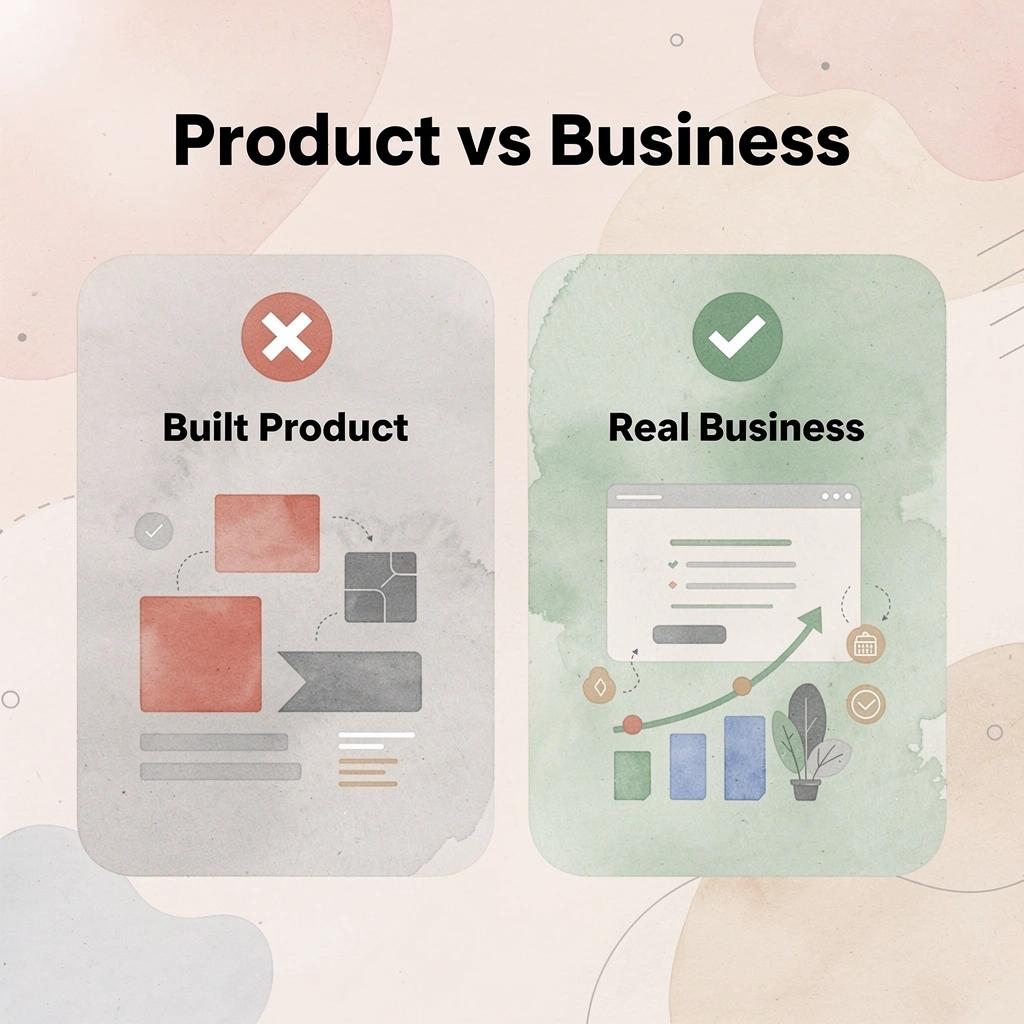
Rather than working as another no-code builder, Polsia acts as an independent AI co-founder designed to help entrepreneurs build and run an entire company. It enables founders to move from idea to a working business with reduced need for technical skills, employees, or outside contractors.
💡 Tip: If you're a solo founder or small team, Polsia fills gaps that would require hiring multiple specialists, making it essential for lean, fast-moving startups.
⚠️ Warning: Don't mistake Polsia for a drag-and-drop tool. As an AI co-founder, it supports strategic decisions, not just technical builds.
How does Polsia help you validate and build your product?
The process starts with planning and validating the idea. Polsia helps founders test business ideas, identify opportunities, and create clear plans before investing significant time or money in building. This reduces the risk of creating products that don't solve real customer problems.
Once an idea is tested and approved, Polsia can build MVPs and software products through full-stack development capabilities. Founders avoid spending months learning development tools, hiring engineers, or searching for technical co-founders.
How does Polsia help you attract and communicate with customers?
Polsia helps solve customer acquisition challenges that hinder SaaS growth. Our platform supports automated marketing across cold email campaigns, Meta ads, and social media, enabling founders to build awareness and reach potential customers without a large marketing team.
As the business grows, Polsia can assist with customer communication and inbox management. Instead of spending hours responding to inquiries and handling routine conversations, our platform automates these processes while maintaining a responsive customer experience.
Who benefits most from using Polsia to run a SaaS business?
The platform simplifies business operations by consolidating infrastructure setup and management in a single platform. Tasks that typically require multiple tools, contractors, and technical expertise become accessible to solo entrepreneurs, reducing operational complexity.
This makes Polsia especially helpful for first-time founders with strong business ideas who lack coding skills, a technical co-founder, or resources to hire a full team. It provides support throughout the business lifecycle rather than forcing entrepreneurs to serve as developers, marketers, support agents, and operations managers simultaneously.
The result lets founders spend more time on strategy, customer understanding, and business growth while AI handles the work required to build and run a SaaS company.
Start or Grow your Existing Business with Polsia Today
Most solo founders know what to build but stop making progress on execution—validation, product development, customer acquisition, and operations. Our Web app development company closes that gap. For just $49 per month, your first session gives you a business execution plan, product roadmap, and AI-powered launch strategy to move your SaaS idea from concept to a working business.
"For $49 per month, solo founders gain access to a business execution plan, product roadmap, and AI-powered launch strategy—everything needed to move from idea to working product." — Polsia
💡 Tip: If you're stuck between knowing what to build and actually building it, the gap isn't your idea—it's your execution infrastructure. That's exactly what Polsia solves.
What Most Founders Struggle With → What Polsia Provides
- Validation: Structured business execution plan
- Product Development: Step-by-step product roadmap
- Customer Acquisition: AI-powered launch strategy
- Operations: Full team support without hiring
⚠️ Warning: Most solo founders don't fail because of a bad idea—they fail because they lack a structured execution plan. Don't let momentum die before your product launches.
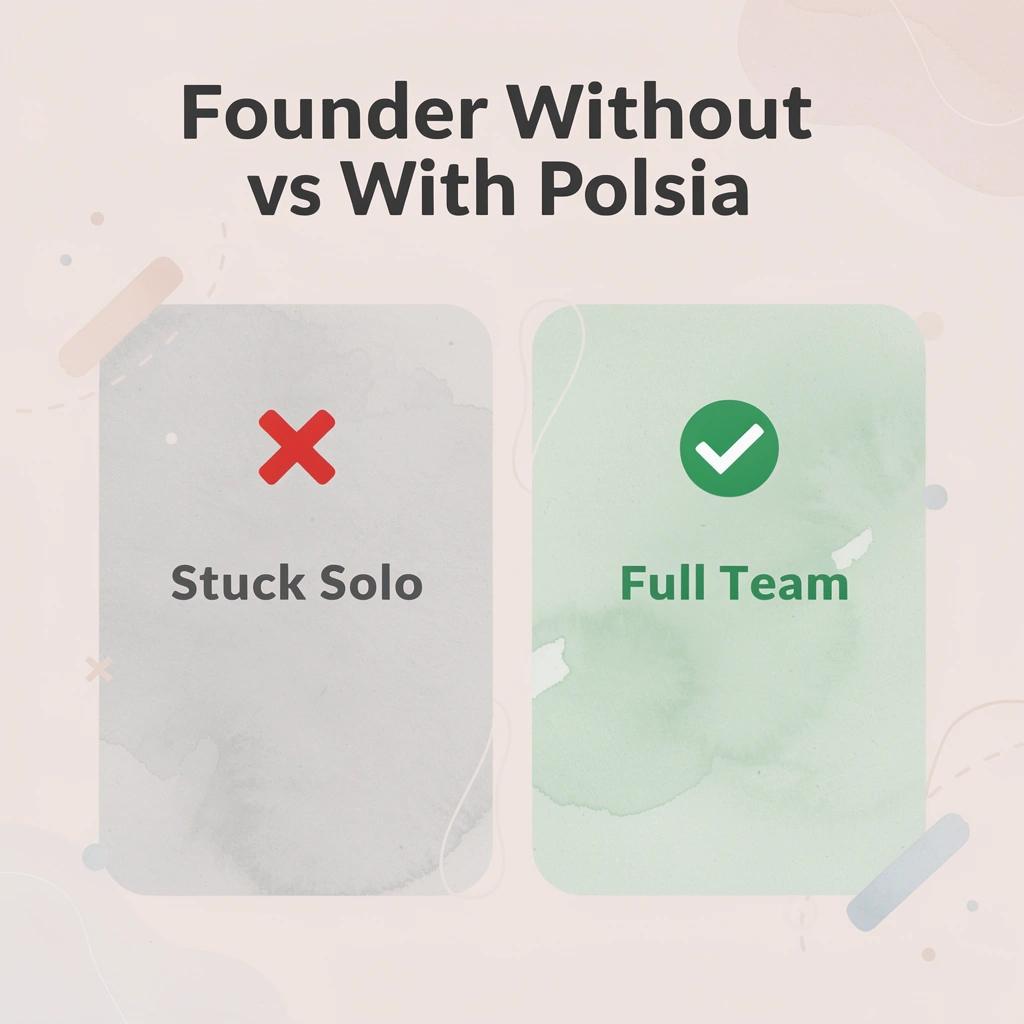
Polsia lets you work as a true founder with a full team behind you without hiring anyone. You get the speed, expertise, and support of an entire team at a fraction of the cost, so you can focus on building instead of getting stuck.
🎯 Key Point: You don't need a co-founder, a dev team, or a growth agency to launch—you need Polsia. One platform provides full execution support and a clear path from idea to revenue.
Start or grow your business at Polsia today.
Related Reading
- Base44 Vs Lovable Ai
- Lovable Ai Vs Replit
- Replit Vs Base44
- Glide Vs Bubble
- Glide Alternatives
- Bubble.io Vs Webflow
- Bolt Vs Replit
- Bubble Vs Lovable