9 Best Softr Alternatives for Building Online Businesses
Building apps without code has transformed how entrepreneurs launch their online businesses, but finding the right platform can feel overwhelming. Softr has earned its place as a popular choice for creating client portals, internal tools, and membership sites, yet it doesn't fit every project or budget. Developers and founders constantly explore alternatives that offer better pricing, more customization, stronger integrations, or specialized features for specific use cases.
Template-based solutions work well for simple projects, but growing businesses often need more flexibility and control. Custom development provides the exact functionality customers need while integrating seamlessly with existing systems. When standard platforms fall short of ambitious requirements, partnering with a skilled web app development company ensures applications scale properly without the constraints of generic builders.
Table of Contents
- Why Many Founders Outgrow Softr
- What to Look for in a Softr Alternative
- 9 Best Softr Alternatives for Different Use Cases
- Why Most No-Code Alternatives Still Leave Founders With the Same Problem
- The Hidden Cost of DIY Business Building
- How Polsia Goes Beyond Traditional Software Alternatives
- Start or Grow your Existing Business with Polsia Today
Summary
- Building apps without code has transformed how entrepreneurs launch their online businesses, but most platforms only solve the first problem. According to a 2024 Startup Struggle Survey of over 1,000 founders, 49.6% identified customer acquisition as one of their top three challenges, while 38.1% cited scaling and growth. Building the product didn't even make the top concerns list. The real bottleneck surfaces after launch, when marketing execution, sales outreach, customer support, and daily operations become the founder's full-time job.
- CB Insights examined hundreds of startup post-mortems and discovered that 42% cited lack of market need as the primary reason for collapse. Most startups don't die because they couldn't build software. They die because they couldn't build a sustainable business around it. This pattern reveals why switching from one no-code platform to another rarely solves the underlying problem. A founder might migrate to a more flexible builder and still spend their evenings writing blog posts at midnight, manually sending cold emails, answering support tickets during dinner, and troubleshooting ad campaigns that won't convert.
- The financial impact of managing multiple tools compounds quickly. BetterCloud's 2025 State of SaaSOps reporting found that organizations used an average of 106 SaaS applications in 2024, while CloudZero reported that nearly 49% of software licenses go unused. For founders operating with limited budgets, the challenge isn't just paying for software. It's paying for software that must then be learned, configured, maintained, integrated, and managed. Every new platform introduces new workflows, dashboards, and setup requirements that consume time better spent on improving the product or talking to customers.
- The hidden cost of DIY business building shows up in opportunity cost, not subscription fees. What starts as a simple product quickly becomes a growing software stack that requires an email marketing platform, CRM, analytics software, advertising tools, customer support software, hosting infrastructure, automation platforms, and payment systems. Each tool solves a specific problem. Together, they often create a new one. Instead of spending time on revenue-generating activities, founders often become part-time system administrators, managing software that should be working for them.
- Operational burden transfers seamlessly across platforms regardless of which no-code tool you choose. Webflow gives you design freedom, but it doesn't write your SEO content or manage your email sequences. Glide helps you build mobile apps quickly, but it won't generate leads or handle customer onboarding. Lovable and Bolt. New use AI to accelerate development, but once you ship, you're still responsible for every business function that determines whether anyone actually uses what you built. The platform improves. The workload remains identical.
- A web app development company like Polsia addresses this by functioning as an autonomous system that handles planning, development, marketing, customer service, and sales operations while founders focus on strategy and high-value decisions.
Why Many Founders Outgrow Softr
You build your MVP, launch it, and suddenly realize the hard part wasn't creating the product—it was everything after: finding customers, writing marketing copy, managing support tickets, running ads, and updating features based on feedback. Building software solved one problem. Running a business created ten more.

🎯 Key Point: The transition from building to scaling reveals that product creation is just the beginning of your entrepreneurial journey—business operations become the real challenge.
"Running a business created ten more problems than building the product ever did—this is where most founders realize they need more robust tools than their initial MVP platform."
⚠️ Warning: Many founders underestimate the operational complexity that comes after launch. Customer management, marketing automation, and support systems require different tools than those that got you to the MVP stage.
What do startup failure statistics reveal about technical execution?
According to Embroker, 90% of startups fail, and the reasons rarely center on technical execution. The 2024 Startup Struggle Survey, capturing responses from more than 1,000 founders, found that 49.6% identified customer acquisition as a top-three challenge, while 38.1% cited scaling and growth as top challenges. CB Insights examined hundreds of startup post-mortems and discovered that 42% cited lack of market need as the primary reason for collapse. Most startups fail not because they couldn't build software, but because they couldn't build a sustainable business around it.
The Workload Expands Beyond Development
You launch your application in three weeks using a no-code platform. Then you spend the next six months creating traffic, writing email campaigns, producing social content, managing customer conversations, setting up advertising, handling product updates, and maintaining infrastructure. The to-do list grows faster than you can complete it.
Why do platforms fall short after launch?
Platforms focused on application creation help you cross the first finish line, but don't help you run the race that follows. You need traffic, conversions, support workflows, marketing automation, and sales processes. The gap between "I built something" and "I run a profitable business" is wider than most founders expect.
What should founders look for in alternatives?
That's when founders seek alternatives—not because the original platform failed, but because it addressed only the first challenge. Tools like Polsia run business functions independently: handling customer service, writing and launching marketing campaigns, managing sales conversations, and updating code in response to user feedback. The question shifts from "How do I build my app?" to "How do I run this business without hiring a full team?"
But knowing you've outgrown your current platform is only half the problem. The harder question is figuring out what matters when evaluating other options.
Related Reading
What to Look for in a Softr Alternative
Building an MVP is the first step. While comparison articles focus on app-building features, templates, and integrations, a platform that launches quickly may still leave you responsible for marketing, operations, customer support, infrastructure, and growth.

🎯 Key Point: The real challenge isn't building your app—it's everything that comes after launch. Many founders underestimate the ongoing operational demands that can make or break their product's success.
"85% of startups fail not because of product issues, but due to poor go-to-market execution and operational challenges." — CB Insights Startup Failure Report

⚠️ Warning: Don't choose a platform based solely on development speed. Consider whether your alternative provides built-in solutions for the post-launch challenges that will determine your app's long-term viability.
Ease of Building
How quickly can you launch? For non-technical founders, Softr's biggest advantage is its ease of use. Orchids Blog identifies 20 alternatives with similar promises, though learning curves vary significantly. Before testing, consider the required technical knowledge, available templates, and setup time. The faster you validate your idea, the sooner you'll know if customers want it.
Customization and Scalability
Ease of use often involves tradeoffs. Some platforms limit flexibility for simplicity, while others offer customization at the cost of complexity. The key question: can the platform grow with your business, adapt to unique workflows, and avoid forcing a future migration? A platform that works for version one shouldn't become a bottleneck for version two.
Business Functionality Beyond Building
Most platforms focus on helping founders build applications, not run businesses. Ask whether the platform helps with customer acquisition, marketing execution, sales outreach, customer support, or operational management. A working product without customers is a failed business. Platforms like Polsia take a different approach, automatically handling planning, coding, marketing, customer service, and sales so founders can operate their companies 24/7 without assembling a traditional team. This shifts the question from "Can I build this?" to "Can this run my business while I sleep?"
What hidden costs should you consider beyond subscription fees?
Software pricing is only part of the equation. A platform may seem affordable initially, but it requires additional spending on marketing software, CRM tools, customer support platforms, automation software, contractors, or freelancers. The true cost includes everything needed to operate successfully after launch. For founders with limited budgets, reducing the need for additional tools and hires is as valuable as reducing subscription costs.
Why is app development just the beginning of your journey?
One of the biggest mistakes founders make is assuming the decision is mainly about development. App creation is often the shortest part of the entire journey. The bigger challenge is turning an idea into a sustainable business that attracts customers, generates revenue, and operates smoothly over time. The best Softr alternative helps founders move from idea to a working business with minimal operational friction.
Knowing what matters and finding tools that deliver on those criteria are two different problems.
9 Best Softr Alternatives for Different Use Cases
The right tool depends on what you're trying to accomplish. Building a client portal requires different evaluation criteria than a marketplace or internal workflow automation. The Softr Blog lists 9 alternatives, while Hostinger Tutorials expands that to 12, but the essential question remains: which one solves your specific business problem?
🎯 Key Point: The most important factor isn't the number of features available, but how well the platform aligns with your specific use case and technical requirements.
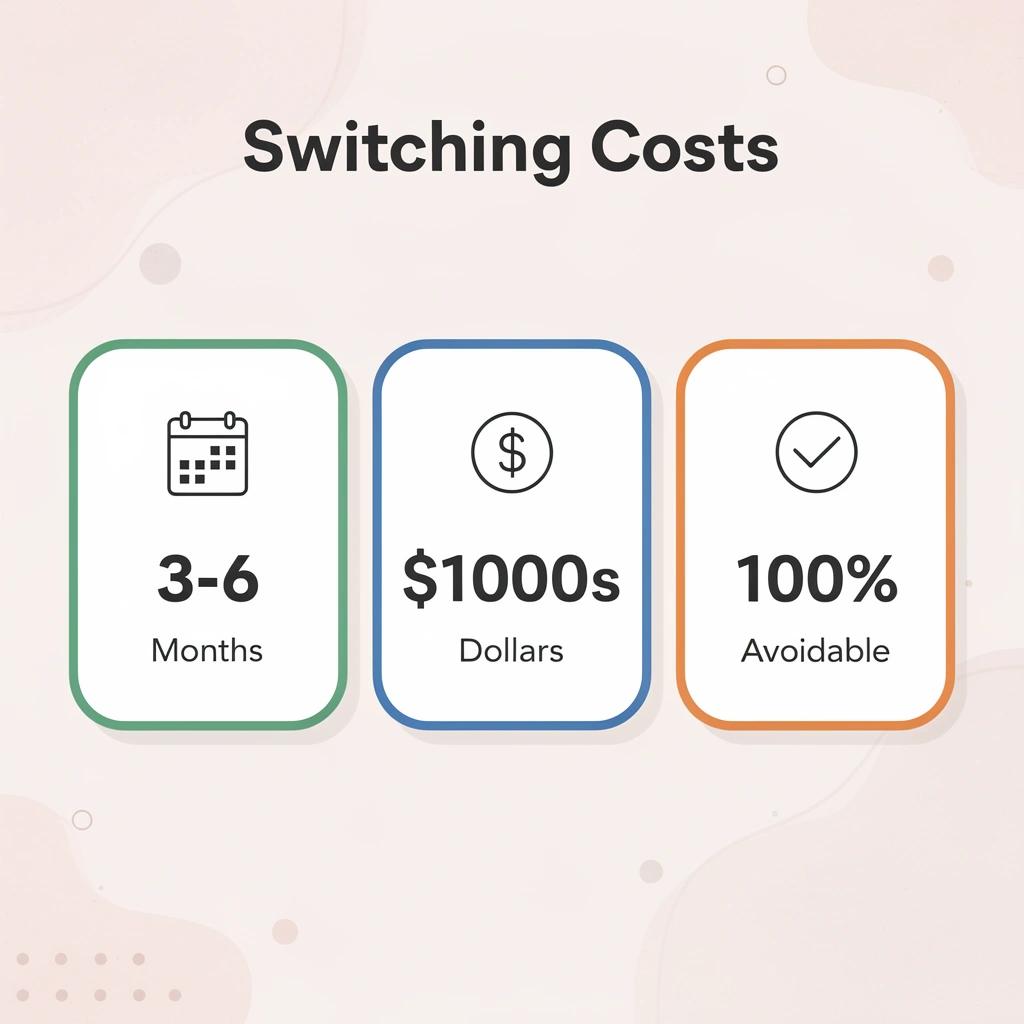
"Choosing the wrong no-code platform can cost businesses 3-6 months of development time and thousands of dollars in switching costs." — No-Code Development Survey, 2024
⚠️ Warning: Don't get distracted by flashy features you'll never use. Focus on the core functionality that directly supports your business objectives and user experience goals.
1. Polsia Best for Building and Running an Entire Business
Most platforms help you build something. Polsia helps you operate it.
How does Polsia handle business operations beyond development?
Launching an MVP is rarely the bottleneck. The real challenge emerges when you need to acquire customers, respond to support questions at 2 a.m., run marketing campaigns, manage sales conversations, and keep the business operating while you sleep.
Polsia acts as an autonomous system that handles planning, development, marketing, customer service, and sales without requiring you to assemble a team first.
Who benefits most from Polsia's autonomous approach?
You describe what you're building, and the system handles every business function. It's designed for solo founders who want to start a company tonight, not six months from now.
This approach works best for non-technical entrepreneurs, side-hustle builders, and anyone who values speed and operational independence as competitive advantages.
2. Retool Best for Internal Tools
Retool specializes in operational software for internal use. Teams use it to build dashboards, admin panels, workflow management systems, and support tools by connecting databases and APIs without having to start from scratch. The platform prioritizes speed over customer-facing polish, making it ideal for operations teams, startups needing process automation, and companies seeking functional internal software without hiring developers.
3. Glide Best for Client Portals
Glide turns spreadsheets and databases into working applications without requiring technical knowledge. Consultants and agencies use it to build client portals, directories, and business tools by eliminating the complexity of traditional development: you organize your data, and Glide creates the interface.
Service businesses, consultants, and founders benefit from simple client-facing applications.
4. Bubble Best for Complex Web Applications
Bubble offers more power and flexibility than most no-code platforms, though it takes longer to learn and set up. Founders building custom SaaS products, marketplaces, or applications with complicated workflows choose Bubble when simpler tools fall short. The platform handles complex logic, custom databases, and advanced user interactions that would normally require traditional development, making it ideal for ambitious projects where feature completeness outweighs speed to launch.
5. Airtable Best for Databases and Lightweight Apps
Airtable sits between a spreadsheet and a database, making it useful for project management, customer tracking, content calendars, and operational workflows. Founders use it to organize operations and manage data without needing to learn traditional database systems.
6. Webflow Best for Websites and Membership Businesses
Webflow gives designers control over every visual detail without needing a developer. The platform works well for businesses focused on content, membership sites, marketing websites, and brand experiences where design directly affects growth. You're not limited by templates, though you'll need time to learn the design system.
7. Lovable Best for AI-Assisted App Creation
Lovable uses AI to create applications from plain-language descriptions. You explain what you want to build, and the platform automatically generates the underlying structure. This dramatically reduces the time between concept and prototype, which is critical during early testing when you need to validate ideas quickly.
Entrepreneurs who want AI to handle technical work while they focus on product direction find this approach appealing.
8. Bolt.new Best for Rapid MVP Development
Bolt.new is made for speed. It lets you create and improve applications straight from prompts—perfect when you need to test an idea this week, not next quarter. The tradeoff is less customization, but that's acceptable when proving your idea works matters more than perfection. Founders in the early testing phase benefit most from this approach.
9. Zapier Interfaces Best for Business Process Automation
Zapier Interfaces improves automation by adding front-end interfaces to workflows, helping businesses streamline data collection, customer onboarding, internal processes, and operational tasks. Rather than building standalone applications, you create interfaces that trigger automated workflows across Zapier's extensive integration ecosystem, making it ideal for founders to reduce manual administration and connect disparate software systems.
Which Softr Alternative Is Right for You?
The answer depends on whether you're solving a technical problem or a business problem.
What if your focus is building applications?
If your challenge is building an application, tools like Bubble, Glide, Lovable, and Bolt.new provide strong development-focused options, each suited to different project types from complex web apps to quick prototypes.
What happens when you need more than just development tools?
But if your challenge extends beyond building software, most platforms leave you to figure out customer acquisition, marketing, sales, support, and operations on your own. Polsia takes a different approach by operating as an independent system that handles those business functions, so you can focus on direction and strategy.
The critical difference isn't what these platforms build—it's what happens after the building stops. Most founders discover this gap only after launch, when their chosen tools can no longer help.
Related Reading
- Replit Alternatives
- Appsheet Alternatives
- Vs Code Alternatives
- Mobile App Ideas
- Ai Tools For Product Managers
Why Most No-Code Alternatives Still Leave Founders With the Same Problem
The tools changed. The work didn't. Founders switching between no-code platforms assume a better builder solves their business problems, but building was never the bottleneck. The real constraint emerges when the product goes live: customer acquisition, marketing execution, sales outreach, and daily operations become the founder's full-time job.
🎯 Key Point: The platform you choose doesn't determine your success—execution after launch does. Most founders spend 80% of their time researching tools and only 20% planning their go-to-market strategy.
"Building is the easy part. Scaling is where most startups fail—not because of technical limitations, but because founders underestimate the operational complexity of running a business." — Startup Research Institute, 2024
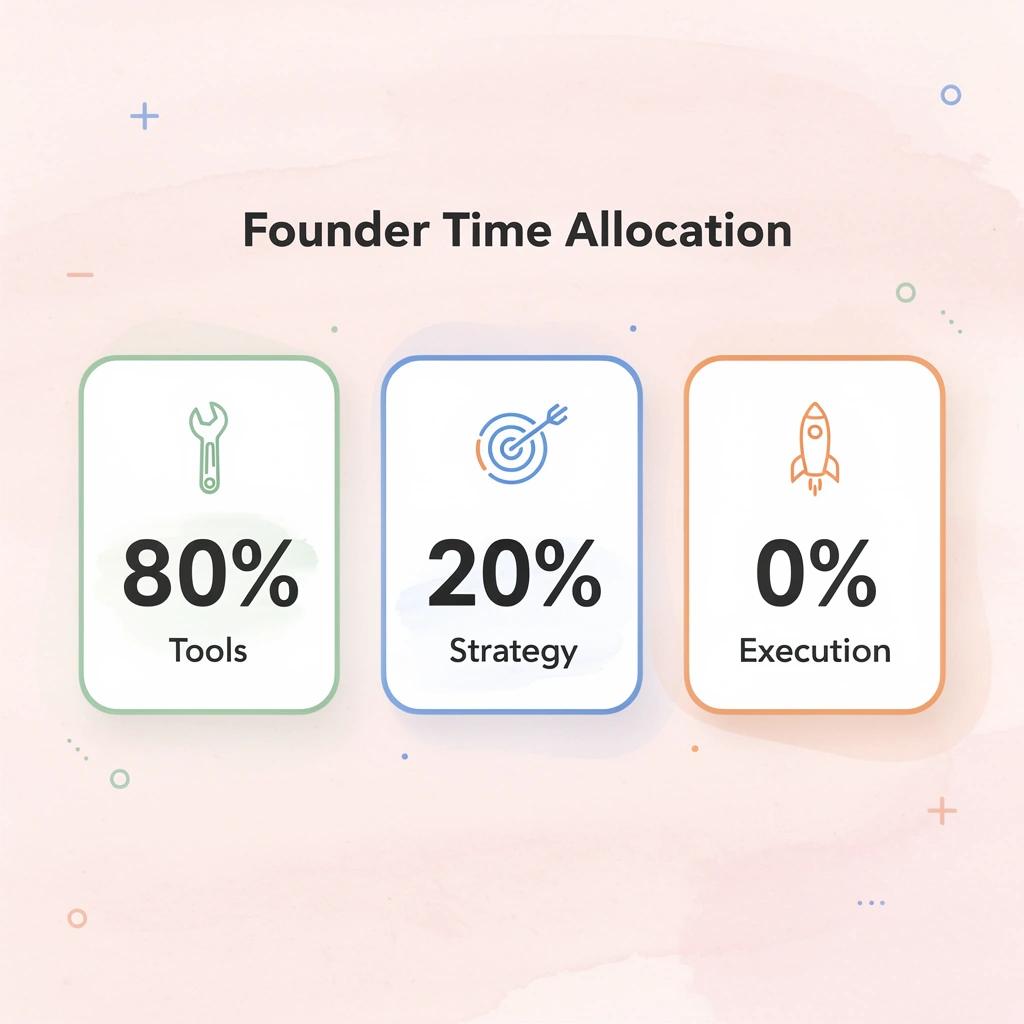
⚠️ Warning: Switching between Bubble, Webflow, Adalo, or any other no-code platform won't solve the fundamental challenge—you still need to acquire customers, manage operations, and execute marketing campaigns regardless of which builder you use.
Why does switching platforms fail to reduce workload?
A founder might spend three days moving from Softr to Bubble, excited about gaining more flexibility and customization options. The new platform delivers exactly what it promised: more control, better performance, and cleaner interfaces. But by the end of the first month, they're writing blog posts at midnight, manually sending cold emails, answering support tickets during dinner, and troubleshooting underperforming ad campaigns. The platform improved. The workload stayed the same.
What business functions remain unchanged across no-code platforms?
This pattern repeats across nearly every no-code alternative. Webflow gives you design freedom, but it doesn't write your SEO content or manage your email sequences. Glide helps you build mobile apps quickly, but it won't generate leads or handle customer onboarding. Lovable and Bolt. New use AI to accelerate development, but once you launch, you're responsible for every business function that determines whether anyone uses what you built.
How do you acquire customers after launch?
Getting customers becomes the first real test. According to a 2023 study by CB Insights, 35% of startups fail due to running out of money, often because they couldn't acquire customers fast enough to sustain the business.
Building a product is one thing; figuring out who your customers are, creating messages that grab their attention, running effective campaigns, and converting interested people into paying customers requires different skills and daily effort. Most app builders offer no help with this process.
What marketing challenges emerge post-launch?
Marketing execution creates similar friction. Every successful product needs content: landing pages that convert, blog posts that rank, social media that engages, and email campaigns that nurture.
Someone needs to research keywords, write copy, design assets, schedule posts, analyze performance, and iterate based on results. That someone is usually the founder, working nights and weekends while the product waits for traffic that never arrives.
How do sales and support operations scale?
Sales and support operations amplify the challenge once the first users arrive. Questions need answers, bugs need fixes, feature requests need evaluation, and onboarding needs refinement.
The more successful your product becomes, the more time you spend managing people instead of building the business.
The Autonomy Gap
Platforms like Polsia operate as independent systems that handle marketing, sales, and support, while founders focus on strategy. The difference lies not in what gets built, but in what happens while you sleep.
The real question isn't which no-code platform has the best features, but which removes the operational burden that prevents founders from scaling beyond solo operations. Replacing one builder with another while carrying the same workload isn't progress.
The time cost of doing everything yourself runs far deeper than most founders calculate.
The Hidden Cost of DIY Business Building
The financial drain of running a business solo isn't the monthly subscription fees. It's the cumulative cost of context switching between platforms, hours spent learning tools you'll only use at 30% capacity, and the mental overhead of maintaining systems that should work for you. Most founders calculate software costs in dollars per month. The real expense shows up in opportunity cost: revenue not generated while troubleshooting integrations or learning dashboards.
"Most founders calculate software costs in dollars per month. The real expense shows up in opportunity cost: revenue not generated while troubleshooting integrations." — Business Operations Research, 2024
🔑 Key Insight: The true cost of DIY business building isn't measured in subscription fees but in the lost revenue from time spent managing tools instead of growing your business.
⚠️ Hidden Reality: When you're using tools at only 30% capacity, you're paying 100% of the cost while getting a fraction of the value, creating a negative ROI on your tech stack.

The Expanding Software Stack Problem
What starts as a simple product quickly becomes a growing software stack. A founder may begin with an app builder, then add an email marketing platform, CRM, analytics software, advertising tools, customer support software, hosting infrastructure, automation platforms, scheduling tools, and payment systems. Each tool solves a specific problem; together, they often create a new one. According to BetterCloud's 2025 State of SaaSOps report, organizations used an average of 106 SaaS applications in 2024, reflecting the expansion of software stacks to meet operational needs.
The Real Cost Isn't Just Financial
The financial impact is significant. CloudZero reported that SaaS spend per employee reached $5,607 annually, with nearly 49% of software licenses going unused. Each new platform requires learning, setup, maintenance, integration, and management. Founders end up spending time as part-time system administrators instead of improving their product or talking to customers.
When Tools Become the Bottleneck
The workload often shifts rather than disappears. A founder might successfully build an MVP in a weekend using AI-assisted tools. Over the next several months, however, they will spend evenings setting up automations, writing marketing emails, managing customer conversations, monitoring analytics, running ad campaigns, maintaining integrations, and troubleshooting software issues.
The product gets built quickly, but the business requires constant operation. Platforms like Polsia take a fundamentally different approach, handling operational execution across planning, marketing, customer service, and sales autonomously rather than adding another tool to your stack.
Why does operational complexity become the real bottleneck?
The most effective founders reduce operational complexity, automate repetitive work, and find leverage wherever possible. Many believe launching alone means doing everything themselves, but that approach becomes the bottleneck.
The hidden cost of DIY business building is not development—it's the accumulating combination of software costs, learning curves, operational maintenance, and administrative work that persists long after the MVP launches.
But eliminating tool sprawl is only half the equation.
How Polsia Goes Beyond Traditional Software Alternatives
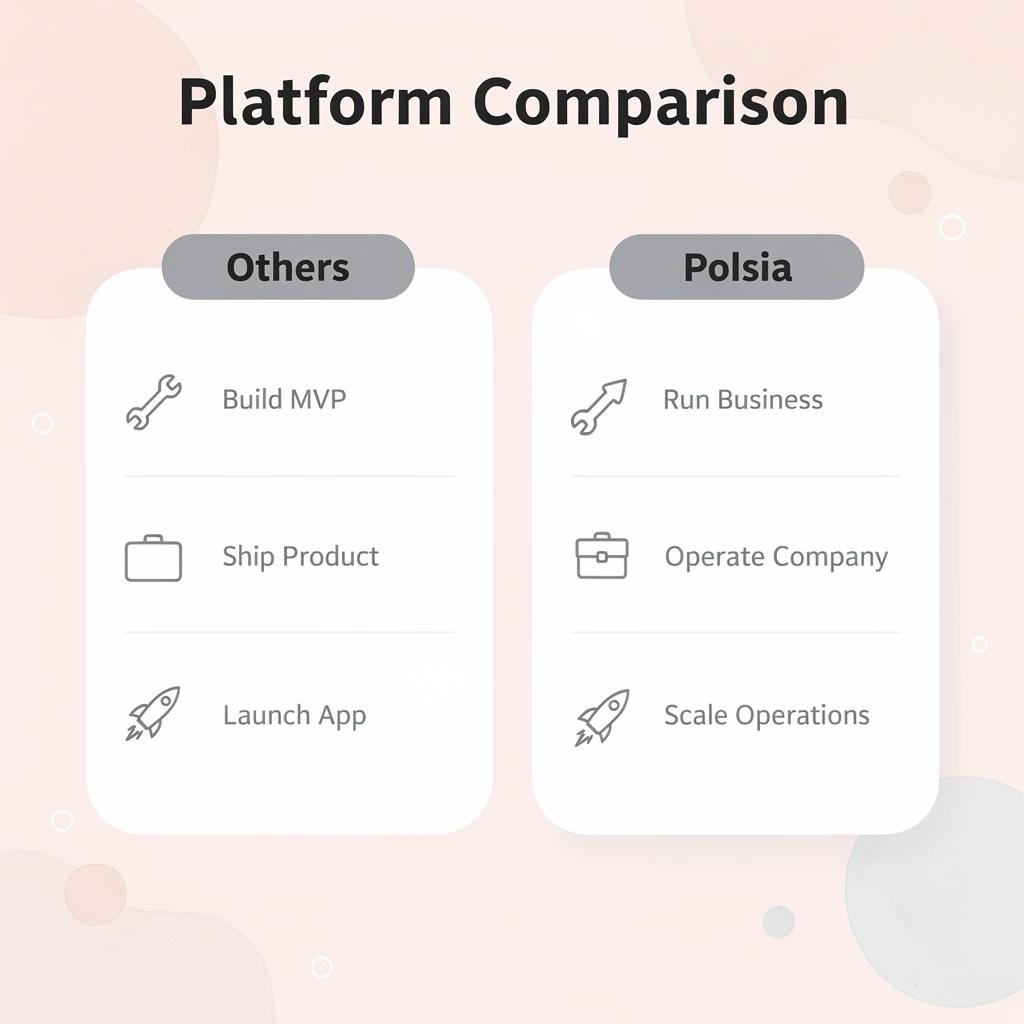
Most no-code platforms help you ship a product, but Polsia helps you operate a complete company. When you finish building your MVP in Bubble or Webflow, you still need to find customers, write marketing emails, answer support tickets, and manage infrastructure. Running a business doesn't stop once your app goes live.

💡 Key Insight: The real challenge isn't building your app—it's everything that comes after launch.
"Running a business doesn't stop because your app went live. Most founders discover the hardest work begins after they ship their MVP." — Solo Founder Reality, 2024

Polsia addresses what happens after launch by working as an independent business partner across every operational area a solo founder typically struggles to manage alone. It ensures the platform continues working when you step away from your laptop.
🔑 Bottom Line: While other platforms help you build, Polsia helps you actually run and scale your business.
Product Strategy Before Code
Most founders jump straight into building because no-code tools make it easy. Problems emerge later when the product misaligns with market needs or features accumulate without clear priorities.
Polsia helps plan products independently, creating structure around validating ideas and prioritizing features before development begins. This reduces the costly pattern of building first and discovering months later that the market doesn't want what you made.
Full-Stack Development Within Business Context
Building the application is one part of a larger system. Polsia handles full-stack development and MVP launches by connecting the output directly to marketing, customer acquisition, and operational workflows.
You're not putting code into action—you're launching a product already connected to the systems that will help it find customers and generate revenue.
Marketing Execution That Runs Continuously
According to Preston Zeller's January 2025 LinkedIn post, founders can access this independent business support for $49 per month. You're paying for execution capacity that operates whether you're working or sleeping.
The system handles cold email campaigns, marketing content creation, Meta advertising setup, and outreach execution—activities that require daily attention, updates, and improvements. Most other options provide tools to help you manage these tasks yourself. Polsia executes them independently while you focus on strategic decisions and customer conversations that demand human judgment.
Operational Support That Scales With Growth
Customer questions arrive at inconvenient times. Support requests pile up during product launches. Administrative tasks multiply as revenue grows, and the founder spends most of their time responding to emails and managing systems rather than building.
Polsia manages customer communication and key operational functions, freeing founders to focus on activities that move the business forward. Infrastructure remains maintained, workflows continue to run, and daily operations progress without constant founder intervention. This operational continuity separates a platform that helps you build from one that helps you run.
Related Reading
- Best Mobile App Builder
- No Code Ai Tools
- Hire App Developer
- Best Vibe Coding Tools
- Ai App Builders
- Lovable Ai
- How To Create An App
Start or Grow your Existing Business with Polsia Today
If you're ready to start a company or grow an existing one without assembling a complex tool stack or hiring a team first, Polsia works as your autonomous business partner. It plans your idea, builds the product, launches marketing campaigns, handles customer service, and executes sales outreach while you sleep.

🎯 Key Point: Skip the 6-month setup phase and focus on what actually matters for business success.
Most founders spend six months setting up software when they should be testing demand and talking to customers. Polsia removes the operational gap between having an idea and running a business that generates revenue.
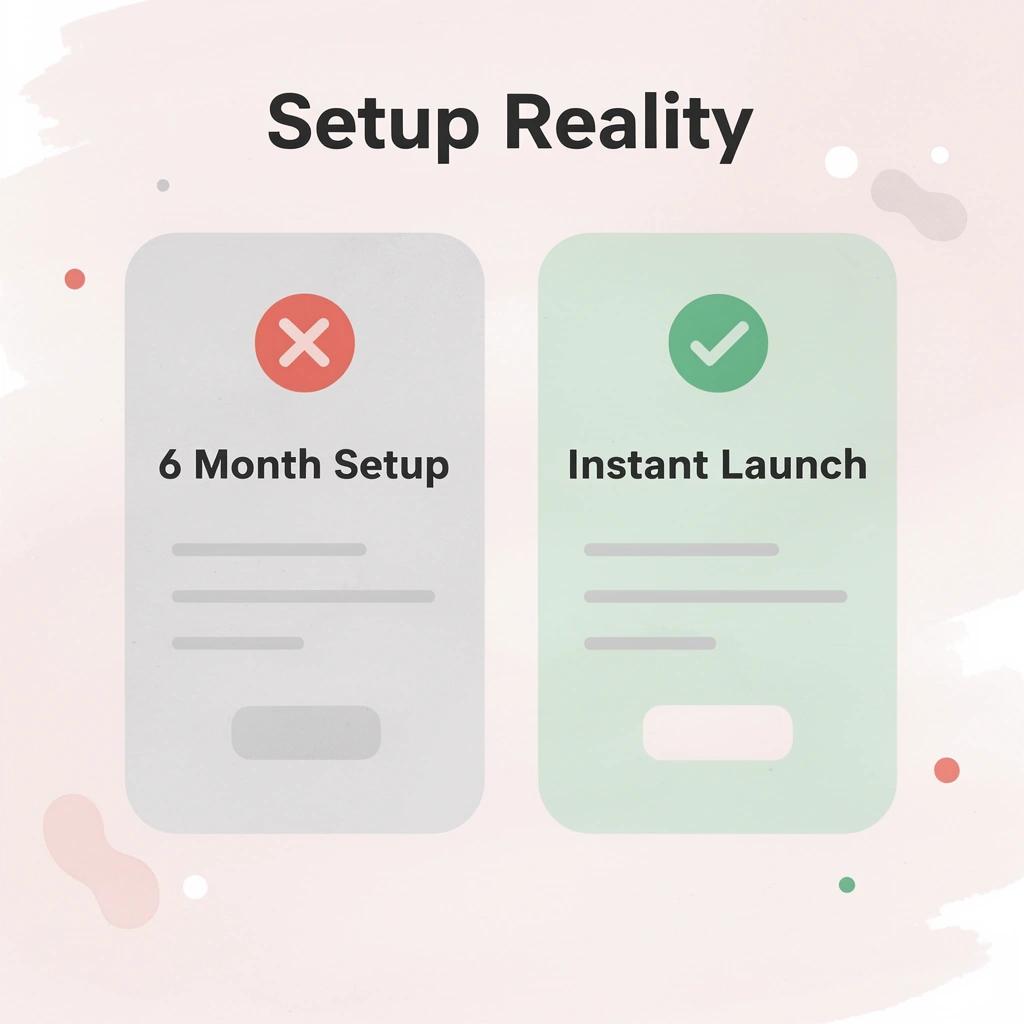
"Most founders spend 6 months setting up software when they should be testing demand and talking to customers." — Business Setup Reality
💡 Pro Tip: Start your first session tonight. Describe your business idea, and you'll see how an AI co-founder maps out a strategy, identifies your target market, and begins execution across product development and customer acquisition at the same time. No learning curve for multiple platforms. No switching between tools. No hiring process before you can take immediate action.