Startup Product Development Guide for First-Time Founders

Building a startup product without a technical background no longer means waiting months for a developer or burning through a budget before launch. Many first-time founders struggle to move from idea to a working product, often stalling at the first technical hurdle. The best no-code SaaS builder tools have changed that equation, giving founders a practical path to build, test, and ship an MVP on their own terms.
Understanding what startup product development actually involves is the first step toward making smarter decisions early on. Founders who get this right can validate ideas faster, avoid costly rebuilds, and stay focused on solving real user problems. For those who want expert guidance alongside the right tools, working with an experienced web app development company like Polsia can turn a concept into a functional product far sooner than traditional development allows.
Table of Contents
- Why Startup Product Development Is So Challenging for First-Time Founders
- What Is Startup Product Development?
- The Startup Product Development Process
- Common Startup Product Development Mistakes
- What Founders Need Beyond Product Development
- How Polsia Simplifies Startup Product Development
- Start or Grow Your Existing Business with Polsia Today
Summary
- First-time founders rarely fail because of a bad idea. The more common collapse point is the gap between having a concept and knowing how to execute it, where validation, building, and launching each create dependencies on the next stage, and a stumble in one can unravel the others. According to Wilbur Labs' survey of 200 US tech founders, running out of cash and team problems rank among the most cited reasons startups fail.
- Speed in early product development is not about cutting corners. It is about compressing the time between a hypothesis and the evidence that confirms or disproves it. Founders who ship a rough but functional version early and learn from real users hold a structural advantage over teams still debating design decisions weeks later, because every week spent building without feedback compounds untested assumptions into the foundation of a product nobody asked for.
- Validation is not a formality completed before the real work begins. It is the real work. Research shows that 42% of startups fail because there is no market need for their product, meaning nearly half of all startup failures could have been avoided with honest customer conversations before any development began.
- The feature trap quietly kills timelines. Once founders start building, the instinct is to add more, but each addition delays the only data that actually matters: what happens when a real person uses the product. A product attempting to solve five problems at once usually solves none of them well, and the discipline of defining the smallest version that delivers genuine value is consistently harder in practice than it sounds in theory.
- Waiting too long to launch disguises itself as diligence. Real users reveal things no internal review can surface, including the features they ignore, the workflows they abandon, and the language they use to describe the problem. Only 1 in 7 product concepts makes it to market as a successful product, and the ones that do tend to share one behavior: they treat post-launch feedback as a primary input rather than a secondary one.
- Growth and product development are not sequential activities. By the time a product is ready, the audience should already exist. Founders who build in public, test messaging, and run early ads before writing a single line of code move faster, waste less, and find product-market fit before their runway disappears.
- Polsia, a web app development company, addresses the execution gap directly by giving solo founders an autonomous system that handles roadmap planning, code shipping, and customer-facing work simultaneously, so the founder can stay focused on validation and decisions rather than managing tasks across too many open threads.
Why Startup Product Development Is So Challenging for First-Time Founders
Starting a new product is hard because it demands competence across many domains simultaneously, often before you have experience in any of them. You are not building a product alone. You are making critical decisions about markets, technology, hiring, money, and timing all at once, with incomplete information and a shrinking runway.
"You are not building a product alone — you are making decisions about markets, technology, hiring, money, and timing all at once, with incomplete information and a shrinking runway."
⚠️ Warning: Most first-time founders underestimate how many simultaneous disciplines are required from day one, before expertise has been built.

The failure point is usually not a bad idea, but the gap between having one and knowing how to execute it. Validation requires talking to customers before the product even exists. Building requires either technical skills or money to hire someone who has them. Launching requires marketing, positioning, and distribution decisions that most first-time founders have never made before.
- Validation
- Core Requirement: Customer discovery.
- Common Stumbling Block: Skipping it entirely to rush into development.
- Building
- Core Requirement: Technical skills or capital.
- Common Stumbling Block: Underestimating the amount of both needed for a viable MVP.
- Launching
- Core Requirement: Marketing and distribution.
- Common Stumbling Block: Having a product with no clear positioning strategy
Each stage creates critical dependencies on the next, and a stumble in one can cause the others to collapse.
🎯 Key Point: The real challenge of startup product development isn't the idea — it's the cascading chain of execution stages, each one requiring a completely different skillset.
💡 Tip: Map your skill gaps against each stage — validation, building, and launching — before you begin, so you can hire, partner, or learn proactively rather than reactively.
Why does each stage of product development create compounding pressure?
Founders underestimate the specialized knowledge each stage requires. Many assume low-cost freelancers or minimal budgets save money early on. In reality, this choice often produces unusable work, wasting months and forcing costly restarts. Financial pressure compounds technical pressure, creating paralysis.
Most founders respond by hiring their way to competence—seeking a technical co-founder, developer, designer, or marketer. But building a team before revenue or product-market fit adds cost, coordination overhead, and misaligned incentives when speed and clarity matter most. According to Wilbur Labs' survey of 200 US tech founders on the causes of startup failure, running out of cash and team problems rank among the most cited reasons startups collapse, meaning the "hire to solve it" instinct often accelerates the very failure it was meant to prevent.
What separates founders who ship from founders who stall?
The founders who move fastest execute without waiting for a full team. A solo founder who can plan a roadmap, ship a working product, reach customers, and iterate based on feedback operates with fewer dependencies and faster feedback loops. Polsia, a web app development company, is built around this model. Our platform gives solo founders an autonomous system that handles execution: shipping code, managing customer conversations, and freeing the founder to focus on decisions requiring human judgment.
The critical difference between founders who stall and founders who ship is not talent or funding, but the willingness to question the assumption that more people equal more progress. Product development moves at the speed of decisions, not headcount.
What Is Startup Product Development?
Startup product development is the process of turning a business idea into a market-ready product while reducing risk, saving resources, and checking that customers really want it early on. The goal is to find out whether a real problem exists, whether your solution fixes it, and whether customers will pay for it before you run out of resources.
"The goal of startup product development is not to build more — it's to learn faster, validate sooner, and spend smarter before resources run dry." — Lean Startup Methodology
💡 What This Means in Practice: Startup product development isn't just building — it's a structured process of validation that ensures you're solving a problem people actually have and are willing to pay to fix.
🎯 Key Point: The three core questions every startup must answer are: Does a real problem exist? Does your solution fix it? Will customers pay for it?
Problem Discovery
- Core Question: Does a real problem exist?
- Goal: Validate the pain point through customer interviews.
Solution Validation
- Core Question: Does your solution fix it?
- Goal: Confirm product-market fit with an MVP or prototype.
Willingness to Pay
- Core Question: Will customers pay for it?
- Goal: Prove commercial viability through pre-sales or commitments.

How does startup product development differ from established company processes?
Established companies build on known demand. Startups search for it. That search requires rapid iteration, customer discovery, and honest measurement rather than polished execution. According to StudioRed's 2024 product development research, about 95% of new products fail after launch because most teams optimize for the wrong things at the wrong time.
What makes early validation so hard to get right?
The failure point is usually building alone for too long. Founders spend weeks or months improving features based on ideas they believe are right, only to launch and find that customers wanted something different. Research from the Startup Genome project found that startups that test ideas early are more likely to achieve sustainable growth than those that build without regular customer contact. The product you imagine and the product your market wants are rarely the same at the start, and the only way to close that gap is through organized, repeated contact with real users.
Why does building without feedback compound risk over time?
Most founders build extensively before showing anyone, treating early exposure as a risk rather than a resource. Sharing an unfinished product feels vulnerable. But every week spent building without feedback compounds assumptions, and untested assumptions become the foundation of a product nobody asked for. Solo founders who deploy autonomous systems like Polsia to handle roadmap planning, customer replies, and execution tasks can redirect their attention entirely toward validation, keeping the feedback loop tight without sacrificing momentum.
Why speed matters more than polish in the early stages
Speed in startup product development means shortening the time between a hypothesis and the evidence that confirms or kills it. The faster a founder moves from idea to user interaction, the faster they identify which assumptions were wrong and rebuild around what is true. A founder who ships a rough but functional version in week four and learns something concrete operates at a structural advantage over the team still debating design decisions in week twelve.
Founders discover that their initial customer segment was slightly off, that a secondary feature resonated more than the core one, or that pricing assumptions collapsed in the first sales conversation. These are not failures—they are the actual work of product development. The startups that survive are not those that avoided these corrections, but those that built a process capable of making corrections quickly without losing sight of what they were originally trying to solve.
Related Reading
- How To Start A Software Company
- How to Automate My Business
- How To Create A Digital Product
- How To Start An Ai Company
- How To Find A Cofounder
- How To Validate A Startup Idea
- How To Start A Saas Business
- How To Turn An Idea Into A Product
The Startup Product Development Process
What separates surviving startups from failed ones is the discipline to move through each stage of development in the right order, without skipping the uncomfortable steps.
"The startups that survive are not always the most innovative — they are the ones disciplined enough to follow the right process at the right time." — Startup Development Insight
💡 Tip: Every stage of the product development process exists for a reason — skipping steps feels faster but almost always leads to costly rework, missed product-market fit, or outright failure.
⚠️ Warning: The most common mistake early-stage founders make is rushing past validation and discovery phases to jump straight into building — a shortcut that rarely pays off.
Startups That Follow the Process
- Higher product-market fit: Better alignment with actual customer needs.
- Reduced development waste: Focuses efforts only on what is proven to work.
- Stronger investor confidence: Data-backed progress mitigates perceived risk.
- Faster path to scale: Efficient operations allow for quicker growth.
Startups That Skip Steps
- Misaligned product: Builds solutions for problems that don't exist.
- Costly rework: Frequent pivots result in wasted time and capital.
- Loss of momentum: Burning through runway without achieving key milestones.
- Premature scaling: Failing because the foundation was never solidified.
🔑 Takeaway: The discipline to move sequentially — through discovery, validation, building, and iteration — is not a constraint on speed. It is the single greatest competitive advantage a surviving startup can have over its less disciplined competitors.
Validate before you build anything
Make sure a real problem exists—one that real people are trying to solve now, not one you're guessing about. Talk to potential users before you start coding, examine what competitors are doing to find gaps they missed, and prioritize early feedback. According to We Are Tenet, 42% of startups fail because there is no market need for their product, meaning almost half of startup failures could have been prevented with a few honest conversations before development began.
What does 'minimum' actually mean in an MVP?
An MVP is the smallest possible product that lets a real customer experience real value and give you real feedback. The problem almost always stems from adding too much, not removing things. Founders add features they think customers might want, and each one takes weeks longer to build, pushing the product further from the market. The simpler the MVP definition, the faster you get to the only information that matters: what happens when a real person uses it.
How do solo founders avoid getting buried in their own process?
Solo founders often build alone until their product grows complex enough that process management outpaces progress. Roadmap planning, feature prioritization, customer communication, and development are scattered across too many open tabs and half-finished tasks. A web app development company like Polsia handles execution across planning, building, and customer-facing work simultaneously, allowing the founder to focus on decisions rather than drowning in tasks.
Build for learning, not for launch
Development should be treated as a structured experiment, not a construction project with a fixed blueprint. StudioRed's product development research shows that companies following a formal product development process see 30% higher success rates because structure forces you to test assumptions at each stage rather than discovering flaws after launch. Build core functionality, test it with real users before release, and treat every usability issue as a signal. The goal is not a polished product—it's one that teaches you something.
Measure what users actually do, not what they say
After launch, user interactions reveal gaps between founder expectations and actual customer behavior. Engagement patterns, drop-off points, feature adoption rates, and support requests tell stories no pre-launch survey could predict. Founders who treat post-launch data as confirmation of assumptions miss the most valuable insight. Those who treat it as new information and adjust quickly close the distance to genuine product-market fit.
Knowing the process is only half the battle. Specific, avoidable mistakes within each step trip up even disciplined founders.
Related Reading
- Best Ai Tools For Startups
- Mvp Tools
- Best App Creators
- Bolt Alternatives
- Easiest Way To Build A Web App
- No-Code Ai Tools
- Lovable Ai Alternatives
- Bubble.io Alternatives
- Ai Prototyping
- Saas Mvp Development
- Replit Alternatives
- Softr Alternatives
Common Startup Product Development Mistakes
Mistakes that you can avoid tend to happen in the same places over and over again during product development.
"The most dangerous startup mistakes are not random — they are predictable patterns that repeat across teams, industries, and funding stages." — Startup Research Insight
⚠️ Warning: Recurring mistakes in product development are not bad luck — they are avoidable patterns that most founders fail to recognize until it's too late.
💡 Tip: Knowing where these mistakes typically cluster in the product development process is the first critical step toward building smarter and faster.
Skipping validation
- Where It Happens: Early ideation stage.
- Impact: Wasted resources on solutions nobody wants.
Scope creep
- Where It Happens: Mid-development.
- Impact: Delayed launches and mission drift.
Ignoring user feedback
- Where It Happens: Post-prototype.
- Impact: Poor product-market fit and low retention.

Why does building before validating demand hurt founders most?
Building before confirming customer demand costs founders the most money. The failure point is usually not a bad product but a misread signal: enthusiastic friends, a crowded market that appears to validate demand, or a problem the founder personally experiences and assumes others share. StudioRed's product development research reports that around 66% of new products fail within two years of launch. The pattern behind that number is consistent: real customer demand was assumed rather than confirmed. Validation isn't a formality to complete before the real work begins. It is the real work.
Why does building more features quietly kill your timeline?
Once founders start building, the instinct is to build more. Every new feature feels like added value, but it delays getting the product in front of real users. Complexity grows, and a product that tries to solve five problems at once usually solves none well. Teams waste time on features customers never asked for and rarely use. The discipline of building the smallest thing that delivers real value is harder than it sounds, especially when every idea feels essential.
How does hiring to solve development pressure make things worse?
Most founders handle early development pressure by hiring: a developer, a marketer, a customer success person. More hands seem to mean faster progress, but headcount introduces coordination costs, misaligned incentives, and financial pressure that forces founders to stop iterating and start defending decisions. A web app development company like Polsia replaces that instinct: instead of adding people to manage roadmaps, ship code, run ads, and reply to customers, our autonomous AI system executes across all functions from day one. The solo founder model becomes a structural advantage.
When the launch becomes a delay tactic
Waiting too long to launch delays the feedback that reveals whether the product merits improvement. Real users expose what internal review cannot: features they ignore, workflows they abandon, the language they use to describe the problem. Without that input, development proceeds in isolation, and the gap between what was built and what the market needs widens.
Why do founders stop listening after launch?
StudioRed's analysis shows that only 1 in 7 product ideas becomes successful. Successful products treat post-launch feedback as their primary source of information. Founders who stop listening after launch develop without understanding customer needs, except now with a live product in the market. The market constantly sends signals; the question is whether you're paying attention.
What happens when growth is treated as an afterthought?
The bigger mistake is treating product development and customer acquisition as separate, sequential activities. By the time the product launches, the audience should already exist. Founders who understand this build in public, run early ads, and test messaging before writing code. Growth isn't added after launch—it's a discipline run in parallel. Those who get that move faster, waste less, and find product-market fit before their runway disappears.
Knowing these mistakes is one thing; knowing what to do about them starting today with available tools and models is where things get interesting.
What Founders Need Beyond Product Development
Building a product is not the same as building a startup. Many first-time founders focus on features and launch plans, only to discover that a successful business requires much more than a working product.
"A working product is just the entry ticket — building a startup means mastering the business, people, and market forces surrounding it." — Startup Ecosystem Insight
🚨 Warning: Founders who treat product development as the finish line often stall when they hit go-to-market challenges, team scaling, and investor readiness — areas that demand equal attention.
💡 Tip: From day one, invest time in customer discovery, financial modeling, and network building — not just shipping features. The real competitive edge comes from everything around the product, not just the product itself.
Product vs. Market
- Founders Focus On: Features & roadmap.
- Startups Actually Need: Market validation.
Launch vs. Growth
- Founders Focus On: Launch plans.
- Startups Actually Need: Customer acquisition strategy.
Design vs. Economics
- Founders Focus On: Product polish.
- Startups Actually Need: Revenue & financial modeling.
Code vs. People
- Founders Focus On: Technical execution.
- Startups Actually Need: Team building & leadership.
Delivery vs. Sustainability
- Founders Focus On: MVP delivery.
- Startups Actually Need: Investor & stakeholder relations.

Why do marketing and business planning matter as much as the product?
Marketing and customer acquisition are critical challenges after launch. A product cannot generate revenue if potential customers never discover it. Founders need a strategy to attract visitors, generate leads, convert prospects into customers, and retain them. CB Insights' analysis found that 14% of failed startups cited poor marketing as a contributing factor, highlighting that growth and distribution are as important as product development.
Business planning is essential for startups operating with limited resources. It enables founders to prioritize opportunities, allocate budgets effectively, and set realistic goals. Without a clear plan, founders waste time and money on initiatives that don't contribute to growth or sustainability.
How do operations and customer support shape early startup success?
Operations become increasingly important as a startup grows. Customer onboarding, support, billing, infrastructure, vendor relationships, and internal workflows all require attention and directly shape the customer experience.
Customer support is particularly valuable early on. Every interaction provides insights into customer needs, product weaknesses, and opportunities for improvement. Founders who engage with customers gain a deeper understanding of the market and make better product decisions.
Successful startups continuously improve products, test growth strategies, refine operations, and respond to feedback long after launch. Customer expectations evolve, competitors introduce new offerings, and market conditions change over time.
Why do solo founders struggle to scale without a broader team?
Solo founders struggle because one person cannot simultaneously handle product development, marketing, sales, customer support, operations, and strategy. Research from the National Bureau of Economic Research found that startups with broader managerial and operational capabilities outperform those relying solely on technical expertise.
Most first-time founders cannot afford to hire developers, marketers, operators, and strategists from day one. As responsibilities grow, time becomes fragmented, and progress slows, creating a gap between a promising idea and a thriving business.
Many founders seek efficient ways to handle product development, marketing, operations, and execution without building a large traditional team from the start.
How Polsia Simplifies Startup Product Development
For many first-time founders, startup product development feels overwhelming. Success requires technical expertise, product development skills, marketing knowledge, operational experience, and resources to hire a capable team.
"For first-time founders, the barrier isn't the idea: it's the overwhelming combination of technical, marketing, and operational demands required to bring that idea to life."
💡 Tip: If you're a solo founder feeling stretched thin, you're not alone. The sheer number of disciplines required to launch a product is one of the biggest reasons startups stall before shipping.
⚠️ Warning: Hiring separately for technical, marketing, and operations roles too early can drain your runway before launch.
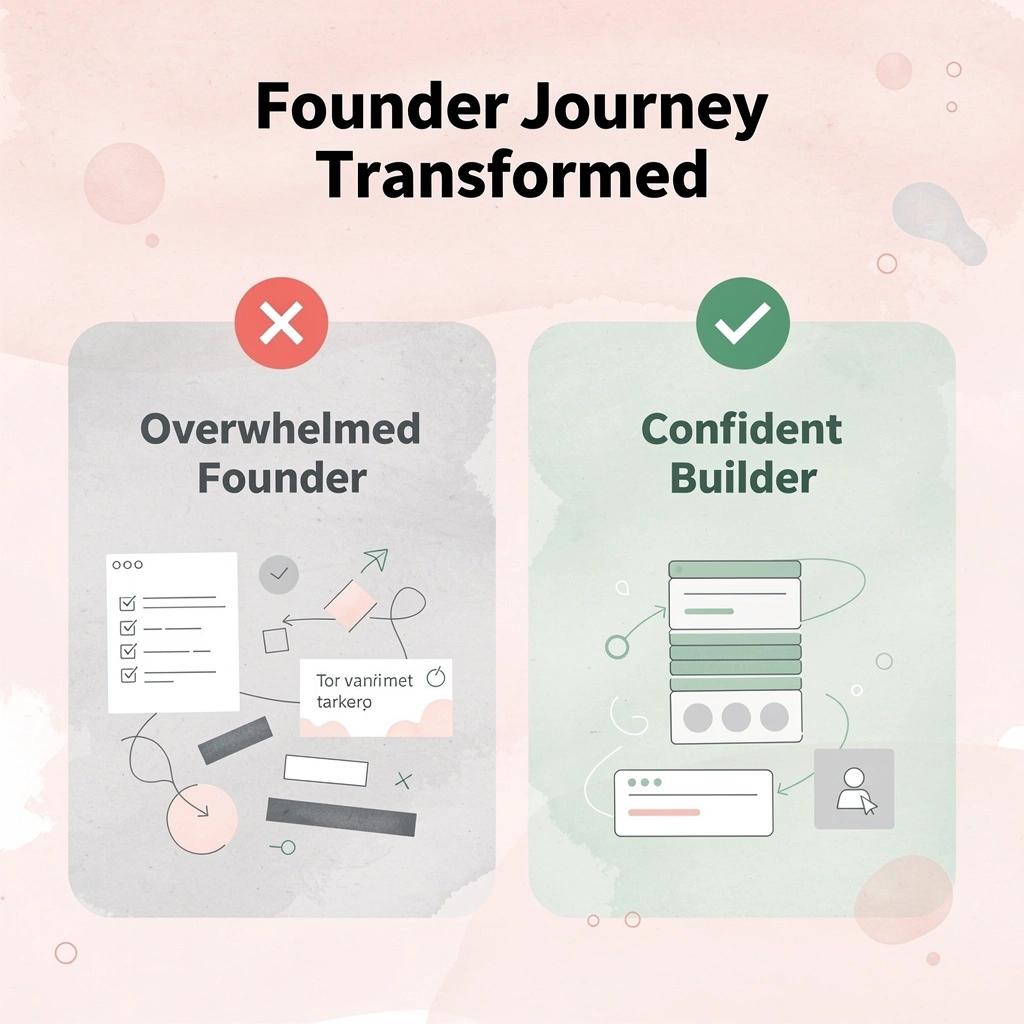
Polsia was built to remove these barriers entirely. As an autonomous AI co-founder, our platform helps founders move from idea to launch without a traditional startup team — eliminating the need to search for technical co-founders, hire developers, or assemble separate marketing and operations teams.
🎯 Key Point: Polsia doesn't just assist founders — it acts as a full co-founding partner, compressing what would take a multi-person team into a single, unified platform.
🔑 Takeaway: The real unlock for solo founders isn't working harder — it's having Polsia handle the roles that would otherwise require an entire startup team to fill.
How does Polsia support planning and building your product?
The platform helps with business planning from the start. It helps you identify opportunities, validate concepts, and prepare to launch by turning ideas into actionable plans.
When you are building, Polsia helps with the whole product development process: MVPs, software products, web applications, and online businesses. Entrepreneurs can go from idea to working product faster, even without a technical background or coding experience.
How does Polsia handle marketing and operations for founders?
Polsia addresses a critical challenge: turning a product into a business. The platform automates marketing across cold email, Meta ads, and social media, helping founders generate awareness and acquire customers without a dedicated marketing department.
It also handles customer communication, inbox management, infrastructure setup, and operational workflows, reducing administrative burden so you can focus on strategic decisions.
Who is Polsia built for, and how do you get started?
Because Polsia runs continuously, you get 24/7 work across planning, development, marketing, and operations. A single AI-powered platform handles tasks requiring multiple team members.
Most importantly, Polsia is built for first-time founders. You don't need coding skills, startup experience, a technical co-founder, or a large budget. Start today and let an AI co-founder help you plan, build, market, and operate your business.
Start or Grow Your Existing Business with Polsia Today
The tools exist. The model is proven. If you are a solo founder or an aspiring one, the old assumption that product development requires a team of developers, marketers, and support staff no longer applies. Polsia gives you an independent AI system that plans your roadmap, ships code, runs ads, replies to customers, and closes deals — without hiring anyone. That is your first employee, ready on day one.
"The old assumption that product development requires a full team no longer applies — Polsia is your first employee, ready on day one."
🎯 Key Point: You no longer need a full team to build and scale a product — one AI system can cover every critical function from day one.
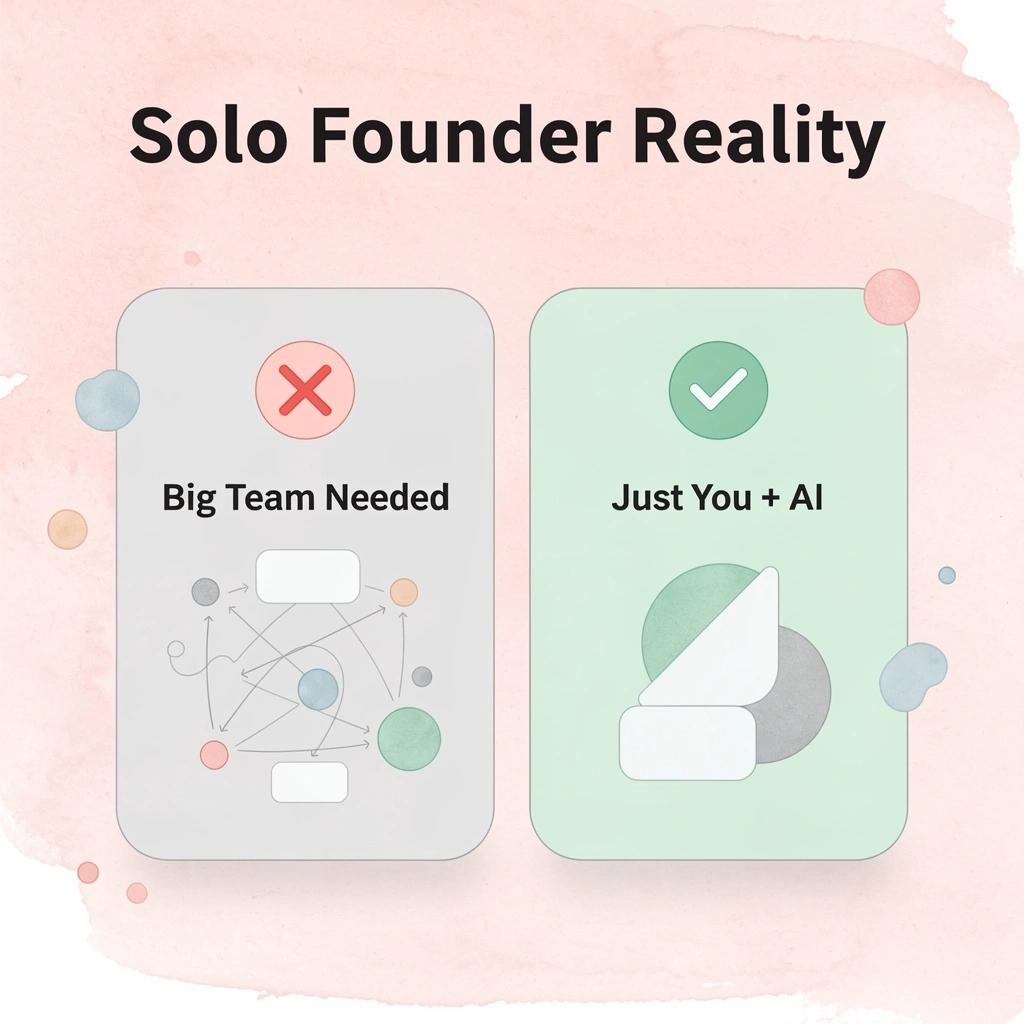
Start today. Whether you are testing a new idea or speeding up a product that already has traction, Polsia is built for founders who want to move at the speed of a full team without the extra costs that slow down early growth.
💡 Tip: If you are in the idea-testing phase, Polsia lets you validate, build, and launch faster than any traditional hiring process.
✅ Best Practice: Don't wait until you have "enough" traction to start. The earlier you deploy Polsia, the faster you compound your growth with zero added headcount.
Related Reading
- Lovable Ai Vs Replit
- Replit Vs Base44
- Bubble.io Vs Webflow
- Glide Vs Bubble
- Bubble Vs Lovable
- Bolt Vs Replit
- Base44 Vs Lovable Ai
- Glide Alternatives