How to Start a SaaS Business Without a Technical Team

Most aspiring founders hit the same wall: a solid software idea with no clear path to building it without a large budget or a technical team. That gap is exactly where the best no-code SaaS builder tools have changed the game, making it possible to launch a fully functional product without writing a single line of code. From validating an idea and defining a target market to setting up recurring revenue and landing the first paying customers, the barrier to entry has never been lower.
What matters now is having the right support to move from concept to a product users will pay for. Founders who want a faster, more structured path forward can work with a web app development company like Polsia, which helps turn SaaS ideas into functional products quickly and affordably.
Table of Contents
- Why Most People Never Start a SaaS Business
- What Makes a SaaS Business Successful?
- How to Start a SaaS Business Step by Step
- Common Mistakes New SaaS Founders Make
- Why Starting a SaaS Business Is Easier Than Ever
- How Polsia Helps You Start a SaaS Business
- Start or Grow Your Existing Business with Polsia Today
Summary
- The most common reason aspiring founders never launch a SaaS business is that they think it is a bad idea. It is the belief that execution requires a team assembled before any building begins. Research from CB Insights (2023) found that 35% of startups fail due to a lack of market need, which means founders who delay validation in favor of preparation are taking on more risk, not less.
- Retention is a more reliable growth engine than acquisition in SaaS. According to Vena Solutions, top SaaS companies achieve annual customer churn rates below 5%, and companies with net revenue retention above 120% grow twice as fast as those with NRR below 100%. These numbers reflect products so deeply embedded in daily workflows that leaving becomes more disruptive than staying.
- Sequence matters more than speed when building a SaaS product. Founders who validate demand before writing a single line of code avoid the most expensive early mistake: building features for an imagined user rather than a real one. A landing page, a short survey, or direct conversations with ten potential customers can confirm whether a market exists before any development budget is committed.
- The solo founder model is growing at a measurable rate. Carta's startup formation research shows the share of new companies founded by solo founders rose from 23.7% in 2019 to 36.3% in the first half of 2025. That shift reflects a structural change in what one person can realistically build and ship alone, driven by AI-assisted tools that have compressed development cycles from months to days.
- Feature overload is one of the quietest killers of early SaaS products. According to Antler, one of the most common early-stage mistakes in B2B SaaS is building features based on assumptions rather than validated customer pain points. A product that tries to solve five problems usually solves none of them well enough to earn loyalty or reduce churn.
- Early investment in content marketing and SEO produces compounding returns that paid acquisition channels rarely match at the same cost efficiency, according to Profitwell (2022). Founders who start building an audience before launch arrive at their first customers with trust already established, rather than spending to manufacture it after the product ships.
- Polsia, a web app development company, bridges the gap between idea and execution by providing solo founders with a business plan, product roadmap, and MVP strategy in a single session, without requiring them to hire a development team first.
Why Most People Never Start a SaaS Business
Most aspiring founders fail not because their ideas are bad, but because they overestimate where they need to start. The technical barrier, hiring costs, and overwhelming responsibilities feel like walls — but most are just perceptions shaped by an older way of building software companies.
"The biggest obstacle between most founders and their SaaS business isn't capital, code, or competition — it's the perception of how high the barrier to entry actually is."
🎯 Key Point: The #1 reason aspiring founders never launch isn't a lack of skill or resources — it's overestimating the starting line. The game has fundamentally changed.
⚠️ Warning: Don't let outdated assumptions about hiring costs, technical complexity, or team size stop you before you even begin. The modern SaaS playbook looks nothing like it did a decade ago.
- Technical Complexity: While legacy systems were hard to build, modern no-code platforms and AI-driven development tools have lowered the barrier to entry, allowing you to build sophisticated products faster than ever.
- High Hiring Costs: You no longer need a massive upfront investment; solo founders are building and scaling profitable SaaS products by leveraging automation instead of traditional headcount.
- Overwhelming Responsibilities: The "team" is no longer just people; lean tools and AI automation now manage the operational heavy lifting that previously required dedicated staff.
Why do founders still follow an outdated SaaS playbook?
That older model had a clear script: find a technical co-founder, raise a seed round, hire a small team, and spend six to twelve months building before customers see the product. Building software once required engineering resources that most solo founders lacked. Many aspiring founders still follow that script in 2025, though today's tools have transformed it.
The real problem is the belief that execution requires headcount. Aspiring founders survey the full scope of running a SaaS business—product planning, development, marketing, customer acquisition, support, infrastructure—and conclude they need a team before beginning. A solo founder who starts imperfectly and collects real customer feedback in week one is already ahead of the founder who spends six months assembling the "right" team before writing a single line of product requirements.
How does hiring before revenue compound the risk for solo founders?
The traditional approach hires specialists for each function: a developer to build, a designer to polish, a marketer to generate leads. When those functions required dedicated expertise at every stage, this made sense. But as scope expands before revenue arrives, financial exposure compounds quickly. According to Scott Leese on LinkedIn, a post about SaaS survival in 2025 generated 792 comments, reflecting founder anxiety about whether the traditional path still works. As a web app development company, Polsia removes this risk by providing solo founders with a system for planning, building, marketing, and operating without first assembling a team.
What does the waiting loop actually cost a founder who delays?
The waiting loop is its own trap. Founders delay until they learn to code, save more money, or find the right co-founder. Each condition feels reasonable; together, they become an indefinite delay. Finerva's 2025 SaaS analysis shows a widening gap between SaaS and the rest of the market starting in April 2025, signaling that the window for differentiation is narrowing. Founders who act now with imperfect tools build customer insight and momentum that waiting founders never recover.
The real cost of not starting is invisible: it lives in the gap between what a founder imagined building and what a competitor launched while the founder was preparing. Fear of mistakes is a more powerful barrier than any technical challenge, and no amount of planning, saving, or certifying removes it.
But knowing why founders stall is only half the picture. The more interesting question is what separates the ones who build something that lasts.
Related Reading
- Best No Code SaaS Builder
- How To Turn An Idea Into A Product
- Startup Product Development
- How To Start A Software Company
- How to Automate My Business
- How To Create A Digital Product
- How To Find A Cofounder
- How To Start an AI Company
- How To Start A Saas Business
What Makes a SaaS Business Successful?
Successful SaaS businesses are built on precision: solving a specific problem for a specific person, repeatedly and reliably. The founders who last stay close enough to their customers to keep improving what already works.
"The founders who last stay close enough to their customers to keep improving what already works." — Core SaaS Principle
🎯 Key Point: The foundation of every successful SaaS business is ruthless specificity — a clearly defined problem matched to a clearly defined person.
💡 Tip: Don't chase every customer. Nail one specific use case first, then expand. The most durable SaaS companies are built on depth before breadth.

The problem is worth solving
The failure point is usually not the product—it's problem selection. Founders who chase broad markets build software that serves everyone adequately and nobody exceptionally. The strongest SaaS products target a pain that is frequent, costly, and currently handled through workarounds: spreadsheets, manual processes, or disconnected tools. When your software removes that workaround, customers depend on it.
That dependency drives SaaS growth through retention. According to Vena Solutions' 85 SaaS Statistics, Trends and Benchmarks for 2026, top SaaS companies achieve annual churn rates below 5%. This reflects products embedded so deeply in daily operations that leaving becomes more disruptive than staying. Churn below 5% is a product design achievement, not a customer service one.
Why does retention compound everything?
Most first-time founders focus too much on acquiring new customers while underestimating what happens after the sale. A leaky bucket never fills, no matter how fast you pour. What separates strong SaaS businesses is their focus on net revenue retention, which measures whether existing customers increase their spending over time. Vena Solutions reports that SaaS companies with net revenue retention above 120% grow twice as fast as those with NRR below 100%, meaning the product itself becomes a growth channel when customers expand their usage.
Can a solo founder realistically compete without a team?
The traditional assumption is that growth requires a sales team, a customer success department, and a dedicated onboarding crew. Solo founders often stop here, believing they cannot compete without more employees. But a web app development company like Polsia changes that thinking entirely. When one person can handle product iteration, customer communication, and feature prioritization through an autonomous AI system, the overhead that once required a team becomes manageable for a single founder.
What execution actually looks like
Product-market fit is not a moment; it's a signal you read through customer behavior. The clearest sign is not what users say, but what they do when your product is down. If they email in a panic, you've built something that matters. If they move on, you haven't found the fit yet. Execution is the discipline of staying close enough to that signal to act before a competitor does. Recurring revenue gives you the runway to keep listening, improving, and compounding the advantage that retention creates.
Knowing what makes a SaaS business work differs from knowing where to start and in what order—factors that fundamentally change your odds of success.
How to Start a SaaS Business Step by Step
Doing things in the right order matters more than doing them fast. Successful SaaS founders validate before building, launch before perfecting, and improve based on what real customers actually do, not what they think customers will do.
"The founders who win aren't the fastest builders — they're the ones who validate first, launch early, and let real customer behavior guide every next step." — SaaS Growth Principle
🎯 Key Point: The correct order of operations — validate → launch → improve — is the single most important framework for SaaS success. Skipping steps doesn't save time; it wastes it.
⚠️ Warning: The most common SaaS founder mistake is building a fully polished product before talking to a single real customer. Months of work can be lost chasing assumptions instead of validated demand.
To successfully move from an idea to a sustainable venture, you must strictly follow these three phases while avoiding the common traps that stall momentum:
- 1. Validate: Engage with real customers to identify actual pain points before writing a single line of code.
- Common Mistake: Building based on internal assumptions of what you think users want.
- 2. Launch: Ship an MVP (Minimum Viable Product) as early and imperfectly as possible to test your thesis in the market.
- Common Mistake: Obsessing over perfection and waiting too long to release, missing critical market feedback.
- 3. Improve: Use real usage data and analytics to guide your feature development and pivot decisions.
- Common Mistake: Developing updates based on guesswork or personal preference rather than empirical user behavior.
⚡ Pro Tip: Speed wins only when it's applied after validation — launching fast on a validated idea is powerful; launching fast on an unvalidated one is just fast failure.

Start with the problem, not the product
The failure point is usually this: a founder falls in love with a solution before confirming the problem is real. The most durable SaaS businesses begin with a specific, recurring frustration that a defined group faces each week. When you can describe that moment in the customer's own words, you have something worth building toward.
Validation comes before development and requires no product. A landing page, a survey, or a direct conversation with 10 potential customers can confirm demand. According to CB Insights (2023), 35% of startups fail because there is no market need for their product. The goal is to find people willing to pay for a solution or, at a minimum, sign up before the product exists.
Build the smallest thing that solves the real problem
Once demand is confirmed, the focus shifts to restraint and simplicity. An MVP is the minimum functionality required to deliver the core outcome your customer is paying for. Founders who build a lean ship faster, gather feedback sooner, and avoid building unused features. Product decisions made after real usage data outperform those made in planning documents.
Why does the traditional build approach slow everything down?
Most solo founders either learn to code themselves or spend months searching for a technical co-founder, delaying everything and creating dependency before the business proves itself. A growing number of companies use a web app development company like Polsia to plan, build, and iterate on their products without an internal development team. Our platform accelerates progress by eliminating hiring and onboarding time, letting you act on customer feedback immediately. The hidden cost of the traditional approach is the compounding delay between learning something from a customer and acting on it.
What should you focus on in the first 90 days after launch?
Launching quickly matters, but what you do in the first 90 days shapes everything. Monitor feature usage, track where customers drop off during onboarding, and treat every support request as a signal about product clarity. Test acquisition channels early, not after the product feels "ready," because finding a channel that consistently brings in qualified customers at a sustainable cost takes longer than most founders expect. According to Profitwell (2022), SaaS companies that invest in content marketing and SEO as early acquisition channels see compounding organic growth that paid channels rarely replicate at the same cost efficiency.
Why do pricing and operations trip up so many SaaS founders?
Pricing and operations are the two areas founders consistently underestimate until they create real friction. Pricing is not a one-time decision; it's a hypothesis you test against real customer behavior, and most SaaS companies adjust their model at least twice in the first year as they understand what customers value. Operations, including support systems, infrastructure reliability, and financial tracking, need to be built before they become urgent, because a broken support process discovered at 500 customers is far more damaging than one discovered at 50.
But knowing the right steps is only half the picture; founders who follow every step correctly and still struggle are usually making a different kind of mistake entirely.
Related Reading
- Softr Alternatives
- Best App Creators
- Lovable Ai Alternatives
- Ai Prototyping
- Easiest Way To Build A Web App
- Bubble.io Alternatives
- Mvp Tools
- Saas Mvp Development
- Best Ai Tools For Startups
- Bolt Alternatives
- No-Code AI Tools
- Replit Alternatives
Common Mistakes New SaaS Founders Make
The mistake that quietly kills most early SaaS businesses isn't building the wrong product. It's building the right product the wrong way — with too many assumptions baked in before a single real customer weighs in.
"The most dangerous phrase in business is: we've always done it this way — but for SaaS founders, the deadlier version is: we assumed customers wanted it this way." — Product Strategy Insight
⚠️ Warning: Founding teams that skip early customer validation are statistically far more likely to burn through their runway building features nobody asked for.
💡 Tip: Before writing a single line of code, talk to at least 10 real potential customers. Their words should shape your roadmap, not your assumptions.
To build a resilient venture, you must choose the right architectural approach for your development lifecycle:
- Assumption-first building: Leads to a high risk of misaligned product-market fit by building features no one wants.
- Customer-first validation: Enables faster iteration and lower wasted spend by anchoring development in actual user needs.
- Hybrid (build + test early): Provides a balanced risk profile by using real-world feedback loops to iterate on a functioning product.
🎯 Key Point: The core mistake isn't a lack of talent or effort — it's a process failure. Validating assumptions early is the single highest-leverage habit a new SaaS founder can build.

What actually goes wrong before launch
Founders often spend weeks adding features based on assumptions rather than on validated customer pain points. According to Antler, this is one of the most consistent early-stage mistakes in B2B SaaS. The result is a launch that feels complete internally but lands flat externally, since the market never asked for what was built.
Why does trying to solve too much kill early traction?
A product trying to solve five problems usually solves none well enough to earn loyalty. The founders who win early focus on one specific workflow, one recurring frustration, one moment where their user wastes time or loses money, and make that single thing undeniable. Everything else waits.
What happens when marketing starts too late?
Most solo founders wait until launch to start marketing, leaving them with no audience, waitlist, early feedback, or momentum. Starting to talk publicly about the problem you're solving weeks or months before launch builds trust that paid advertising cannot create quickly. Content, community participation, and direct outreach cost almost nothing and return more than most founders expect.
How do manual processes quietly break a growing SaaS?
Early-stage founders often run everything by hand: copying data between tools, answering support questions themselves, tracking revenue in spreadsheets. It works for ten customers. At fifty, it starts to break down. At two hundred, it falls apart. The founders who grow successfully build simple systems early, before they need to handle more work. A web app development company like Polsia is designed for this reality: our platform helps solo founders manage product, support, marketing, and operations without hiring more people, and uses AI to keep the infrastructure running so work doesn't fall apart.
Is over-planning just expensive procrastination in disguise?
The biggest mistake isn't a tactical error: it's believing that more planning reduces the risk of being wrong. The market rewards the founder who gets real feedback fastest, adjusts without ego, and keeps moving. Spending budget on branding, advertising, or development before confirming customers will pay is planning with a price tag.
Yet knowing this still leaves one question: if the barriers to starting have never been lower, why do so many capable people feel it's out of reach?
Why Starting a SaaS Business Is Easier Than Ever
The friction isn't a lack of ideas or ambition; it's psychological, rooted in an outdated picture of what it takes to start.

The old mental model demanded a technical co-founder, seed funding, a small specialist team, and 18 months before shipping. That's no longer accurate. As Toni Hopponen noted on LinkedIn in April 2025, starting a SaaS business today differs categorically from doing so in 2010: one person can now build and ship it alone. The tools have changed. The question is whether the mental model has caught up.
Why does the skills gap between solo founders and funded teams keep shrinking?
The change isn't about cheaper tools or faster computers—it's about who gets to participate. AI-assisted development lets a single founder describe a feature in plain language and watch working code take shape in minutes. Marketing copy, customer onboarding sequences, support responses, and data analysis—tasks that once required separate specialists—can now be handled through coordinated AI tools that a solo operator runs from a single laptop. The skills gap between a solo founder and a funded team has narrowed faster than most anticipated.
Does the founding moment still have to wait for the hiring moment?
Most people who want to start a company still do this the old way: they sketch a product idea, estimate hiring costs, and conclude they're not ready. That gap between idea and first line of code used to be a real problem. Today it's mostly a habit of thinking. Platforms like Polsia offer solo founders an independent system that handles planning, coding, marketing, and operations without requiring them to assemble a team first. The founding moment doesn't have to wait for the hiring moment.
Why does speed change the entire game?
When development cycles compress from months to days, founders stop treating the product as the final goal and start treating it as the first draft. A founder who ships a working MVP in a week and puts it in front of real users has a fundamentally different relationship with risk than one who spent six months building before anyone saw it. Feedback arrives before sunk costs become emotional. Adjustments happen before the wrong direction becomes the only direction.
What does the data say about solo founding today?
The data on solo founding shows this change. According to Carta's startup formation research, the share of new companies founded by solo founders grew from 23.7% in 2019 to 36.3% in the first half of 2025. This reflects a structural shift in who believes starting is possible and, more importantly, who's proving it by shipping products, acquiring customers, and building recurring revenue without a single hire.
What's the one thing no tool can replace?
The tools exist. The costs have dropped. The playbook no longer requires a team. What remains is the one thing no tool can replace: the decision to begin.
How Polsia Helps You Start a SaaS Business
Starting a SaaS business is possible, but hard work. Founders must validate ideas, plan products, build software, attract customers, manage operations, and support users: responsibilities that overwhelm first-time entrepreneurs.
"The path from idea to operating SaaS business demands six distinct skill sets simultaneously — a burden that crushes most solo founders before they ever launch."
⚠️ Warning: Most first-time founders underestimate the scope of launching a SaaS. It's not building alone; it's validating, marketing, operating, and supporting users all at once.

Polsia is an autonomous AI co-founder that helps plan, build, market, and operate an online business from start to finish.
Polsia streamlines the founder journey by replacing traditional, fragmented hiring with an integrated, AI-augmented operational model.
- Validate Ideas: Uses AI-driven research to test and confirm market demand before you invest time.
- Plan the Product: Creates clear, structured roadmaps and feature sets to keep development focused.
- Build Software: Provides guided technical support to ensure your product is built efficiently.
- Attract Customers: Integrates marketing strategy directly into your execution plan to drive consistent growth.
- Manage Operations: Implements autonomous oversight systems to keep your business running smoothly.
- Support Users: Sets up scalable frameworks to handle ongoing customer needs without burnout.
💡 Tip: Think of Polsia as your always-on co-founder — covering every stage of the SaaS journey so you're never navigating the hardest parts alone.
🎯 Key Point: Polsia doesn't just assist with one part of your business — it's built to handle the full lifecycle, from day one to a fully operating SaaS.
How does Polsia help founders validate and plan their SaaS idea?
Instead of spending months finding a technical co-founder or learning to code, founders can move from idea to execution faster. Polsia supports business planning and validation, helping entrepreneurs evaluate opportunities and develop a clearer launch path before investing significant resources.
Once validated, Polsia supports full-stack product development without requiring coding skills. Whether building a SaaS platform, web application, or other online business, founders can build and deploy products without facing one of the biggest barriers to getting started.
How does Polsia accelerate MVP creation and customer acquisition?
Polsia speeds up MVP creation. Rather than spending months building numerous features, founders can launch quickly, gather feedback, and confirm customer demand sooner—a key SaaS lesson: successful products improve through real customer feedback, not perfect initial builds.
Customer acquisition is equally important. Polsia automates marketing across cold email, Meta ads, and social media, helping founders attract customers without having to master every marketing skill.
How does Polsia handle operations so founders can focus on growth?
As businesses grow, day-to-day tasks consume significant time. Polsia handles customer communication, inbox management, infrastructure setup, and ongoing operations, freeing founders to focus on strategic growth.
Polsia works around the clock, unlike traditional teams with set hours. This benefits founders balancing startups with full-time jobs or other commitments.
Why is Polsia built for first-time founders starting a SaaS business?
For people starting their own business, the biggest challenges are technical skills, money, and time, not ideas. Hiring experts costs significantly; learning every skill takes years. Polsia brings planning, development, marketing, and operations together on one platform designed for first-time founders.
The result is a practical way to go from idea to launch, letting entrepreneurs focus on building a business customers want instead of assembling a team.
Start or Grow Your Existing Business with Polsia Today
The hardest part of starting a SaaS is making the decision, not finding the right tools or timing. If your idea is sitting in a notes app or half-finished spreadsheet, the gap to a working product is smaller than you think. Polsia, a web app development company built for solo founders, delivers a business plan, product roadmap, and MVP execution strategy in your first session—enabling you to validate demand and start building without hiring a developer.
"The gap between a SaaS idea and a working product is smaller than you think—with the right system, solo founders can go from concept to execution in a single session." — Polsia
💡 Tip: Don't wait for the perfect moment or team. Polsia's first session gives you a complete business plan, roadmap, and MVP strategy—everything you need to move from idea to action.
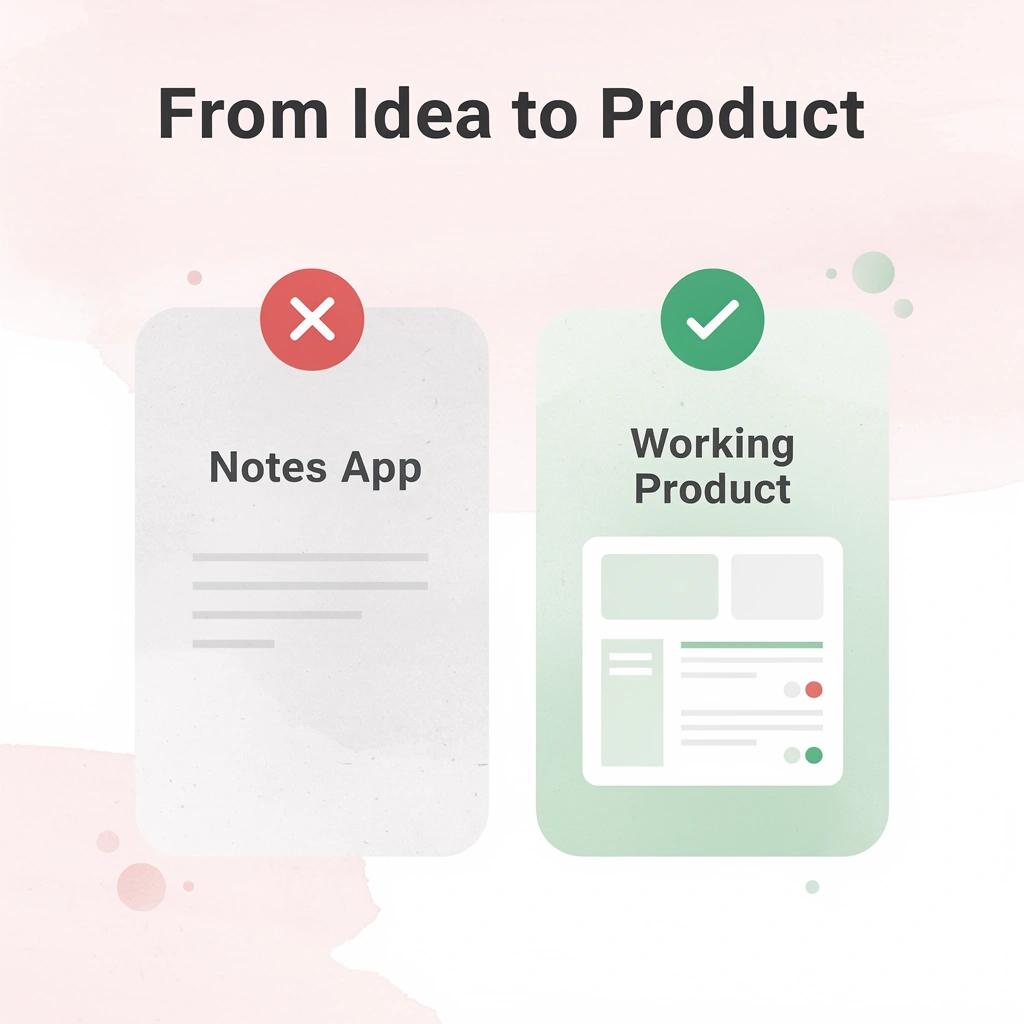
You don't need a team; you need a system that replaces one. Polsia handles planning, coding, marketing, and operations that most founders assume require multiple people. The solo founder era is here—and it's redefining what's possible for a single person with the right tools.
Founders often view their needs as a hiring problem, whereas Polsia reframes them as an execution and architecture problem.
- Product Development: Instead of just a developer, you get a full MVP execution strategy paired with direct coding support.
- Strategy: Instead of a long-term business plan consultant, you get a validated business plan finalized in your very first session.
- Marketing: Instead of hiring a marketer to chase demand, you get marketing planning woven directly into your product roadmap.
- Operations: Instead of building an ops team, you get an operational framework designed specifically for the constraints of a solo founder.
🎯 Key Point: The solo founder era is already here. Polsia replaces the need for a full team by handling every critical function—from product development to marketing—in one powerful platform.
⚠️ Warning: Waiting until you can afford a team means waiting indefinitely. The only question is whether you'll be part of the solo founder movement—or watch others build while you plan.
Related Reading
- Bolt Vs Replit
- Bubble.io Vs Webflow
- Base44 Vs Lovable Ai
- Replit Vs Base44
- Glide Alternatives
- Bubble Vs Lovable
- Glide Vs Bubble
- Lovable Ai Vs Replit