10 Best Devin AI Alternatives to Build Your Startup From Scratch

AI coding assistants have revolutionized software development, with Devin AI leading the charge as an autonomous agent that writes code, debugs applications, and deploys complete projects. While Devin represents the cutting edge of Vibe Coding—where AI amplifies creative vision and accelerates development—entrepreneurs and developers need practical alternatives that match their specific budgets, technical requirements, and timelines. The market offers numerous powerful options beyond Devin that can effectively support startup development from concept to launch.
Choosing the right AI development solution becomes critical when racing to bring a product to market. Startups require more than basic code generation—they need strategic guidance, reliable execution, and tools tailored to their unique challenges. For comprehensive support in evaluating and implementing these AI coding solutions, partnering with an experienced web app development company ensures access to both cutting-edge technology and the expertise needed to transform ideas into successful products.
Table of Contents
- Devin AI Sounds Like the Future, But It’s Not Enough
- What Devin AI Actually Does Well, And Where It Stops
- Why Most “AI Developer” Tools Fail Solo Founders
- What to Look for in a Devin AI Alternative
- 10 Best Devin AI Alternatives for Founders
- How Polsia Replaces the Need for Several AI Tools
- Start or Grow your Existing Business with Polsia Today
Summary
- Devin AI resolved 13.86% of real GitHub issues end-to-end without human input, up from 1.96% for previous models, and merged 67% of pull requests in 2024, up from 34% the year before. This represents measurable progress in autonomous coding capability. But the performance stops at the engineering layer. The system writes code, debugs applications, and executes technical workflows, yet it doesn't validate product ideas against market demand, write positioning copy, or determine which distribution channels convert users into customers.
- CB Insights research shows that 35% of startups fail because there was no market need for what they built. Engineering velocity has nothing to do with that outcome. Most AI developer tools optimize for shipping features and faster deployment, which matters only if founders already know people want what they're building. Solo founders rarely have that certainty upfront. They build functional products in three weeks, launch them, and watch growth flatline because no clear audience exists, and there's no structured way to drive adoption.
- The gap between code written and product deployed is where most solo projects die quietly. Full-stack development requires more than code generation. It includes infrastructure, hosting, iteration, and connecting the product to real users. Language support means nothing if the application never reaches production. The pattern repeats across failed projects: a functional app, zero users, an abandoned repository. Speed in the wrong direction is just expensive wandering.
- Marketing is not a phase that happens after launch. It's a parallel operation that should start the moment an idea is validated. Without distribution, even well-built products sit unnoticed. Without positioning, potential users can't explain why they'd switch from their current solution or do nothing at all. Technical builders excel at building, but doing marketing consistently becomes the determining factor, and it's time-consuming in ways that code never is.
- Tools that treat planning, building, launching, and running as continuous interconnected operations create different outcomes than tools that isolate each phase. The real standard is not how fast code gets written but how quickly a founder can move from idea to a business that generates revenue and serves customers. Speed in development doesn't matter if the rest of the business is missing, so the right tool should address the constraint that actually prevents launch and scaling.
- A web app development company like Polsia addresses this by operating autonomously across product planning, development, marketing, and customer operations rather than stopping at code generation.
Devin AI Sounds Like the Future, But It’s Not Enough
Devin AI promises autonomous code writing, debugging, and task completion with minimal input—the missing piece for solo builders. But the core limitation is this: most people ask whether Devin can build a product, when the critical question is whether he can build a business.

🎯 Key Point: The gap between building functional code and building a sustainable business remains the biggest challenge for AI-powered development tools.
"The critical question isn't whether AI can build a product, but whether it can build a business." — The fundamental limitation of current AI development tools
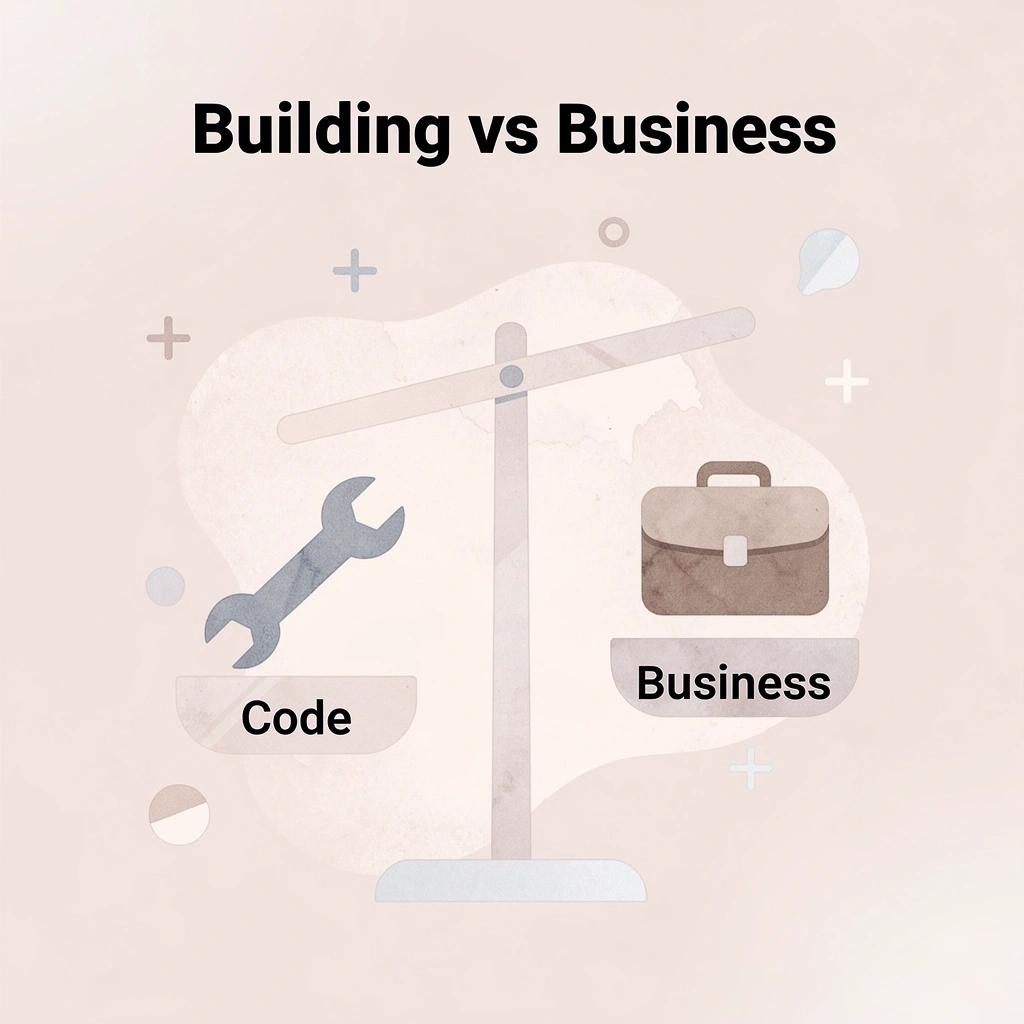
💡 Takeaway: While Devin AI excels at technical execution, the strategic thinking, market validation, and business development aspects still require human insight and entrepreneurial judgment.
What's the difference between a product and a business?
A product is code. A business is distribution, positioning, customer acquisition, retention, and operations. Even if the product is built perfectly, it doesn't matter if no one uses it. Cognition reports that thousands of companies now use Devin, and the company is racing toward a $25 billion valuation, according to Techzine Global. The market clearly sees value in independent coding, but that value stops at the engineering layer.
Why do products fail without a proper business strategy?
You can end up with a fully functional product, but no clear path to users. You're responsible for reaching your audience, positioning your product in the market, and generating consistent growth. Without that layer, the product sits unused. That gap is where most early-stage efforts fail.
Why does the engineering focus create misconceptions?
The focus is almost entirely on engineering output. Demos show code being written, bugs being fixed, and tasks being completed autonomously. What they don't show is everything after the product is built: user acquisition, demand validation, and business sustainability. This skews perception. The hard part has been solved, but only one part of the problem has been addressed.
What makes truly autonomous systems different?
Autonomous systems must operate beyond code. Polsia provides an AI system that plans, builds, and markets continuously without human intervention. While AI coding assistants stop when scripts finish, autonomous systems run continuously. They integrate planning, execution, and marketing as connected functions rather than separate tasks.
But the real challenge isn't whether the AI can do the work. It's whether you understand what needs to be executed.
What Devin AI Actually Does Well, And Where It Stops
Devin excels at organized engineering work: writing production code, debugging systems, and completing multi-step workflows independently. This is measurable, not theoretical.

🎯 Key Point: Devin excels at structured, measurable tasks where clear outcomes can be defined and tracked, making it ideal for systematic development work.
"Organized engineering work with multi-step workflows represents the sweet spot where AI coding assistants like Devin deliver measurable value rather than just theoretical promises."
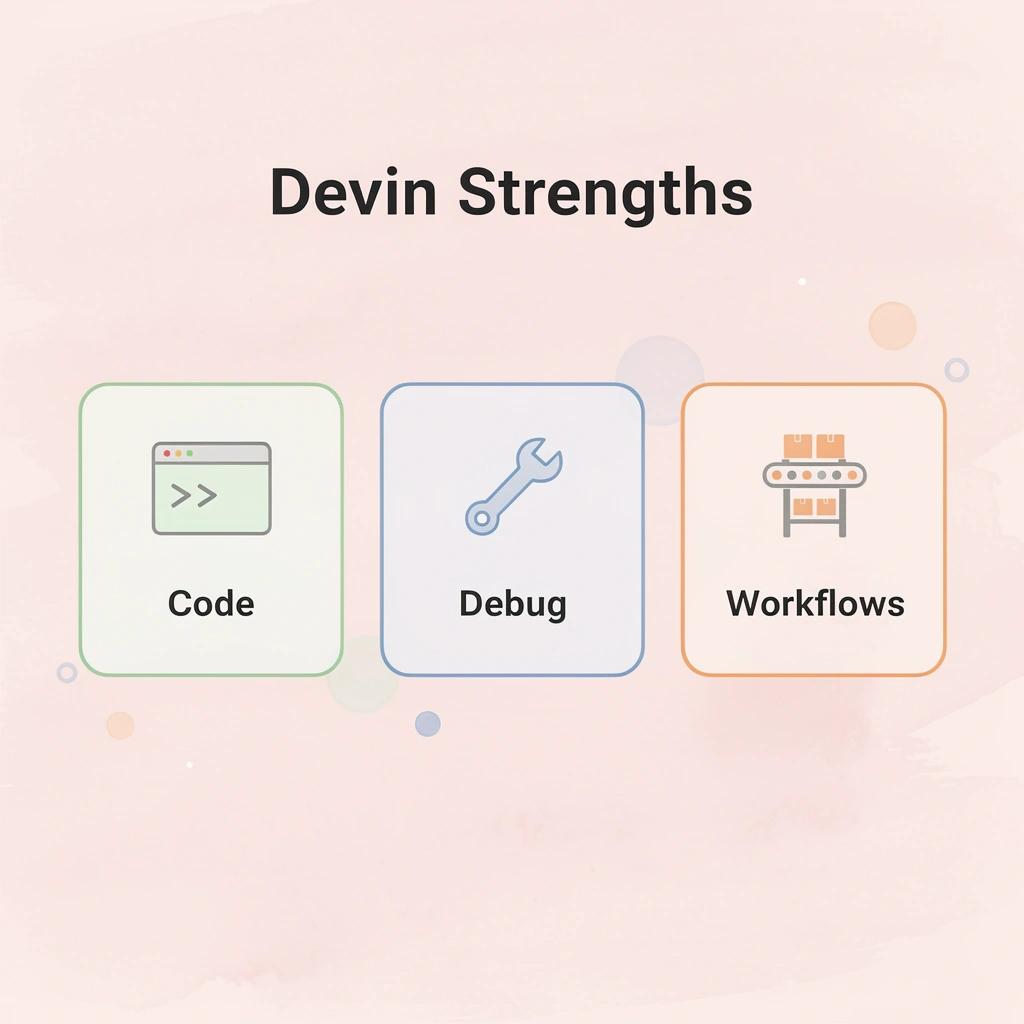
⚠️ Warning: While Devin handles structured tasks exceptionally well, don't expect the same level of performance when requirements become ambiguous or creative problem-solving is needed.
Where Devin performs
Devin works as an independent software engineer, planning end-to-end workflows, searching documentation, writing tests, finding bugs, and making changes based on feedback—capabilities that go beyond code-generation tools like Copilot or ChatGPT. Jacob Addington's analysis shows that Devin merged 67% of pull requests, up from 34% the year before, while becoming 4x faster at problem-solving. This represents a significant shift in what independent systems can accomplish.
On SWE-bench, which tests AI against real GitHub issues, Devin solved 13.86% of problems from start to finish without human help, compared to 1.96% for previous models. These aren't contrived challenges but real production issues that broke actual software.
Where the boundary appears
Devin works only in engineering: coding, fixing bugs, and technical work. It doesn't handle positioning, distribution, customer acquisition, product testing, landing page writing, channel analysis, or strategic decisions about what to build.
Reviews call it a "super-advanced intern." It can accomplish much, but requires clear instructions and oversight for unclear problems. Building software is one part of running a business.
What challenges do solo founders actually face?
The other parts—positioning, marketing, customer discovery—fall outside Devin's scope.
Most solo founders face a different problem than slow coding: they build products that work, but nobody discovers them. The real issue isn't coding speed; it's managing planning, development, and growth simultaneously.
How do autonomous systems compare to coding-only tools?
Systems like Polsia operate as independent co-founders, handling planning, coding, and marketing as connected functions. The difference isn't faster development; it's continuous operation across the entire business model.
Related Reading
Why Most “AI Developer” Tools Fail Solo Founders
AI coding tools promise speed, but speed alone doesn't create successful businesses. According to CB Insights research, 35% of startups fail because no market need existed for what they built. The engineer's velocity was irrelevant.
"35% of startups fail because no market need existed for what they built." — CB Insights Research
🚨 Warning: Building faster doesn't guarantee building the right thing for your market.

Most AI developer tools focus on the wrong goal. They help you release features, write better code, and deploy faster—all useful if you already know people want what you're making. Solo founders lack that certainty at the start. They're building without knowing if anyone wants it, hoping the product finds its audience after launch.
🔑 Key Takeaway: Speed optimization tools solve the wrong problem when you haven't validated market demand yet.
The predictable failure pattern
A founder uses an AI coding assistant to build an app in three weeks. The interface works. The features function as intended. Then it goes live, and growth stops. No clear audience exists. The messaging feels unclear. There's no organized way to drive adoption, so early visitors don't convert, and early users don't return.
The founder assumes the product needs improvement and adds more features. But the gap isn't in what the product does—it's in whether anyone knows it exists, understands why it matters, or has a reason to choose it over doing nothing.
What actually determines survival
Without distribution, a well-built product sits unnoticed. Without positioning, potential users can't explain why they'd switch. Without retention systems, early adopters drift away. AI developer tools accelerate the build phase, but they don't address validation before you start or go-to-market after you finish. For solo founders, those phases determine whether the business succeeds.
Why does marketing become the bottleneck after launch?
The gap is most pronounced after launch: you have a working product but no momentum. Marketing feels like a blank page. Technical builders excel at building, but marketing consistency becomes the determining factor, and it takes far more time than writing code.
Systems like Polsia address this by handling planning, development, and marketing as continuous, connected operations rather than separate tasks. The difference isn't faster builds—it's independent operation across the entire business model while you focus on decisions only humans should make.
What matters more than speed and automation?
But speed and autonomy matter only if you're solving the right problem.
Related Reading
- Replit Alternatives
- Appsheet Alternatives
- Softr Alternatives
- Vs Code Alternatives
- Mobile App Ideas
- Ai Tools For Product Managers
What to Look for in a Devin AI Alternative
If your goal is to start a real business, not just ship code, building is only one part of the equation. Tools like Devin AI excel at execution, but without the rest of the system in place, the outcome remains unchanged.

🎯 Key Point: The most sophisticated AI coding tool won't transform your project into a profitable business without proper strategy, marketing, and operations in place.
"85% of startups fail not because of technical issues, but due to lack of market need and poor business execution." — CB Insights, 2023
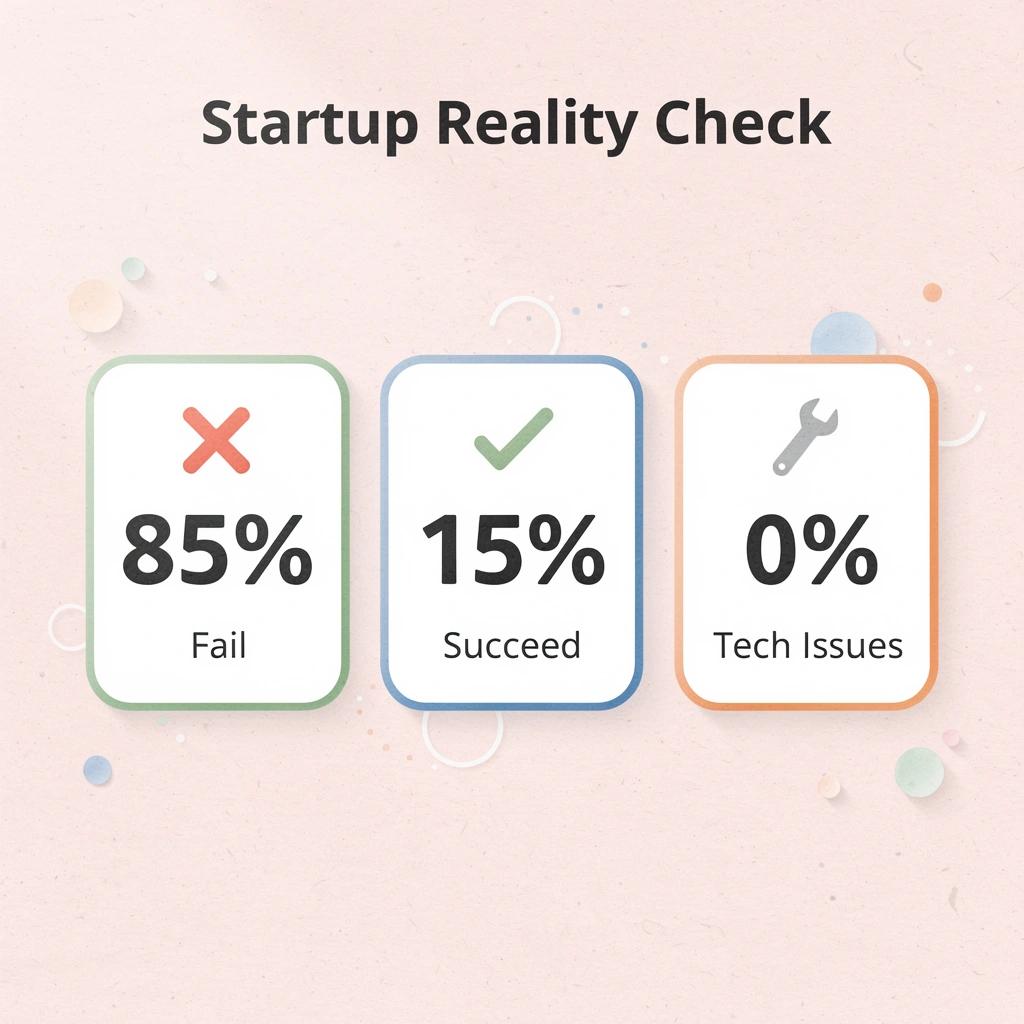
So the question shifts from "Can this build my product?" to "Can this run my business?"
⚠️ Warning: Don't fall into the trap of thinking that faster development automatically equals business success—the real challenge lies in everything that happens after the code is written.
Product planning and validation come first
The tool should help you decide what to build based on demand, not assumptions. Most founders skip validation because it feels slower than coding, but speed in the wrong direction is expensive wandering. You need a system that surfaces market signals before you write code.
Full-stack development with deployment, not just code generation
Writing code isn't enough—the product needs to be live, usable, and connected to real users. That includes infrastructure, hosting, and iteration. According to CodeAnt AI, the current landscape supports 30+ languages, but language support doesn't matter if the code never reaches production. The gap between "code written" and "product deployed" is where most solo projects fail.
Built-in marketing systems that generate demand
Most tools fall short here. You need a way to create demand through ads, email outreach, or content. Without distribution, even a strong product won't gain traction: a functional app, zero users, and an abandoned GitHub repo. Marketing isn't a post-launch phase; it's a parallel operation that should start the moment you validate an idea.
Operational support that scales with users
A product without operations cannot grow. When evaluating options, seek systems that treat planning, building, launching, and running as ongoing, connected operations rather than separate tasks. Platforms like Polsia accomplish this by operating autonomously across the entire business model while you focus on decisions only humans should make.
These abilities create a system that takes you from idea to working business, not a tool that helps you build faster. Speed in development means nothing if the rest of the business is missing.
But knowing what to look for is only useful if you know where to look.
10 Best Devin AI Alternatives for Founders
The best Devin AI alternative depends on your main challenge. If you need a coding assistant that understands your whole codebase, you're solving a different problem than a founder who needs to create a working prototype without writing code. The tools below address different constraints: technical speed, market validation, or operational capacity. The right choice depends on which matters most to you.
🎯 Key Point: The most effective AI coding tool isn't necessarily the most advanced one—it's the one that directly addresses your biggest bottleneck as a founder.
"Choosing the wrong development tool can cost founders 3-6 months of precious runway time." — TechCrunch Startup Survey, 2024
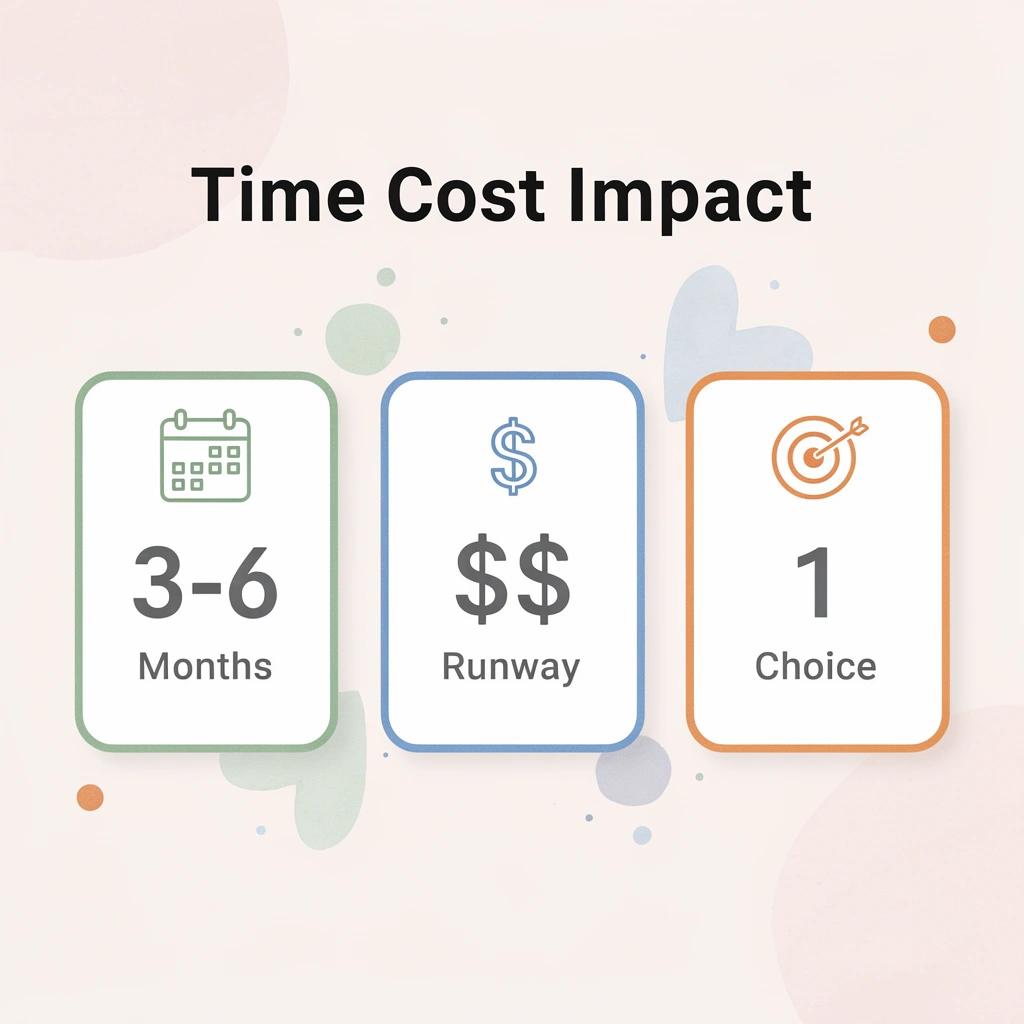
💡 Tip: Before selecting any Devin AI alternative, identify whether your primary need is rapid prototyping, code quality improvement, or technical team augmentation—this will guide you to the right solution faster.
1. Polsia
Polsia is an independent AI co-founder that runs your business continuously without requiring daily management. It handles complete product development, marketing automation across cold email and Meta ads, customer inbox management, and infrastructure setup, freeing you to focus on decisions only humans should make. For solo founders without technical backgrounds or capital to hire a team, Polsia bridges the gap between having an idea and operating a working online business. At $49 per month, it's one of the most affordable systems for launching and growing without assembling a team first.
2. Cursor
Cursor is an AI-powered code editor built on Visual Studio Code that lets technical founders write, edit, and debug code using natural language instructions while maintaining full context across the entire codebase. It accelerates development by understanding project structure and dependencies: you describe what you want changed, and Cursor generates the code directly in your editor. For founders comfortable with development workflows who need to build faster, Cursor integrates into your existing process without requiring a new environment or deployment pipeline.
3. Replit Agent
Replit Agent lets you describe an application in plain language and watch it generate, run, and deploy the project directly in the browser. It handles the entire development environment, making it useful for non-technical founders who want to prototype and ship ideas quickly. You can iterate in real time, test functionality immediately, and deploy to production without managing servers or configuration files. The barrier between concept and working demo drops from weeks to hours, which is critical when validating ideas with real users before committing to a full build.
4. Lovable
Lovable is designed for founders who want to build full-stack web applications through conversation, not code. It generates production-ready applications from natural language descriptions and connects directly to databases, authentication systems, and deployment pipelines without manual configuration. For non-technical founders, it compresses the distance between idea and live product by handling both frontend and backend in a single workflow. The output is a functional application you can deploy, test with users, and iterate on based on real feedback.
5. Bolt
Bolt creates complete web applications from a single prompt. It lets you make changes in real time without managing separate tools or environments. It handles frontend design, backend logic, and deployment in one place, reducing overhead. For founders testing product demand or pitching to investors, Bolt bridges the gap from idea to a working demo by generating a functional application you can share immediately.
6. GitHub Copilot
GitHub Copilot is the most widely used AI coding assistant among developers and technical founders because it works directly inside popular code editors, suggesting completions, generating functions from comments, and helping with debugging in real time. For founders comfortable writing code, it significantly accelerates development. According to CodeAnt AI, Copilot supports over 30 languages, making it useful across different tech stacks. It excels when you understand the architecture and need help writing repetitive code, fixing bugs, or quickly exploring implementation options.
7. Vercel v0
Vercel v0 creates React components from text descriptions, producing production-ready code that integrates smoothly with existing codebases. For founders building web products, it reduces implementation time without requiring deep frontend expertise. It works best alongside other development tools, as it handles the visual layer but not backend logic or deployment. The customizable output lets you refine the user experience based on feedback.
8. AutoGPT
AutoGPT is an open-source independent AI agent that breaks down large goals into smaller tasks and completes them sequentially using available tools and internet access. For founders automating research, content generation, data gathering, and operational tasks, it offers flexible customization without manual workflow building. Once you define the objective, AutoGPT operates independently, freeing you to focus on strategy or customer conversations. The trade-off is a greater technical setup than managed platforms, but the customization potential suits founders who need automation tailored to specific workflows.
9. Microsoft Copilot for Azure
Microsoft Copilot for Azure is built directly into the Azure cloud platform and helps founders manage infrastructure, deploy applications, monitor performance, and troubleshoot issues using natural language. For founders who use Microsoft tools and want to reduce the complexity of cloud operations without hiring a dedicated DevOps engineer, it provides a practical, deeply integrated solution. You can describe what you need deployed or diagnosed, and Copilot handles the configuration, compressing time spent managing servers and scaling infrastructure. The tool works best when your product already runs on Azure, eliminating the need to switch between platforms or learn separate management interfaces.
10. Sweep AI
Sweep AI works inside a GitHub repository, handling bugs, tests, and small features based on naturally written issues. Founders describe a problem in a GitHub issue, and Sweep automatically writes code and opens a pull request. For founders managing existing codebases, it reduces maintenance work and enables incremental improvements without disrupting other priorities. It works best with a working product that needs ongoing maintenance and feature requests.
What Actually Matters When Choosing
The best choice for any founder depends on where the biggest problem lies: development speed, product design, marketing, or operations. Most founders don't need fully independent software engineers like Devin AI. They need a tool that accelerates the journey from idea to a built product across the whole business, not just coding. The most effective tools fix the specific problem directly rather than adding complexity elsewhere.
Which tools match different founder types?
A technical founder who knows how to code will benefit most from tools like Cursor or GitHub Copilot that speed up making changes within familiar workflows. A non-technical founder who needs to quickly create and test ideas will find more value in platforms like Replit Agent, Lovable, or Bolt that provide an end-to-end development environment.
A solo founder launching and operating a business without a team needs a system that covers product development, marketing, and operations simultaneously, which is where tools like Polsia become the most practical choice.
Why do coding tools miss the bigger picture?
The idea that founders need help only with coding misses critical problems in marketing, customer management, and operations. A well-built product with zero users becomes an abandoned GitHub repo. The tool you pick should solve the real problem preventing you from reaching customers and generating revenue.
If building the product is your biggest challenge, pick a tool focused on development. If reaching users is your biggest challenge, pick a platform that handles marketing and operations. If you're doing everything yourself, pick a system that can run autonomously across your whole business.
How do fragmented tools slow you down?
Most teams use separate tools for coding, deployment, marketing, and customer management. This creates extra work and hampers collaboration. As complexity increases, information scatters across platforms, response times lengthen, and decision-making slows.
Platforms like Polsia operate across product planning, development, marketing, and customer operations. They compress the time from idea to working business while maintaining full visibility into every layer of execution.
The real standard is not how fast you can write code, but how quickly you can move from idea to a revenue-generating business that serves customers. The tool you choose should address the constraint preventing you from launching and scaling. The best alternative removes friction between your current state and your goals.
But speed and capability matter only if the system fits the way you work.
How Polsia Replaces the Need for Several AI Tools
Tools like Devin AI are powerful but have limits: they stop at code. Founders still must figure out what to build, how to get users, and how to run their business. Polsia is designed to cover that entire gap.

🎯 Key Point: While specialized AI tools excel in narrow domains, they leave critical business gaps that founders must fill manually—from product strategy to user acquisition.
"85% of startup failures stem from non-technical challenges like market fit and customer acquisition, not coding limitations." — CB Insights Startup Failure Report, 2023
💡 Tip: Instead of juggling multiple AI tools for different tasks, Polsia provides an integrated approach that handles technical development, business strategy, and growth execution in one unified platform.
From Idea to Revenue, Not Just Idea to Code
Polsia works as an independent AI co-founder, not a developer. It connects all the different parts of building and running a business.
How does Polsia handle the complete product development process?
You can plan and validate your business idea before building anything. Polsia then handles full-stack product development and ships your MVP, moving you from idea to a live product without requiring a technical background.
What makes Polsia different from other AI coding tools in terms of business operations?
Polsia runs marketing across cold email, Meta ads, and social platforms, solving the distribution problem most founders underestimate. It handles operations—from customer responses to infrastructure—so the business functions as users arrive.
According to Porter Stanley's LinkedIn post about Polsia, the platform completed 65,602 tasks and sent 55,835 emails in a single week, demonstrating continuous operational capacity without founder intervention.
The Difference in Practice
Instead of using Devin AI to build an app and then spending months on growth, marketing, and operations, Polsia plans the idea, builds the product, launches acquisition channels, and manages incoming users within one system. You're not manually assembling different tools or filling gaps.
You're operating with a system built to take you from zero to a functioning business, not a finished product. The scope matters when the constraint is everything required to make something people pay for, not coding speed.
But having the right tools matters only if you know how to use them.
Related Reading
- Best Mobile App Builder
- No Code Ai Tools
- Lovable Ai
- How To Create An App
- Hire an App Developer
- Ai App Builders
- Best Vibe Coding Tools
Start or Grow your Existing Business with Polsia Today
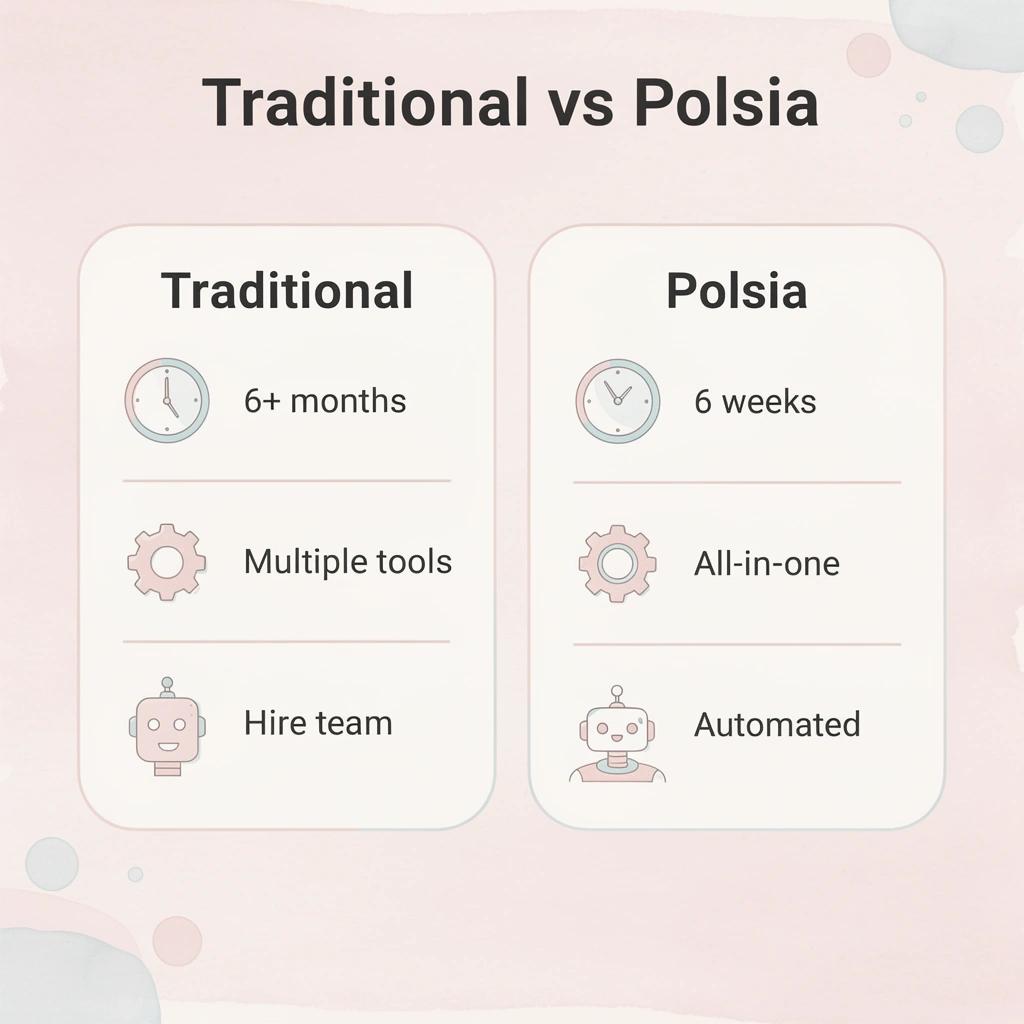
You already know what you want to build. The question is whether you want to spend the next six months assembling a system or six weeks running a business. Most founders treat launch as the finish line when it's actually the starting gate.

🎯 Key Point: Skip the operational overhead and focus on what matters most - building your business.
Polsia runs for $49 a month and handles planning, building, and marketing without requiring you to hire, code, or manage multiple subscriptions. You describe the business idea, and our system validates demand, builds the product, launches it, and runs acquisition campaigns while you focus on decisions only you can make.
"The constraint for most founders is not ideas or effort but the sheer volume of tasks required to turn momentum into traction."
This removes the operational drag that keeps you stuck in execution mode when you should be thinking about direction, positioning, and the next milestone. For most founders, the constraint is not ideas or effort but the sheer volume of tasks required to turn momentum into traction.
Traditional Approach
- 6+ months setup time
- Multiple subscriptions to manage
- Hire developers & marketers
- Focus on execution tasks
With Polsia
- 6 weeks to run a business
- $49/month all-in-one solution
- Automated building & marketing
- Focus on strategic decisions
⚠️ Warning: Don't let operational complexity delay your launch when you could be serving customers instead.
Start today, and by next month, you will have a functioning business with live users. Our system handles marketing and deployment automatically, freeing you to focus on what the business needs next.