7 Lovable AI Alternatives for Building and Growing a Business

Entrepreneurs can now describe their web application ideas in plain English and watch AI assistants generate working prototypes in real time. This approach, exemplified by tools like Lovable AI in the Vibe Coding space, transforms how businesses bring digital products to life through conversational interfaces and rapid development cycles. Understanding the landscape of AI-powered development platforms, no-code solutions, and visual builders helps founders choose the right approach for their specific needs.
The key lies in working with experienced partners who can objectively evaluate these modern development tools. Rather than chasing every promising new platform, businesses benefit from expert guidance on which AI coding assistants, automated deployment tools, and rapid prototyping solutions actually deliver results for their specific use case and long-term goals. This strategic approach ensures companies partner with the right web app development company to navigate the evolving landscape of AI-assisted development.
Table of Contents
- Why Founders Start Looking for Lovable AI Alternatives
- The Belief That Building the App Is the Hard Part
- What to Look for in a Lovable AI Alternative
- 7 Lovable AI Alternatives to Consider
- Which Type of AI Platform Is Right for Your Goals?
- Why Founders Choose Polsia Instead of Standalone App Builders
- Start or Grow your Existing Business with Polsia Today
Summary
- Founders are discovering that building software has become the easiest part of starting a company, not the hardest. CB Insights' analysis shows that 35% of startup failures stem from a lack of market need, while technical inability to build the product doesn't rank near the top of failure reasons. The real bottleneck emerges after launch, when customer acquisition, support, marketing, and operations demand simultaneous attention that solo founders can't provide alone.
- Solo entrepreneurship is surging precisely because AI removed technical barriers. According to Gusto Insights, solo founders now represent 42% of all new business formations, up from 35% in 2022. However, new businesses are starting with 15% fewer employees than just two years ago, meaning founders handle every function themselves. This creates a capacity crisis in which shipping code takes days, but acquiring the first hundred customers takes months of sustained effort across multiple channels.
- Most development platforms treat launch as the finish line when the real work actually begins. Over 6000 companies have shifted toward systems that support ongoing business operations rather than just initial product creation, according to Henry's Best Hits. The 80% of work that happens after deployment, including customer communication, marketing optimization, and sales follow-up, receives no support from tools designed purely for code generation.
- Approximately 20% of new businesses fail within their first year, according to U.S. Bureau of Labor Statistics data, and roughly half fail within five years. Most of these businesses successfully launched products or services. The challenge was sustaining growth, acquiring customers, and operating effectively over time. As AI makes software creation easier for everyone, success increasingly depends on distribution, positioning, customer acquisition, retention, and operational execution rather than technical capability.
- Developers report 90% faster development cycles when using modern AI-powered platforms, but deployment speed becomes meaningless without systems for customer discovery. Platforms offering 5x faster deployment compared to traditional methods still leave founders stranded the moment code ships, facing marketing campaigns that never materialize, support requests that pile up unanswered, and sales conversations that demand follow-up no single person can provide while simultaneously building product.
- Web app development company addresses this capacity problem by providing autonomous systems that handle roadmap planning, marketing execution, customer service, and deal closing alongside product development, eliminating the operational collapse that typically forces solo founders to choose between building and running their business.
Why Founders Start Looking for Lovable AI Alternatives
Founders stop using platforms like Lovable AI when they realize their problem isn't building software anymore. The shift happens quietly, usually a few weeks after launch, when the product exists but nothing else does.

🎯 Key Point: The post-launch reality hits hard when founders discover that having a working product is only the beginning of their journey, not the destination.
"The shift happens quietly, usually a few weeks after launch, when the product exists but nothing else does." — Common founder experience pattern

⚠️ Warning: Many founders assume that rapid prototyping tools will solve their entire business challenge, only to find themselves facing marketing, user acquisition, and revenue generation problems that require completely different skill sets.
What happens after the initial product launch?
Customer acquisition slows, support requests pile up, marketing campaigns stall, and the founder who built an app in days spends months wondering why nobody uses it.
How has AI changed the startup landscape for solo founders?
According to Gusto Insights, solo founders now represent 42% of all new business formations, up from 35% in 2022. This increase reflects how AI has lowered technical barriers. However, lowering one barrier doesn't eliminate the others: generating code solved the easiest problem, not the most important one.
The moment everything changes
The product launches. A few early users sign up. Then silence. Founders refresh analytics dashboards hoping for traffic that never arrives, post on social media to nonexistent audiences, and wait for word-of-mouth growth that requires users first. The app works perfectly, but nobody knows it exists.
Customer acquisition becomes the new bottleneck. Building takes weeks. Getting the first hundred users takes months. Many founders assume distribution happens naturally once quality reaches a certain threshold. The best product without a system for reaching people remains invisible, and invisibility kills companies faster than bad code ever could.
When operational reality hits
Support requests arrive slowly at first, then accelerate. Each customer email requires research and thoughtful responses, sometimes prompting product changes. Marketing campaigns must be created, monitored, and refined. Social media accounts remain neglected or stagnant. Infrastructure problems emerge at inopportune moments. New businesses are starting with 15% fewer employees than they did two years ago, forcing founders to handle every role themselves.
What does running a company actually require?
Product development accounts for 20% of what it takes to run a company. The other 80% involves talking to customers, creating content, managing operations, fixing problems, optimizing funnels, analyzing metrics, and making decisions across diverse areas unrelated to writing code. Founders who loved building discover they're now operating, and those skills don't transfer automatically.
Why do most platforms miss the real bottleneck?
Most platforms focus on speeding up development because that's the technical problem AI solves well. But companies need customer acquisition to run continuously, support to be handled efficiently, marketing to be executed consistently, and operations to be managed intelligently. When founders realize their bottleneck has shifted from building to everything else, they seek partners like Polsia's web app development company. The challenge isn't generating code faster; it's running an entire company alone.
But here's what most founders miss until it's too late.
Related Reading
The Belief That Building the App Is the Hard Part
One of the most common assumptions among first-time founders is: "Once I build the product, the rest will take care of itself." Product development is the most visible part of starting a business. Startup stories focus on launches, MVPs, and new features, while social media is filled with screenshots of products being built and launch announcements.

For many aspiring entrepreneurs, the product feels like the mountain they need to climb. Yet startup data tells a different story: building the product is not the main reason most startups fail.
🎯 Key Point: The product development phase gets disproportionate attention compared to the real challenges that determine startup success.

"Building the product has never been the main reason most startups fail." — Startup failure analysis data reveals that product issues account for only a small fraction of business failures.
⚠️ Warning: Focusing exclusively on product perfection while neglecting market validation, customer acquisition, and business fundamentals is a recipe for startup failure.
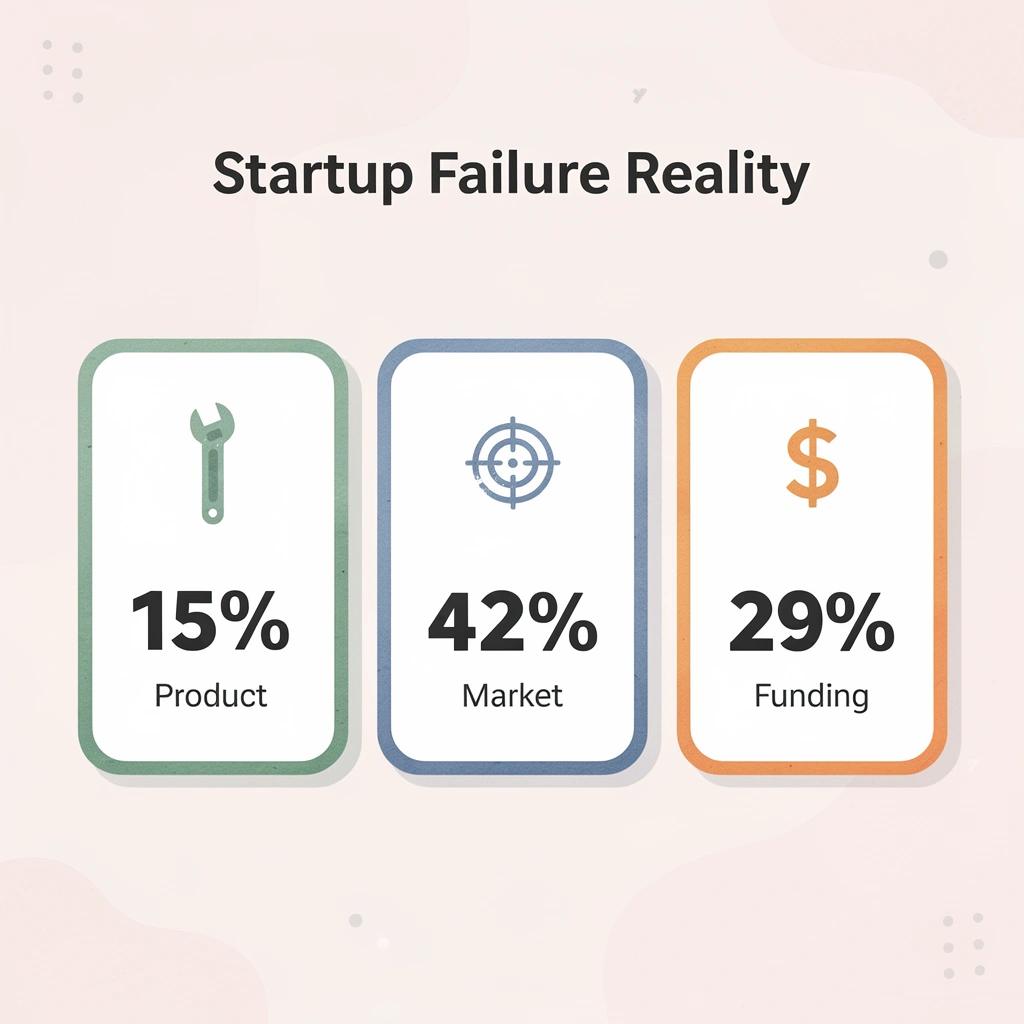
What are the main reasons products fail in the market?
CB Insights' analysis of startup failures shows that 35% of failed startups cite no market need for their product. Other major reasons include competitive losses, broken business models, pricing problems, and weak marketing.
Not being able to build the product is rarely a top reason for failure. The real problem is usually that founders built something people didn't want or couldn't reach customers easily.
Why doesn't technical success guarantee business success?
A founder can successfully create an app and still fail to build a business. The software may work perfectly, and the design may be polished, but if customers never find the product, technical achievement won't translate to business success.
Research from startup accelerator programs shows that acquiring users and achieving product-market fit rank among the biggest challenges founders face after launch. Building the product creates the opportunity for success, but it does not generate demand on its own.
Why do most businesses struggle after launch?
Running a business presents a challenge many founders don't fully prepare for. Once users start using your app, businesses need ongoing support, communication, maintenance, marketing, and decision-making. Customer questions need answers. Infrastructure needs monitoring. Growth initiatives need execution. User expectations shift. None of these responsibilities disappear because the app is live.
According to data published by the U.S. Bureau of Labor Statistics, approximately 20% of new businesses fail within their first year, and roughly half fail within five years. Most launched products successfully; the challenge was sustaining growth, acquiring customers, and operating effectively over time.
How does AI change the competitive landscape?
The rise of AI makes this lesson critical. As software development becomes easier, product creation becomes less of a competitive advantage. If thousands of founders can quickly generate functional applications, success depends on everything surrounding the product: distribution, positioning, customer acquisition, retention, and operational execution. Many technically sound products struggle because the app was never the entire business—it was only the beginning.
What mindset do sustainable companies adopt?
Sustainable companies think differently: building an app is one part of building a company. Success requires systems for growth and operations. Tools like Polsia's web app development company provide independent AI systems that handle roadmap planning, marketing execution, customer service, and deal closing. This eliminates the need for a traditional team, allowing the founder to focus on strategic direction.
What separates tools that help you build from systems that help you run the entire operation?
What to Look for in a Lovable AI Alternative
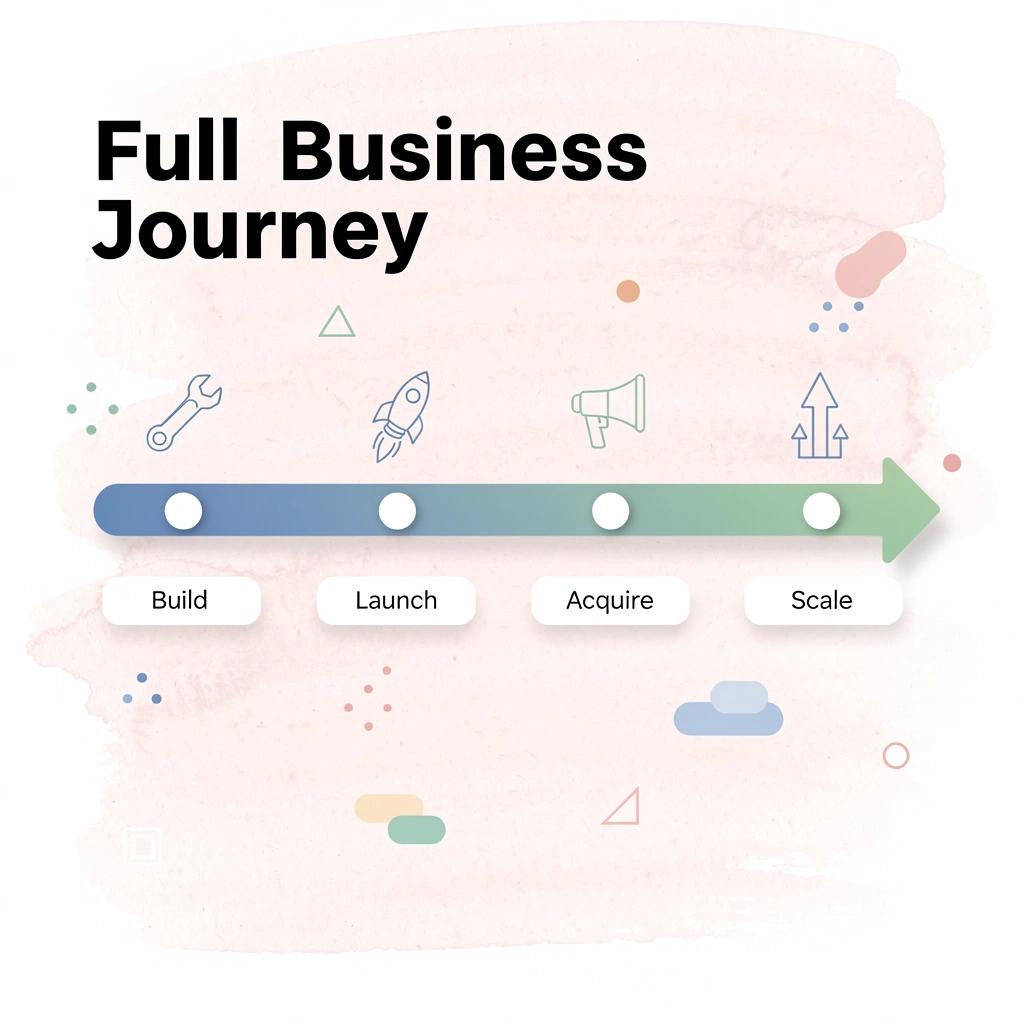
The criteria change once you realize the app itself isn't the finish line. You stop evaluating platforms based only on code generation speed and start asking whether they'll matter six months after launch. Can this platform help you validate demand, acquire users, manage operations, and grow revenue, or does it disappear once deployment finishes?

🎯 Key Point: The real test of any AI development platform isn't how fast it builds your app—it's whether it supports your entire business journey from launch to scale.
"The best development tools don't just help you ship faster—they help you succeed longer by supporting the full lifecycle of your product." — Modern Development Philosophy
⚠️ Warning: Many developers get trapped by platforms that excel at rapid prototyping but offer zero support for user acquisition, analytics integration, or revenue optimization—leaving you stranded after launch.
Product Development
Start with a platform that transforms ideas into testable products without requiring an engineering team. Choose app creation tools that handle development work, support minimum viable products, enable rapid iteration based on user feedback, and streamline launch processes. According to the Anything Blog, 90% of developers say they can develop faster when using modern AI-powered platforms. The real value lies in learning what works before exhausting months of your budget.
Business Planning
Whether a startup executes its technical side well rarely determines whether it survives its first year. Most startups fail because founders build solutions for problems that don't exist or enter markets they don't understand. Look for platforms offering idea validation frameworks to test your assumptions before coding, market positioning guidance that clarifies who you're serving and why they should care, customer targeting tools that identify your actual audience, and product strategy support connecting features to business outcomes. The earlier you identify weaknesses in your model, the less time you waste building products nobody wants.
Marketing Automation
A technically perfect app that nobody finds is a failure. Customer acquisition becomes the bottleneck the moment you launch, especially for solo founders without marketing knowledge or resources. Consider whether a platform supports content creation that attracts your target audience, outreach campaigns that systematically reach potential users, paid advertising that maximizes limited budgets, lead generation that builds your pipeline, and audience growth that compounds over time. The Anything Blog reports 5x faster deployment compared to traditional methods, but deployment speed means nothing if nobody shows up. The strongest platforms treat marketing as inseparable from product development.
Operations
As your user base grows, customer inquiries, support requests, workflows, and administrative tasks increase rapidly. However, most AI platforms ignore these operational needs. Traditional approaches assume you will eventually hire a team to handle these functions, but that assumption breaks down when you're committed to staying lean. Platforms like Polsia's web app development company address this gap by providing autonomous systems that handle customer support, manage workflows, coordinate operations, and continuously maintain business administration, eliminating the need to choose between growth and operational collapse.
What should you consider for long-term scalability?
Most founders evaluate tools based on immediate needs and outgrow them within months. The better question is whether the platform remains useful as revenue grows, user demands shift, and complexity increases.
Look for systems that support business growth without requiring constant tool replacement, maintain operational capabilities across multiple functions as you scale, adapt to changing requirements without disrupting existing workflows, and reduce the need to rebuild processes at each growth stage.
How do you choose the right platform for your goals?
The best choice depends on what you're trying to build. If your goal is to make software fast, development speed matters most. If your goal is building a lasting business, you need planning, marketing, operations, and scalability to work together as an integrated system.
Which specific platforms deliver on these criteria?
Related Reading
- Softr Alternatives
- Replit Alternatives
- Mobile App Ideas
- Appsheet Alternatives
- Devin Ai
- Ai Tools For Product Managers
7 Lovable AI Alternatives to Consider
The best choice depends on what you're doing. Some platforms focus on code generation, while others help you ship faster but leave you stuck when finding customers, handling support, or growing. A few expand into areas that matter more: helping you run a business, not just build an app.

According to Trickle Blog, seven alternatives are worth exploring, each offering a different perspective on what founders need most.
🎯 Key Point: The right AI platform should help you build and grow your business, not generate code alone.
"Seven alternatives are worth looking at, each taking a different view on what founders need most." — Trickle Blog, 2024
💡 Tip: Choose platforms that offer business support alongside technical development to maximize your startup's success.
1. Polsia
Best for: Founders who want to eliminate the need for a team entirely
Polsia works from a fundamentally different premise than most AI development tools. Rather than helping you code faster, it replaces the traditional approach of hiring people to run operations.
What makes Polsia different from other development tools?
The platform operates as an independent system that plans roadmaps, ships code, runs marketing campaigns, manages customer support, and closes deals. You get complete product development, automated cold email sequences, Meta ads management, customer inbox management, and business strategy execution.
Most startups fail not because the code doesn't work, but because founders cannot simultaneously handle building, marketing, selling, and support. Polsia treats those functions as inseparable from day one.
Ideal user
First-time founders and solo entrepreneurs seeking to start and grow a company without traditional hiring barriers.
2. Bolt.new
Best for: Rapid web app prototyping
Bolt.new prioritizes speed. You describe what you want, and it creates a working web application in your browser without requiring local setup or infrastructure decisions.
What makes Bolt.new effective for rapid prototyping?
The main strength is shortening the time between idea and working prototype. You can test whether your ideas are right, show something to potential users, and incorporate their feedback in hours instead of weeks.
What are the limitations of prioritizing speed?
The tradeoff is control. You're optimizing for speed, not customization or architectural decisions. When you need production-grade systems, you'll move elsewhere.
Ideal user
Founders who need to test ideas quickly and aren't ready to commit to specific technical architectures.
3. Replit AI
Best for: AI-assisted coding with direct codebase control
Replit combines cloud-based development with AI assistance while keeping you close to the actual code. You write code with intelligent autocomplete, refactoring suggestions, and built-in deployment automation, rather than describing what you want in natural language and hoping for a match.
How does Replit maintain developer control?
The platform supports multiple programming languages and handles deployment workflows without requiring separate infrastructure management. You maintain full control over implementation while receiving AI support for repetitive tasks and boilerplate generation.
When does Replit work best for developers?
This works when you have technical skills and want to accelerate development without obscuring the codebase. It doesn't work when you need help beyond coding.
Ideal user
Technical founders who want to accomplish more without relinquishing control over how the system is built and operates.
4. Bubble AI
Best for: Building apps visually without writing code
Bubble is a popular no-code platform for building web apps. You design the visual interface, configure functionality using drag-and-drop tools, and launch your app without writing code.
What makes Bubble's visual approach effective?
The plugin ecosystem adds features beyond the main platform. You can build complex applications—marketplaces, SaaS products, internal tools—without learning programming languages. The visual approach makes logic easier to understand than text-based coding.
What are Bubble's main limitations?
Problems arise when you need to improve performance or add features that plugins don't support. You're limited to what the visual builder allows.
Ideal user
Non-technical entrepreneurs who prefer visual tools and want to build applications without software engineering knowledge.
5. Cursor
Best for: Developer productivity through AI coding workflows
Cursor is built for developers who want AI to speed up their workflows without changing how they think about software development. It understands your codebase, suggests refactorings, generates boilerplate, and helps you navigate large projects faster.
The AI removes friction from repetitive tasks, helps you understand unfamiliar code, and speeds up implementation while you retain full ownership of technical decisions.
Ideal users
Software developers and technical founders who want to ship code faster.
6. Softr
Best for: Business applications and internal tools
Softr specializes in creating operational tools, client portals, and business applications without coding. It integrates tightly with Airtable, transforming spreadsheets into functional apps with user authentication, permissions, and workflows.
This works well for internal operations or client-facing portals rather than highly customized consumer products, since use cases are well-defined and templates match common business needs. You can deploy quickly as a result.
The limitation is flexibility: you are optimizing for speed within a specific application category, not building custom software products.
Ideal user
Small businesses, consultants, and agencies are building operational tools rather than differentiated software products.
7. FlutterFlow
Best for: Mobile-first application development
FlutterFlow lets you create mobile apps visually using Google's Flutter framework. You design interfaces, set up logic, and launch to iOS and Android without writing Flutter code directly.
The platform serves founders building mobile experiences. You can deploy across platforms and leverage Flutter's performance benefits without having to master the framework. The visual builder simplifies mobile user interface design.
The tradeoff: you're limited by what the tool can do, and custom features require stepping outside the visual environment.
Ideal user
Founders building mobile-first products who want visual control without learning Flutter from scratch.
What These Platforms Actually Optimize For
Builder.io Blog identifies seven alternatives, but the real difference lies elsewhere.
Some platforms prioritize speed, others emphasize control, and some target non-technical founders. A few expand AI's role beyond code generation.
What should you actually optimize for when choosing a platform?
The question isn't which platform generates code fastest—it's what you're trying to build. An app that works perfectly but has no users is worthless. A marketing campaign that runs while you're asleep matters more than shaving two days off development time.
Why do most founders choose the wrong optimization target?
Most founders discover this the hard way: they choose based on shipping speed, then realize shipping was never the constraint. Customer acquisition, operations, and running a business were.
But knowing what matters and choosing the right tool are two different challenges.
Which Type of AI Platform Is Right for Your Goals?
Pick a platform by matching it to what you need right now, not by counting features. If you can't ship fast enough, you need one kind of tool. If you can't get customers, you need something different.

🎯 Key Point: The best AI platform isn't the one with the most features — it's the one that solves your biggest bottleneck today.
"Match your tool to your immediate need, not your feature wishlist." — Platform Selection Best Practice
💡 Tip: Before comparing platforms, identify whether your primary challenge is speed (getting to market faster) or growth (acquiring and retaining customers). This single distinction will guide your entire selection process.
If You Need to Build an App Quickly
Speed matters when testing ideas or racing toward launch deadlines. Platforms built for rapid app generation compress weeks of development into days by automating infrastructure, deployment, and large portions of the codebase. You describe what you want, the system generates it, and you iterate from there.
This approach works best for founders validating concepts or pushing MVPs to market quickly. The tradeoff is control: you gain velocity but surrender some architectural decisions to the platform's assumptions.
If You Need More Development Control
Technical founders often want AI to speed up their work without making decisions for them. AI-assisted coding environments meet this need: they suggest code, catch errors, and streamline repetitive tasks while leaving architectural choices in your hands.
This route appeals to engineers building complex systems or products requiring deep customization. The tradeoff is time: more control demands greater involvement in decisions that app-generation platforms handle automatically.
If You Prefer No-Code Development
Visual builders let non-technical founders create applications by dragging and dropping items and setting up workflow logic, making internal tools, marketplaces, and business applications accessible without hiring developers or learning programming languages.
The advantage is that more people can use them, but they have limits. No-code platforms work well for certain tasks and struggle with others. Custom logic or unusual integrations will hit these limits faster than expected.
If You Want Help Running the Business
Building the product isn't where most founders get stuck anymore. Customer acquisition, marketing, support, operations, and lead generation—the work required to turn a working app into a sustainable business—are the real challenges. These don't disappear once the code ships; they intensify.
What platforms help with business operations beyond coding?
Platforms like Polsia exemplify this shift. Rather than focusing solely on app creation, the platform supports roadmap planning, marketing, customer service, and sales management, freeing you to concentrate on strategy and decision-making. The goal is to build systems that acquire users, convert leads, and sustain growth without requiring a large team or constant hands-on work.
Why is customer acquisition harder than development for solo founders?
Solo founders face a capacity problem that development tools alone can't solve. You can build an app in a weekend, but acquiring your first hundred customers takes months of consistent effort across multiple channels. The constraint isn't technical anymore—it's operational. Platforms addressing that reality are becoming more valuable as AI makes software creation easier for everyone.
But choosing based on goals only gets you halfway there.
Why Founders Choose Polsia Instead of Standalone App Builders
Goals show what you want to achieve, but they don't tell you which platform will get you there. Most founders discover this after launch: the product works, but the business stops growing. Customers don't show up. Support requests go unanswered. Marketing campaigns never launch. The problem isn't that the technology fails—it's that the team lacks the capacity to handle everything.

🎯 Key Point: The gap between a working product and a growing business often comes down to operational capacity, not technical functionality.
"The problem isn't that the technology doesn't work—it's that the team doesn't have enough capacity to handle everything." — Common founder realization post-launch

⚠️ Warning: Many founders focus on product features during development but overlook the operational infrastructure needed to scale their business effectively.
The Product vs. Company Problem
App builders solve the wrong half of the equation. They help create software, not businesses. Building a functional product may account for only 20% of what's required to generate revenue. The other 80% involves finding customers, managing communication, executing marketing, handling operations, and maintaining momentum across all these activities simultaneously.
What challenges do solo founders face after building their MVP?
Solo founders feel this problem most acutely. You can write working code in days, but acquiring your first hundred customers takes months of steady work across multiple channels. The platform that helped you build the MVP stops helping when the harder work begins.
You end up connecting different tools together for email campaigns, customer support, analytics, advertising, and operational management. Each tool requires setup, learning, monitoring, and integration with the others.
Beyond Launch Day
Most development platforms treat launch as the finish line. Henry's Best Hits reports that over 6000 companies have already recognized this pattern and shifted toward systems that support ongoing business operations. Products require changes based on user feedback, marketing campaigns need continuous improvement, customer questions arrive regularly, and sales conversations require follow-up.
Standalone builders aren't designed for this phase. They excel at generating code but offer no guidance on customer acquisition strategy, Meta advertising campaigns, cold email sequences, or company operations.
The Autonomous Alternative
Platforms like web app development companies function as operating systems rather than development tools alone. They run continuously across marketing channels, customer communication, sales processes, and business management after launch. Our platform supports every function a business needs to survive and grow.
Why do solo founders need more than development speed?
Solo founders need more than faster development. They need a system that continues to work after launch and handles tasks that typically require a team. The capacity problem intensifies at deployment, when founders face simultaneous demands across marketing, support, sales, and operations. Without additional capacity, something breaks.
What determines success beyond capacity alone?
But having enough space alone doesn't guarantee that the right foundation gets built first.
Related Reading
- Best Mobile App Builder
- No Code Ai Tools
- Mobile App Ideas
- Hire App Developer
- Ai App Builders
- Best Vibe Coding Tools
- How To Create An App
Start or Grow your Existing Business with Polsia Today
If you're evaluating Lovable AI because you want to build faster, you're asking the right question about the wrong part of the problem. The real constraint isn't how quickly you can ship an app—it's whether you have the capacity to acquire customers, respond to support requests, iterate based on feedback, and close deals after launch. Most founders discover this gap when the product works perfectly, but the business stalls because no one is running it.
🎯 Key Point: The bottleneck isn't development speed—it's operational capacity after launch.

Write down every task required to operate your business for the next 30 days after launch: customer outreach, email sequences, support tickets, feature requests, bug reports, sales calls. If that list is three times longer than your development roadmap, you understand the capacity problem. Building is the easy part. Running the company is where solo founders hit the wall.
"Building is the easy part. Running the company is where solo founders hit the wall." — The reality of post-launch operations
Platforms like Polsia address this by functioning as an autonomous system that handles product development, customer acquisition, marketing execution, support operations, and sales conversations simultaneously. The difference isn't speed—it's sustained capacity across every function a business requires to survive past launch.
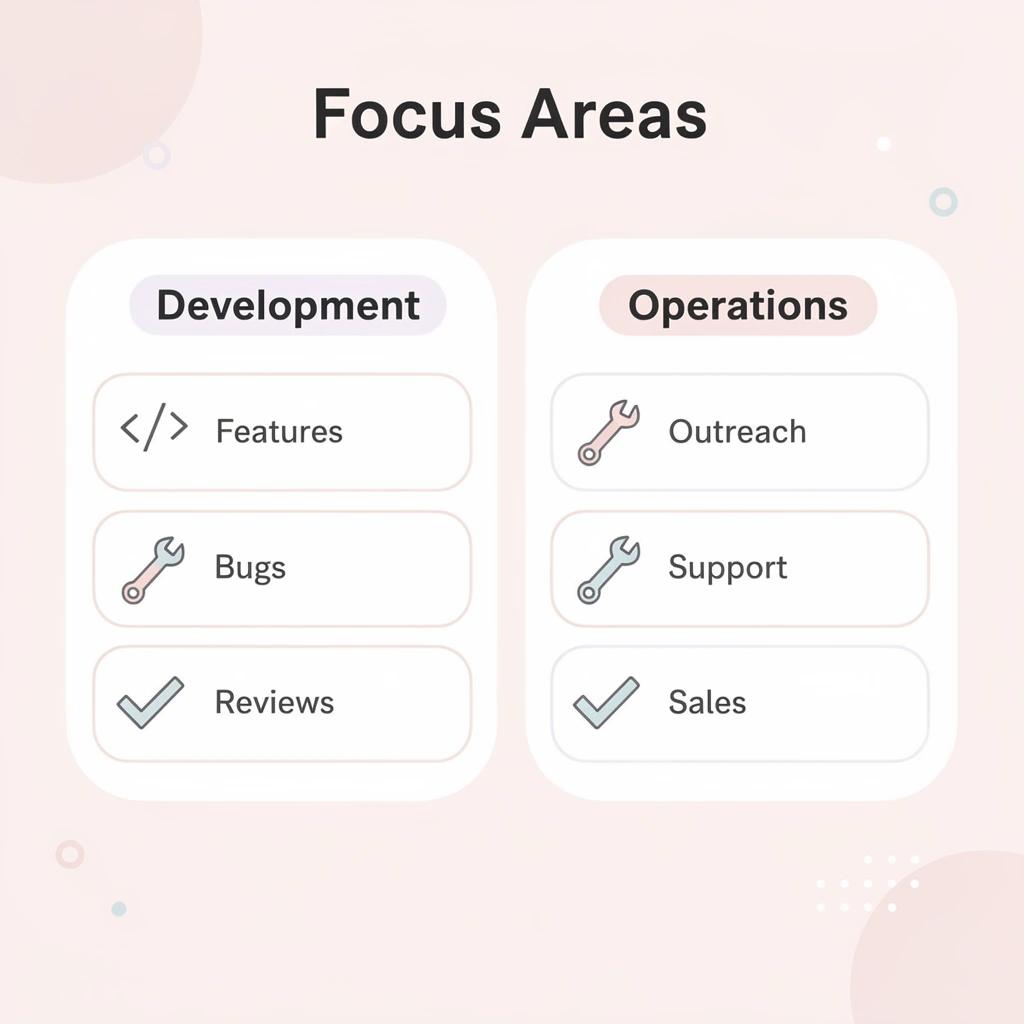
Development Focus vs Business Operations
- Feature development
- Development focus: Ship features
- Business operations: Sales calls
- Bug fixing
- Development focus: Fix bugs
- Business operations: Support tickets
- Code quality
- Development focus: Code reviews
- Business operations: Marketing campaigns
- System maintenance
- Development focus: Technical debt
- Business operations: Customer outreach
⚠️ Warning: Don't optimize for build speed if you can't handle post-launch operations.
Start by listing what breaks first when you're the only person running everything. That's where your next decision lives.